So, you’ve just had a big gum tree pruned at your place in Terrigal, or maybe a silky oak taken down from a commercial property in Newcastle. You’re looking at a pretty hefty pile of branches, logs, and other green bits. What's next? Simple: you're sitting on a pile of garden gold. High-quality mulch from trees is one of the most valuable things you can create for your own landscape.
For over 25 years, we’ve been helping homeowners and strata managers all over the Central Coast turn this supposed ‘waste’ into a genuine asset. This guide is your complete roadmap to making and using top-tier mulch, created right from your own property's trees. When you tackle jobs like removing tree stumps, don't just get rid of the wood—it can be processed into a fantastic resource for your garden.
We're going to cover everything, from the best ways to process the raw tree material to the science behind why it works wonders for our local soils. Whether you're battling with sandy coastal patches in Wamberal or the heavy clay ground you find further inland around Wyong, the right mulch makes all the difference.
The real beauty of using mulch from your own trees is that you know exactly what's going into your garden. It’s a 100% natural, locally sourced product that closes the loop on your property's ecosystem.
What You Will Learn
This guide will walk you through the whole process, touching on the key questions we hear all the time from property owners in Newcastle, Lake Macquarie, and across the Central Coast. You can expect practical, real-world advice from our experienced arborists on:
- Processing: How we safely turn those big branches and even tree stumps into a uniform wood chip. For a deeper dive on this, check out our guide on the benefits of professional tree stump grinding.
- Fresh vs. Aged: This is a big one. We’ll explain the crucial differences between using fresh chips straight from the chipper versus letting them compost first, and which one is better for your garden beds.
- Application: The right way to apply mulch to protect your plants, save water, and keep weeds down without accidentally causing problems.
- Problem-Solving: How to handle common issues like weird-looking fungus, pests, or nutrient imbalances that can sometimes pop up in your soil.
By the time you're done, you'll have the know-how to manage your green waste like a professional, boost your soil health, and create a more resilient, beautiful garden. Let's get started on turning that pile of branches in suburbs like Erina or Belmont into a powerhouse resource for your property.
Safely Processing Tree Material Into Usable Mulch
The first, and arguably most important, step in making brilliant mulch is breaking down all those bulky branches and logs into manageable wood chips.
Sure, for a tiny job you might get away with a small domestic chipper from the local hardware store. But for anything substantial—like the clean-up after pruning a big gum tree in your Toukley backyard—you really need professional-grade equipment. It's a non-negotiable for both safety and getting the job done right.
We rely on industrial wood chippers that can make short work of huge volumes of green waste. This kind of machinery turns an entire tree’s worth of branches into a uniform, usable pile of mulch in no time at all. Our absolute top priority is safety; we operate under strict WHS legislation, which is something you should always check for when hiring an arborist. This is not a weekend DIY job for large trees. Handling this equipment demands the right personal protective equipment (PPE), like heavy-duty eye and ear protection, plus extensive training.
From Waste Wood to Garden Resource
The process is a bit more involved than just feeding branches into a machine. We're also carefully assessing the material itself.
A critical quality control step is making sure wood from diseased trees is handled separately. The last thing you want is to chip it into mulch that could spread pathogens to your healthy garden plants.
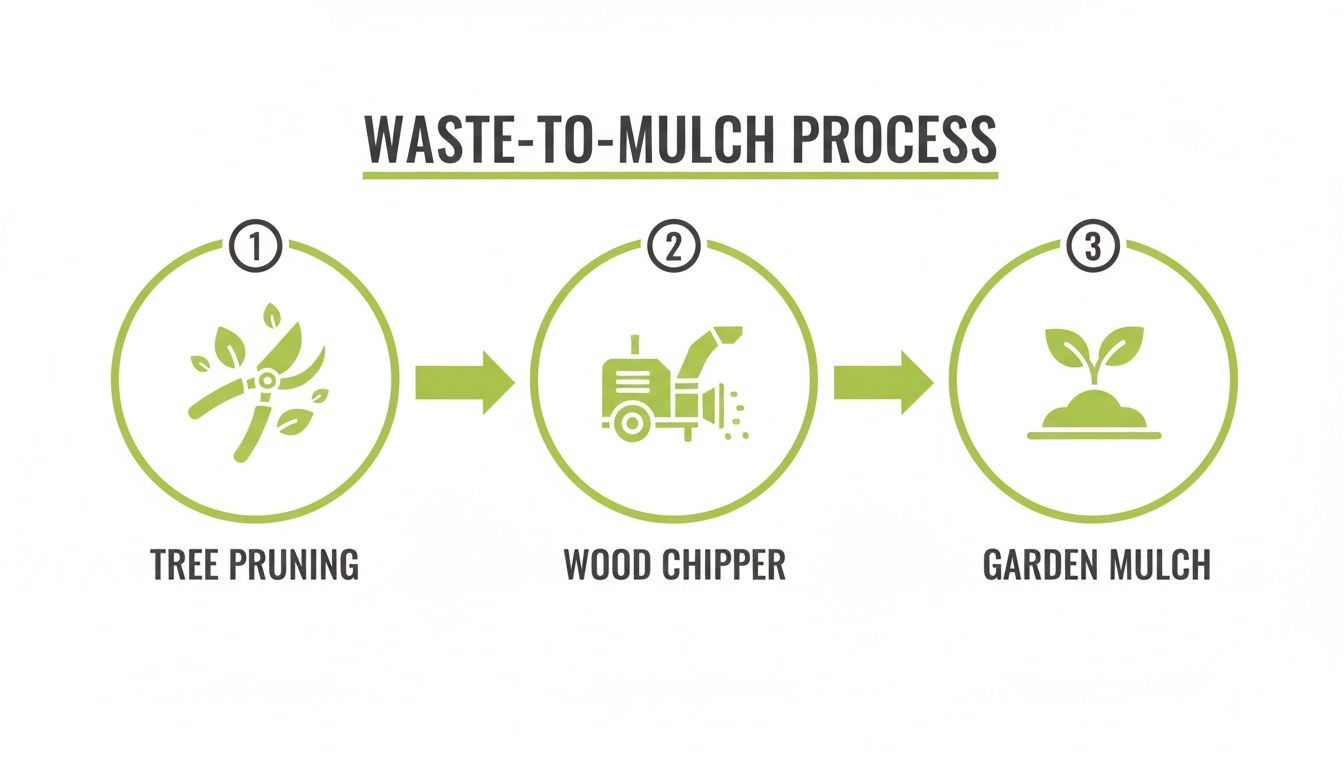
This simple cycle shows how it all works: professional tree care, like pruning, gives us the raw materials. We then process it through a chipper to create a fantastic resource for your garden.
Even the grindings from a stump removal can be a great addition to your mulch pile, as it mixes that woody matter with rich topsoil. This blend creates a diverse texture that soil just loves. You can learn more about the importance of proper tree pruning on the Central Coast and see how it provides the very best starting point for high-quality mulch.
This initial processing stage doesn't just make your property in suburbs like Caves Beach or Warners Bay tidier and safer; it’s the first step on the journey to creating incredibly nutrient-rich soil for your garden.
Remember, the quality of your mulch starts with the quality of the tree material and the professionalism of the processing. A qualified arborist team not only removes the tree safely but also provides you with a clean, high-grade organic product, all while being covered by comprehensive $20M public liability insurance for your peace of mind.
Fresh Woodchip Or Aged Mulch: What Is Better For Your Garden?
So, you've got a fantastic pile of freshly processed mulch from trees. Now comes the big decision: do you spread it straight away, or let it age first? This choice really matters for your garden's health, especially with the varied conditions we see across the Central Coast.
Freshly chipped wood is a brilliant solution for certain jobs. Imagine creating a rustic, natural-looking pathway through your garden in Forresters Beach, or maybe you need to suppress a stubborn patch of weeds in a large, unplanted area. Fresh woodchip is perfect for this. It's durable, looks clean, and forms a thick barrier that weeds absolutely hate.
There's a catch, though, when using fresh woodchip right up against your precious plants. As it starts to break down, the microorganisms doing all the hard work need a lot of nitrogen to fuel their efforts. They pull this nitrogen from their immediate surroundings—which includes the top layer of your soil. This process is known as nitrogen tie-up or nitrogen drawdown.
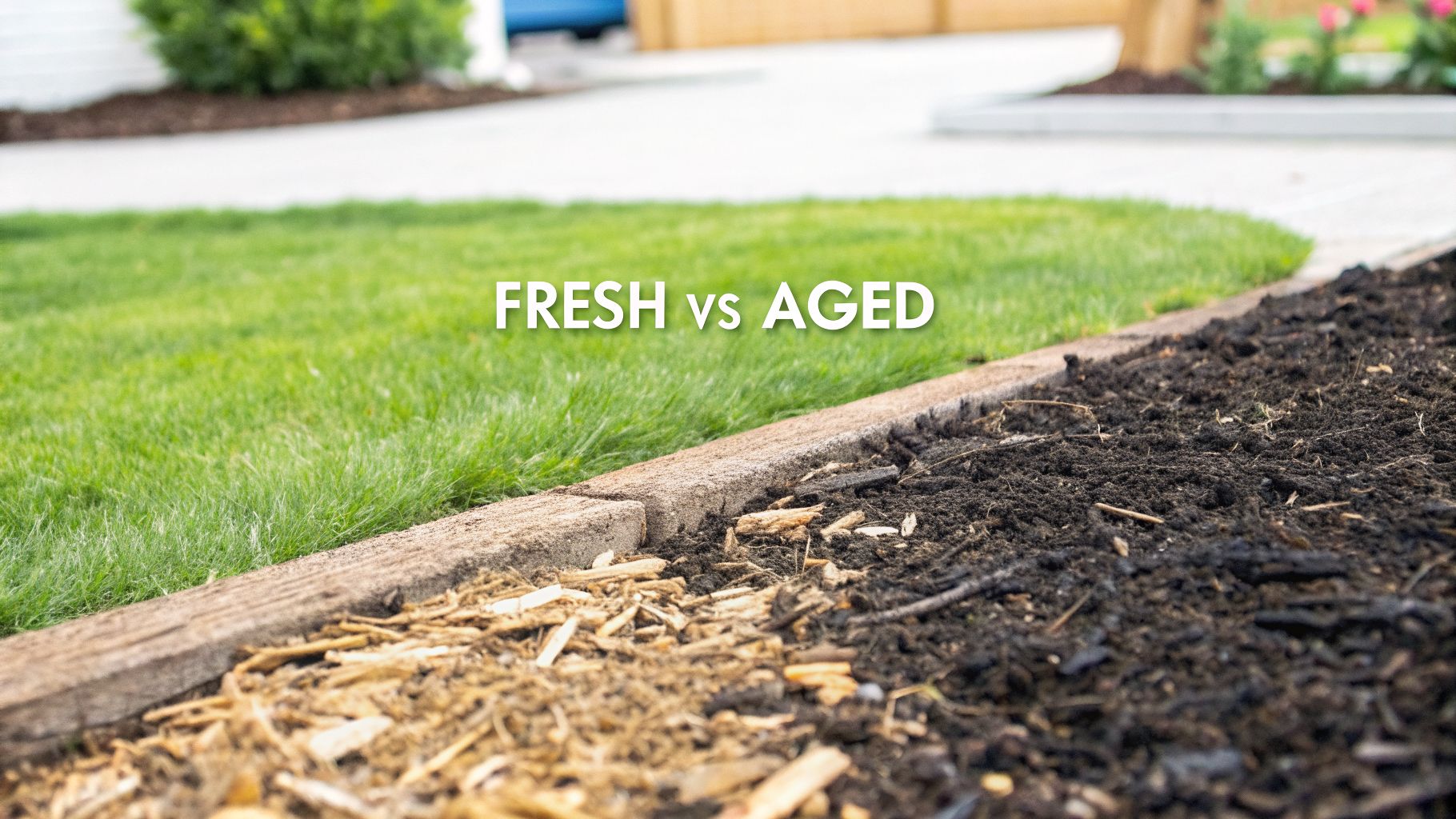
The Case For Aged Mulch
This is where aged, or composted, mulch truly shines. By letting the woodchip break down for a few months before you use it, you're allowing that initial, nitrogen-hungry decomposition phase to happen in the pile itself, not in your garden beds.
What you’re left with is a dark, crumbly, nutrient-rich material that’s ready to feed your soil from day one.
Aged mulch is an absolute powerhouse for improving soil structure, boosting moisture retention—which is vital for surviving our hot summers—and providing a slow-release source of essential nutrients. For many of the strata properties we manage in Lake Macquarie and Newcastle, using aged mulch is standard practice to guarantee the health of valuable, established garden beds.
Expert Tip: That heat you feel coming off a fresh mulch pile is a great sign! It means microorganisms are hard at work breaking down the wood. This process also helps to kill off any lingering weed seeds or plant pathogens that might have been present.
Creating an aging pile is simple. Just find a convenient spot on your property where you can leave the mulch for a few months. Our coastal climate actually helps speed up the process. You'll know it's ready when the mulch is dark brown, has a lovely earthy smell, and the original woodchips have started to break down into smaller, softer pieces.
Fresh Woodchip vs. Aged Mulch at a Glance
Choosing between fresh and aged mulch really comes down to what you're trying to achieve in your garden. One isn't universally "better" than the other; they just have different jobs. This table should help clear things up.
| Attribute | Fresh Woodchip | Aged (Composted) Mulch |
|---|---|---|
| Best For | Pathways, weed suppression (non-garden areas), large open spaces | Garden beds, veggie patches, around trees and shrubs |
| Nutrient Impact | Can cause temporary nitrogen tie-up in the soil | Adds nutrients and organic matter to the soil immediately |
| Appearance | Light, natural wood colour; provides a clean look | Dark, rich, and earthy; looks like high-quality compost |
| Durability | Breaks down slowly, making it long-lasting for paths | Breaks down faster, feeding the soil more quickly |
| Weed Control | Excellent; forms a thick, suppressive physical barrier | Good; also smothers weeds while improving soil |
| Soil Health | Primarily a top-layer protective cover | Actively improves soil structure, aeration, and water retention |
Ultimately, both fresh and aged mulch have their place in a well-maintained Central Coast garden. It's all about using the right product for the right purpose to get the best results for your plants and landscape.
While you're busy improving your garden with mulch, you might also be thinking about other landscape clean-ups. For a better idea of what's involved in tackling old obstacles, you might find our insights on tree stump removal on the Central Coast helpful.
How to Apply Mulch for Maximum Garden Benefits
Creating fantastic mulch from your trees is only half the job. Honestly, applying it correctly is what really unlocks the benefits for your garden, and it’s where we see a lot of well-meaning property owners go wrong.
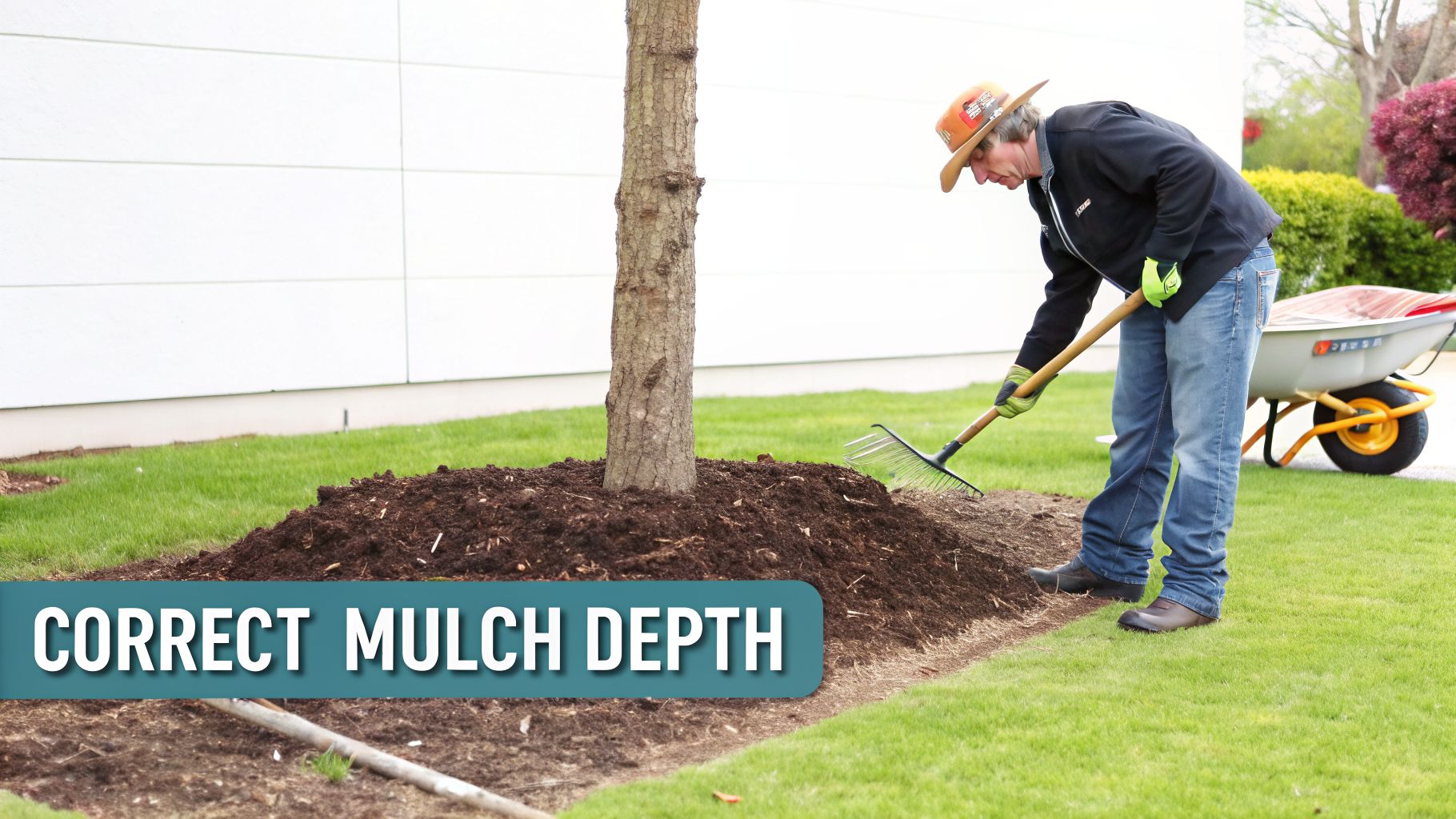
One of the most common mistakes is something arborists call ‘volcano mulching’. This is when you see mulch piled high up against the trunk of a tree, creating a cone shape that looks exactly like a volcano. This practice is seriously damaging. It traps moisture right against the bark, which can lead to collar rot, disease, and nasty insect infestations.
The right way is to think doughnut, not volcano. Always leave a gap of at least a few centimetres between the mulch and the tree trunk. This lets air circulate and keeps the bark dry. It’s a simple technique, but it’s one of the most important things you can do to protect the health of your trees.
Finding the Right Depth
Getting the depth of your mulch layer right is another crucial factor. We always recommend aiming for 75-100mm (or 3-4 inches).
A layer this thick is just about perfect. It’s deep enough to suppress stubborn weeds and hold onto precious soil moisture during our hot summers, but not so thick that it smothers plant roots or stops water from getting through. Go too thin, and it won’t do much at all. Go too thick, and you can accidentally create a water-repellent barrier.
For properties with coastal exposure, like those around The Entrance or Budgewoi, this layer also acts as a brilliant shield, protecting plant roots from salt spray and helping sandy soil hold onto moisture for longer.
Applying organic mulch from trees can double soil carbon over five years and boost root biomass by up to 20% in the top layer of soil. For Central Coast gardens, this means a healthier landscape that is far more resilient to drought.
Seasonal Mulching Strategy
When you apply your mulch can make a big difference, too.
Spreading a fresh layer in late autumn is a great move. The soil is still warm but the winter chill hasn't set in, so the mulch helps insulate plant roots and protect the soil structure over the colder months.
A top-up in spring is also a fantastic idea. This prepares your garden beds for the summer heat, locking in that spring moisture and giving your plants a strong, healthy start to the growing season. This topic comes up often when we discuss what arborists do to maintain landscape health year-round. You can learn more in our guide on the role of professional arborists.
Following this simple seasonal calendar helps you get the most out of all your hard work.
Solving Common Problems With Tree Mulch
Even the best mulch from trees can throw a few curveballs. If you’ve just spread a fresh layer and are seeing some strange things pop up, don’t panic. Most of the time, what you're seeing is just a natural part of the decomposition process, but it definitely pays to know what to look for.
You might notice a white, web-like growth weaving through your mulch. This is usually just a harmless mycelium network—think of it as the root system of fungi—and it’s a good sign that your mulch is breaking down properly. However, you’ll want to keep an eye out for something called artillery fungus. It looks like tiny, cream-coloured cups that shoot stubborn, tar-like black spots onto light-coloured surfaces like your house siding or car.
Addressing Common Mulch Concerns
Termites are another worry we hear about all the time from homeowners in suburbs like Gosford. While it's true that termites eat wood, research shows that a layer of mulch doesn't actively attract them to your home.
The real key is how you apply it: always keep mulch at least 15cm away from your home's foundation. This simple gap is your best defence, as it prevents you from accidentally creating a hidden bridge for pests.
Another issue you might run into is seeing your plants turn a bit yellow after putting down fresh woodchips. This is a classic sign of nitrogen tie-up. It just means the decomposing mulch is temporarily borrowing nitrogen from the top layer of soil to do its work. The fix is simple: just rake the mulch back, apply a light dressing of a nitrogen-rich fertiliser, and then spread the mulch back over.
Using tree-derived mulch is a fantastic sustainable choice, offering an alternative to the 90,000 tonnes of plastic mulch film used annually in Australia. It effectively suppresses weeds by 80-90% and can slash irrigation needs by up to 28%, a huge benefit during our dry spells. To see how it supports landscape regeneration, you can explore more findings on soil health.
For properties on sloped blocks, especially in areas prone to heavy downpours, mulch washing away can be a real headache. To stop this from happening, you can create shallow terraces or opt for a heavier, chunkier type of woodchip that's less likely to float away. In some cases, installing a subtle border along the garden edge can make all the difference in keeping your valuable mulch right where it belongs.
When To Call An Arborist For Your Mulch Needs
While making your own mulch from a few small pruning jobs can be a fantastic weekend project, it’s really important to know your limits. You have to be realistic about when to step back and call in the professionals.
Large-scale tree removal, cleaning up after a big storm, or managing several large trees on a property all fall firmly into arborist territory. Imagine you're clearing a block for a new build in Wyong or you're responsible for the tree maintenance for a strata complex in Warners Bay. These jobs require serious expertise, specialised equipment, and a deep understanding of safety protocols and council permits. It's just not a DIY situation.
From Tree Removal To Ready-To-Use Mulch
This is where a qualified arborist team adds enormous value. We don't just handle the complex tree work safely; we process all the green waste right there on-site with our industrial-grade chippers. This leaves your property completely clean and, best of all, provides you with a massive supply of high-quality, ready-to-use mulch that came from your very own trees.
This approach is both economical and environmentally smart. Here in NSW, arboricultural operations are actually a key source of garden mulch. Repurposing the tree waste after a removal can slash disposal costs by a huge 30-50% for property owners.
It doesn't stop there. Using that fresh mulch on your site can improve soil health and suppress weeds by up to 90%, offering a significant return on your initial investment. To get a sense of the scale of this resource, you can read more about NSW's native forests and wood processing.
By choosing a professional arborist, you're investing in a complete solution. You get safe tree work, guaranteed compliance with local regulations, and a valuable landscape resource—all while knowing your property is protected by our $20M public liability insurance.
If you're facing a large tree project and wondering about the best way forward, just give us a call. We're always happy to pop out and provide a free property assessment to help you make an informed decision.
Common Questions We Hear About Tree Mulch
Over our 25+ years of working with trees across the Central Coast, Newcastle, and Lake Macquarie, a few questions about mulch come up time and time again. Here are the answers we usually give to homeowners looking to make the most of their green waste.
Is Mulch From Any Tree Good For The Garden?
Not all trees are created equal when it comes to mulch. Most of the native species we see around here, like eucalypts and acacias, break down into fantastic, nutrient-rich mulch for your garden beds.
However, you have to be careful. Some trees, like the Black Walnut, release natural chemicals that can actually stop your other plants from growing. It’s also crucial to avoid chipping and spreading diseased wood, as you can inadvertently introduce pathogens right into your garden soil. As qualified arborists, part of our job is to identify these problem trees and make sure only healthy, beneficial material gets turned into mulch.
How Often Should I Reapply Mulch?
Because organic mulch is constantly breaking down and feeding your soil (which is exactly what you want!), it needs a top-up every now and then.
In our local climate, we suggest having a quick look at your mulch depth once a year. A good refresh every one to two years is generally enough to keep that ideal 75-100mm layer that protects the soil and suppresses weeds. If you’re starting to see bare patches of dirt or the layer is looking a bit thin and sparse, it’s time for a top-up.
Can I Remove A Tree Just To Get Mulch?
This is a big one, and the short answer is no. Councils throughout the Central Coast, Newcastle, and Lake Macquarie have pretty strict Tree Preservation Orders in place. You can't just decide to remove a healthy, significant tree because you fancy a pile of mulch.
However, if a tree is dead, dying, or posing a real risk to people or property, removal is often necessary and permitted. The silver lining is that the green waste from a permitted removal provides a fantastic, high-quality source of mulch right on your doorstep. We can help you figure out the local rules; for a deeper dive, check out our guide on navigating council approval for tree removal.
Ready to turn your tree waste into a valuable garden resource? The team at Treecorp Solutions offers safe, professional tree services and on-site mulching. Request a free quote today and let's improve your property's health and beauty.