If you own a home in Terrigal, manage a strata complex in Erina, or look after a property anywhere across the Central Coast, Newcastle, or Lake Macquarie, you know our local trees are the heart of the landscape. But keeping them safe, healthy, and looking their best takes more than just a bit of guesswork—it demands expert care.
This guide is built on our 25+ years of hands-on, local experience. We’ve seen it all, and our goal is to help you, as a property owner or strata manager, make confident, informed decisions about your trees. We'll walk you through everything, from the critical differences between professional pruning and damaging tree lopping to navigating Central Coast council rules without the headache.
Why Expert Tree Pruning is Essential on the Central Coast
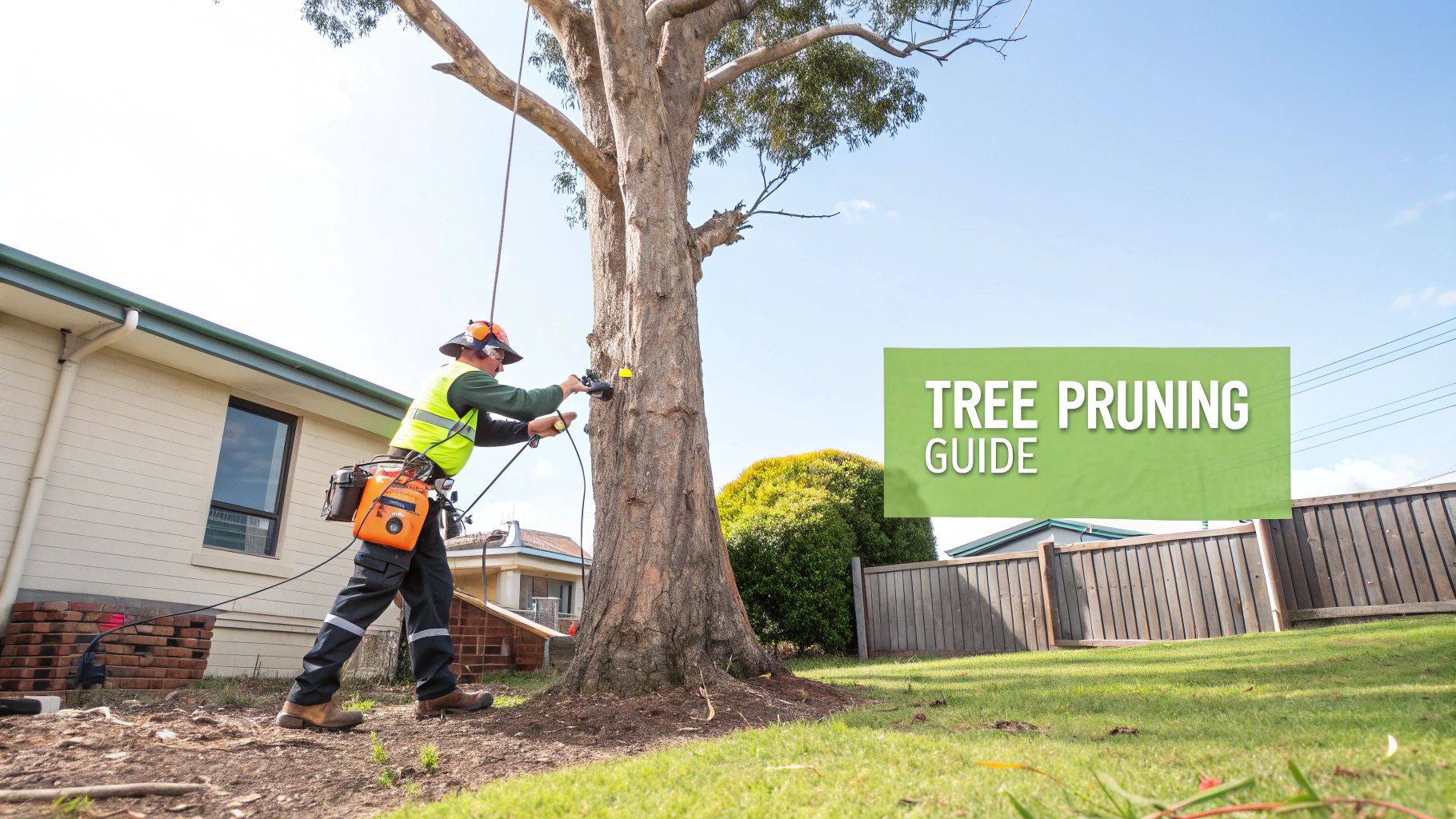
Imagine you've got a beautiful jacaranda in your Gosford front yard, but its branches are now creeping a little too close to the neighbour's fence and the powerlines. Or maybe it's a huge gum tree at your commercial property in Wyong that's started dropping dead branches, creating a real hazard. These are the exact situations where professional tree pruning central coast nsw isn't just a good idea—it's essential for safety and compliance.
Making the right call protects your property and boosts its value. It’s about much more than just making a tree look tidy; it's about safety, council compliance, and the long-term health of a living asset. We’ll show you exactly what to look for when hiring a qualified arborist and what you should expect from a professional job done right.
What We'll Cover in This Guide
To make sure you get the most out of this guide, we'll be covering the key topics you need to know. We'll explain why proper pruning techniques protect your trees, your property, and the public. We will also demystify the rules across Central Coast, Lake Macquarie, and Newcastle councils so you can stay compliant.
Safety and insurance are non-negotiable, so we'll cover the essentials of any professional tree job, including our $20M public liability insurance. Finally, we'll provide a practical checklist to help you hire a qualified, reliable team that’s right for your specific needs. Timing is also a huge piece of the puzzle. For a deeper dive into the specifics, check out our detailed article on the best time to trim trees.
Why Professional Pruning Protects Your Trees and Property
Proper tree pruning is so much more than a quick tidy-up with a chainsaw. It’s a science that directly impacts your tree's health, its structural integrity, and ultimately, its long-term safety. It's crucial you understand the difference between professional arboriculture and outdated 'tree lopping'—a harmful practice that can leave your trees far weaker and more dangerous than before.
Imagine that large gum tree in your Woy Woy backyard that’s been dropping branches. Hacking away at its limbs without the right knowledge, which is essentially what lopping is, creates massive, open wounds that the tree can't heal properly. This is like leaving an open door for pests and disease, leading to internal decay and turning it into a major hazard in the next big storm that rolls across the Central Coast.
The Science Behind Smart Pruning
Professional pruning, when done by a qualified arborist, is a highly strategic process. We strictly follow the Australian Standard AS 4373-2007 for the Pruning of Amenity Trees. This standard dictates exactly how and where to make each cut, ensuring the tree can compartmentalise the wound and heal itself effectively, which prevents rot from setting in.
Using the correct technique encourages strong, healthy growth and allows us to remove dangerous deadwood before it gets a chance to fall. It also vastly improves sunlight and air penetration through the canopy. For strata managers in places like Erina or Umina Beach, this isn't just about aesthetics; it’s a core part of meeting Work Health and Safety (WHS) obligations by actively managing risks on common property.
A well-pruned tree is not just safer; it's also more resilient to the strong coastal winds we often experience from Terrigal to Newcastle. By reducing canopy weight and improving structure, you are actively investing in its ability to withstand severe weather.
More Than Just a Cut
The benefits go well beyond immediate safety. Strategic pruning directs the tree’s energy into developing a strong, stable structure, rather than wasting it on weak, poorly attached limbs. Think of it as giving the tree a blueprint for healthy growth, helping it become a long-lasting asset instead of a future liability.
For anyone looking to maintain the health and beauty of their trees, getting a handle on these principles is vital. To dig a little deeper, you can find more detail in our guide to the benefits of regular tree pruning. At the end of the day, investing in a professional service that understands real arboriculture protects your property, ensures you're compliant, and prevents far more expensive problems down the track.
Navigating Council Permits for Tree Pruning
Trying to figure out local council rules for tree work can sometimes feel like a bigger job than the pruning itself. Do you need a permit for that massive fig tree in your Gosford backyard? What about a protected species in a Newcastle heritage conservation area? Getting your head around the rules is the first step to avoiding hefty fines and making sure your job is above board.
The regulations for tree pruning central coast nsw aren't one-size-fits-all; they can change quite a bit from one council to the next. What's allowed by the Central Coast Council might be different from the rules set by Lake Macquarie City Council or the City of Newcastle. Each one has its own Tree Preservation Orders (TPOs) or Development Control Plans (DCPs) that spell out exactly what you can and can’t do without official approval.
When is a Permit Usually Required?
As a general rule, you'll almost certainly need a permit if your tree is listed as significant, is part of a heritage-listed property, or is a specific native species protected under local environmental plans.
Let's say you have a magnificent Sydney Red Gum on your bushland block near Wyong. These are often protected, meaning any major pruning would probably require an arborist's report and a full council application. The same goes for large trees in sensitive coastal zones around places like Avoca Beach or The Entrance, which often fall under council oversight.
Common Exemptions You Should Know
The good news is, not every little trim requires a mountain of paperwork. Most councils give the green light for minor maintenance pruning without a permit. A common exemption is the "10% rule," which often lets you remove up to 10% of a tree's total canopy within a 12-month period.
This is usually meant to cover the removal of dead, dying, or dangerous branches that pose an immediate risk. But be warned: this does not apply to all trees or situations. Your safest bet is always to check directly with your local council first. This decision tree helps show the difference between proper, healthy pruning—which councils support—and destructive lopping, which they don't.
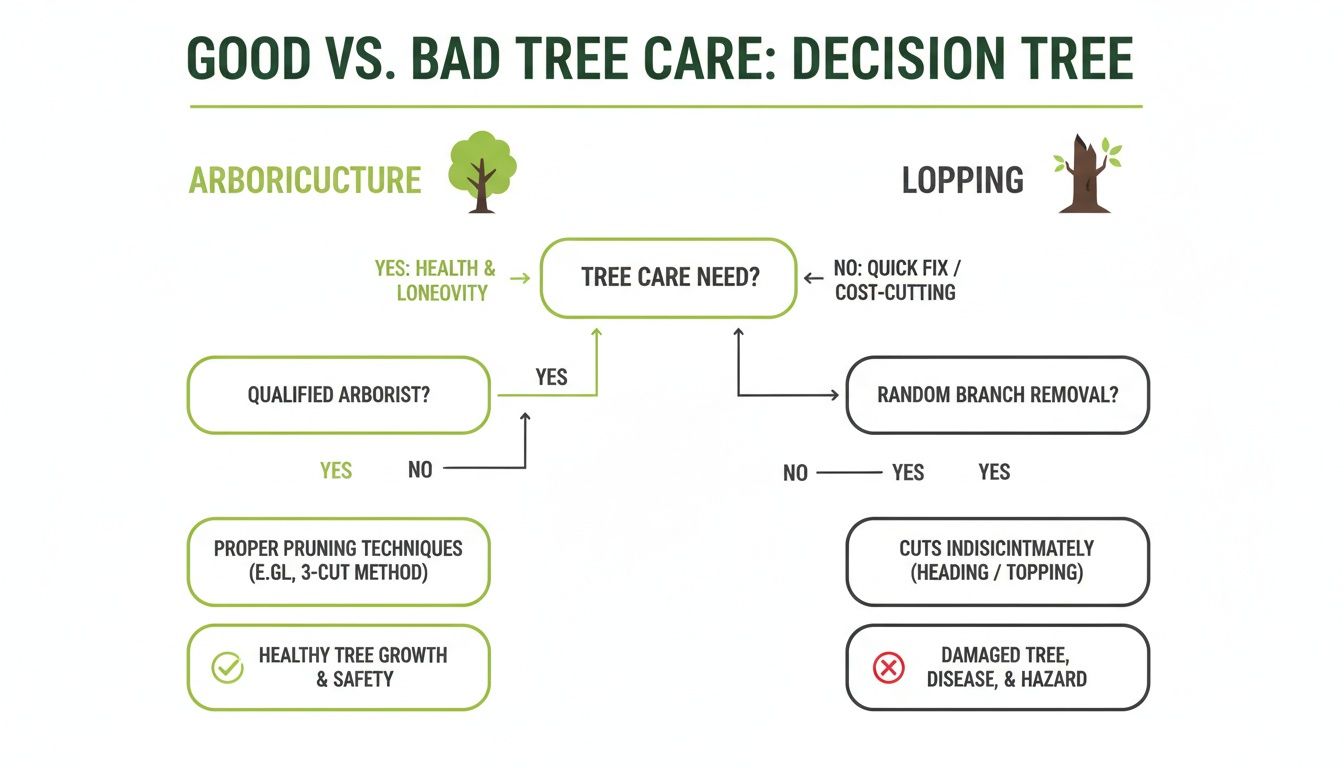
The main takeaway here is that professional pruning done to Australian Standards supports a tree's health, whereas lopping just creates future hazards. Navigating these rules can be a real maze, which is why bringing in a professional team is so valuable. At Treecorp Solutions, we deal with this stuff every day.
With over 25 years of experience working with every local council in the region, we know the ins and outs of their requirements and can manage the entire application for you. For a deeper dive into how it all works, you can find more information on our page about navigating council tree permits. We'll make sure all the work is fully compliant, saving you the hassle and giving you total peace of mind.
Safety and Insurance: The Non-Negotiables in Tree Work
When you're dealing with tree work, especially anywhere near your home or business, safety isn't just a priority—it's everything. There's simply no room to cut corners. Working at height with heavy-duty equipment like chainsaws is incredibly dangerous, which is why we strongly advise against DIY pruning for anything larger than a small garden shrub. The risk just isn't worth it.
This is about more than just the arborist in the tree; it’s about keeping your family, your property, and the public safe from harm. The dangers are very real. Year after year, Australian workplace safety reports show that tree work is one of the most hazardous jobs out there. This highlights why professional expertise is an absolute must.
What Professional WHS Compliance Looks Like
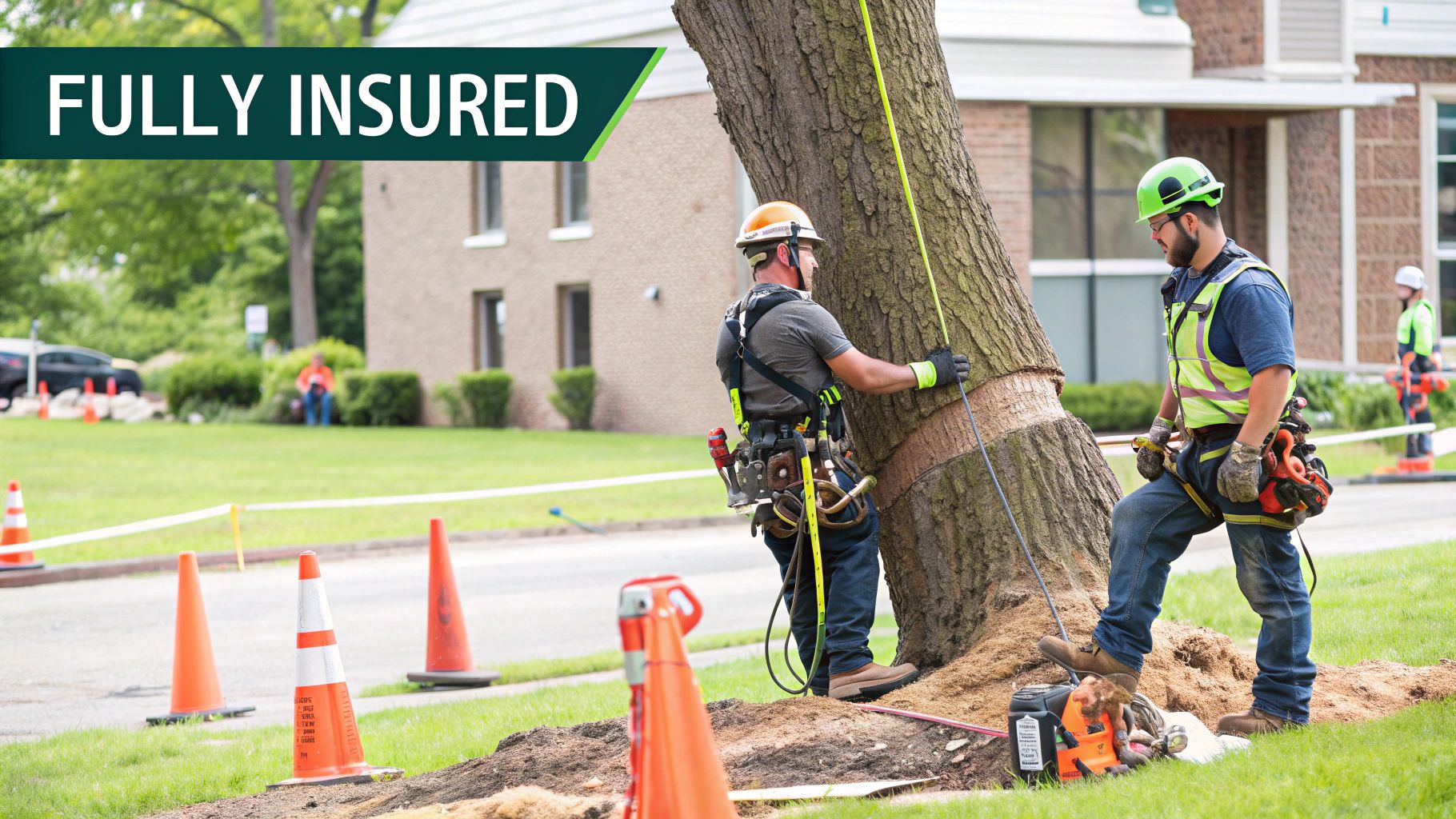
The moment our professional crew arrives at your property, whether it's in Gosford, Warners Bay, or anywhere else on the Coast, you should see safety in action. Proper Work Health and Safety (WHS) compliance is visible from the get-go. Our team turns up fully qualified and kitted out in the correct personal protective equipment (PPE), and we immediately establish clear work zones with signs and safety cones to manage public access.
Before a single cut is made, we conduct a site-specific risk assessment. This is our formal plan to identify and manage any potential hazards before we begin. This structured, safety-first approach is central to how we operate, and you can see more on our comprehensive WHS policies right here.
The Importance of $20 Million Public Liability Insurance
Insurance is your ultimate safety net. It’s a non-negotiable for any legitimate arborist, and you should never hire anyone without it. Imagine a large branch gives way unexpectedly, crashing onto your neighbour's roof in Terrigal or a car parked down the street. If your contractor isn't properly insured, you could be left personally on the hook for thousands of dollars in damages.
Our $20 million public liability insurance is your guarantee that in the unlikely event of an accident, you are completely protected. This isn’t just a piece of paper; it’s total peace of mind for you, your property, and the community. This level of coverage is especially vital for strata managers and body corporates, who hold a duty of care to protect residents and all common property. For anyone managing a larger property, it’s a good idea to chat with a knowledgeable local building insurance broker to fully understand how tree care impacts your specific policy.
Understanding the Costs of Professional Tree Pruning
When you get a quote for tree pruning, that final number isn't just pulled out of thin air. It’s a careful calculation based on the real-world factors that dictate the complexity, risk, and time needed to do the job right—and to do it safely. While we can’t give you a price list here, understanding what goes into a quote helps you see the value you're getting.
The biggest factor, unsurprisingly, is the tree itself. A massive, old gum tree leaning over a house in Wyong is a completely different ball game compared to a small jacaranda in an open front yard in Wamberal. The tree’s size, its species, and even its current health will determine the specific techniques and gear we need to bring.
Key Factors That Influence Your Quote
Where the tree is located and how easy it is to get to play a huge role in the cost of tree pruning on the Central Coast NSW. If a tree is wedged in a tight spot—say, between two houses in Umina or with big limbs hanging right over your pool—our arborists have to use specialised rigging techniques. This means every single branch is carefully controlled and lowered to the ground to prevent any damage whatsoever.
That’s a far cry from a tree out in the open, where we can safely drop branches into a clear zone below. The level of risk involved is a massive part of the equation; the higher the potential risk to your property or to people, the more meticulous and time-consuming the work becomes. A professional quote covers more than just cutting branches. It’s the full package: a highly skilled and qualified crew, specialised equipment, comprehensive $20 million public liability insurance, and a total site clean-up that leaves your property looking immaculate.
Specialised Equipment and Other Costs
Sometimes, the job calls for more than just ropes and chainsaws. If a tree is particularly large or structurally unsound, we might need to bring in an elevated work platform (EWP) or even a crane to work safely. For jobs on busy streets, like in the town centres of Erina or Gosford, we might also need to organise official traffic management to keep the public safe.
These aren't optional extras; they're essential measures for meeting WHS legislation and making sure the job is done safely for everyone involved, and they do factor into the final cost. When you choose us, you're investing in a professional service that takes care of every detail, from start to finish.
How to Choose the Right Arborist on the Central Coast
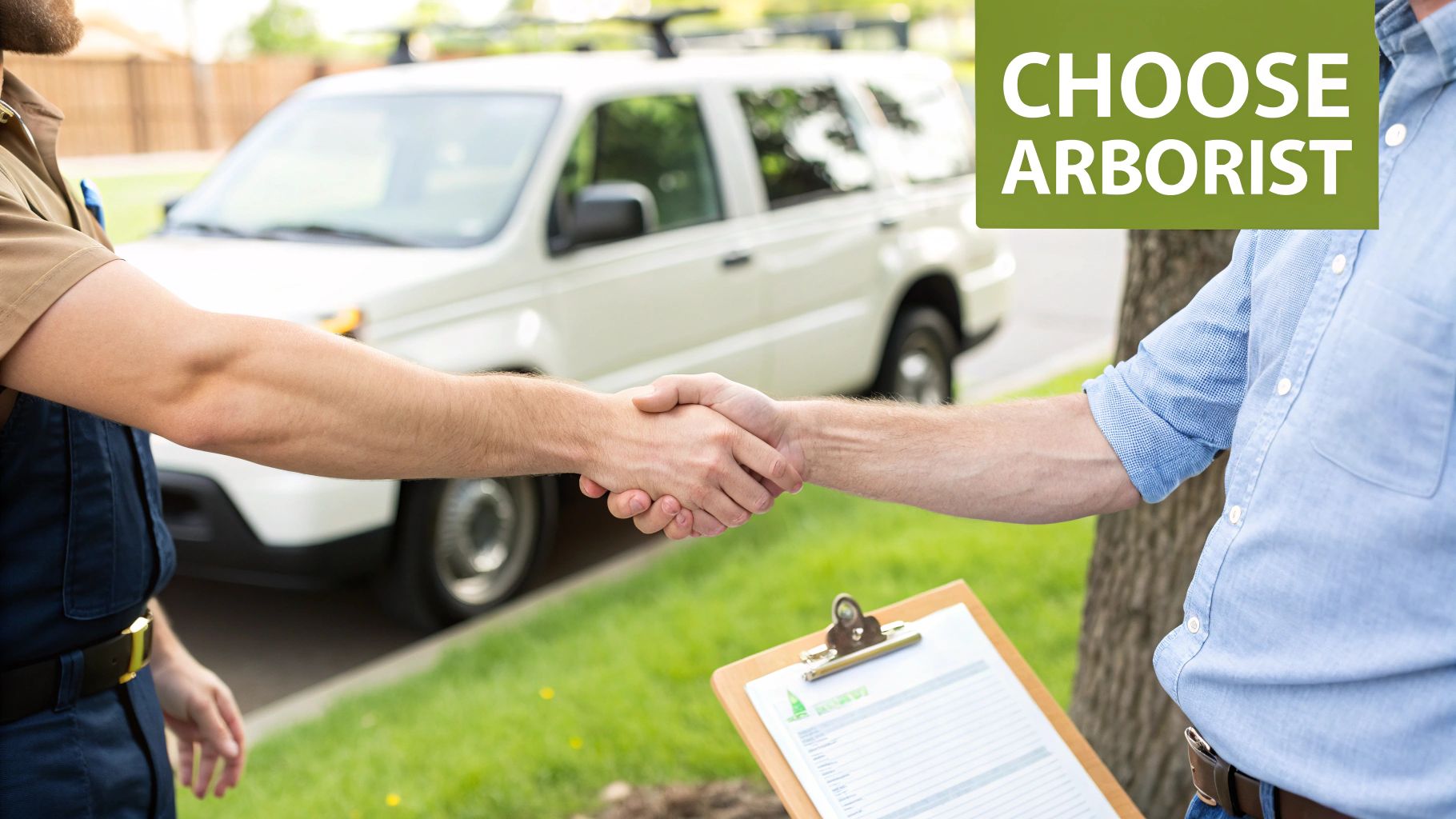
Finding a reliable and qualified arborist on the Central Coast can feel like a tough job, but knowing what to look for makes all the difference. You’re not just hiring someone to cut branches; you're looking for a professional who prioritises the long-term health of your trees, the safety of your family, and the integrity of your property over a quick, cheap job.
First things first, check their qualifications. A legitimate arborist must hold, at a bare minimum, a Certificate III in Arboriculture. This is the industry standard that proves they have the formal training to work safely and effectively. Beyond the paperwork, look for a proven track record of local experience—over 25 years in our case. This deep-seated knowledge ensures they understand the specific challenges of our coastal environment, from salty air to sandy soils.
Essential Questions to Ask Before Hiring
When you get a quote, don't be afraid to ask some direct questions. Any professional team worth their salt will be happy to provide clear, confident answers. You should ask if they are fully insured and ask to see a Certificate of Currency for their Public Liability Insurance, which should cover at least $20 million.
Also ask if they work to Australian Standards, where the only acceptable answer is a firm "yes," specifically to AS 4373-2007 for the Pruning of Amenity Trees. Finally, ask if they can help with the council permit. Experienced local arborists know the ins and outs of the rules for Central Coast, Newcastle, and Lake Macquarie councils and can guide you through the process.
Red Flags to Watch Out For
Just as important as knowing what to look for is knowing what to avoid. Be very cautious of anyone who still uses the term "tree lopping." It's an outdated phrase that signals a harmful, shortcut approach to tree care. Another major red flag is a push for a cash-only deal, as this often means they’re cutting corners on insurance, taxes, or proper business registration, which puts you at serious risk.
A key indicator of professionalism is reliability. Our ‘On Time, Every Time’ promise isn't just a slogan; it’s our commitment to respecting your schedule and delivering dependable service. A trustworthy Central Coast arborist will always provide a written quote, show up when they say they will, and leave your property immaculate. When researching arborists, it's helpful to understand how many reputable businesses ensure they are easily found online, often utilizing proven local SEO strategies for home services.
Got Questions About Tree Pruning? We've Got Answers.
With over 25+ years looking after trees on the Central Coast, we’ve heard just about every question under the sun. Here are some of the most common things property owners from Newcastle to Lake Macquarie ask us, with straight-to-the-point answers.
What is the best time of year to prune trees on the Central Coast?
While we can prune for safety any day of the year, the ideal time really comes down to the tree itself. Winter is a fantastic time to work on many deciduous trees – when they're bare, their structure is laid out like a roadmap, making it easy to see exactly what needs to go. For flowering beauties like jacarandas, it’s a different story. You'll want to wait until just after they've finished their big show for the year.
But here’s the most important rule: any dead, broken, or hazardous branches need to be dealt with immediately, no matter what the calendar says. Our qualified arborists can give you tailored advice for the specific trees in your Terrigal or Gosford yard, ensuring we time the prune for robust health and minimal stress.
How can I tell if my tree needs pruning?
Start by looking for the obvious red flags. Deadwood, broken limbs, and hanging branches are clear signs, especially after one of our coastal storms rolls through. Another classic giveaway is branches that are crossing over and rubbing against each other, which creates wounds that invite pests and disease.
Also, take a step back and look at the bigger picture. Are limbs getting a bit too friendly with your roof or the powerlines? Has the canopy become so thick that your lawn underneath is starved of light and air? If you’re nodding along to any of these, it's a good time to get a professional assessment for tree pruning central coast nsw.
What do I need to do before pruning on a strata property?
If you're in a strata complex, your first port of call is always the body corporate or your strata manager. Trees on common property are the responsibility of the owners' corporation, and you absolutely must have their approval before any work begins. They’ll often have a list of pre-approved, fully insured arborists they prefer to work with.
Even if a tree is tucked away in your private courtyard in a complex in Erina, don't assume you have free rein. The scheme's by-laws can still have specific rules about landscaping and tree work. A quick chat with your strata manager is crucial to make sure you're following the correct process and avoiding any headaches down the line.
Ready to take the next step in caring for your trees? The team at Treecorp Solutions offers free, no-obligation property assessments to help you make the best decision for your home or business. https://www.treecorpsolutions.com.au