When to prune plum trees in Australia all comes down to one crucial detail: the variety. For European plums, you'll need to prune in winter (June-August) while the tree is dormant. But for the popular Japanese plums, you must wait until summer, just after harvesting the fruit. Getting this timing wrong, as we've seen over our 25+ years as arborists on the Central Coast, can mean losing next year's crop or even harming your tree. Let us walk you through the why and when for our local area.
Your Quick Guide to Pruning Plum Trees in Our Region
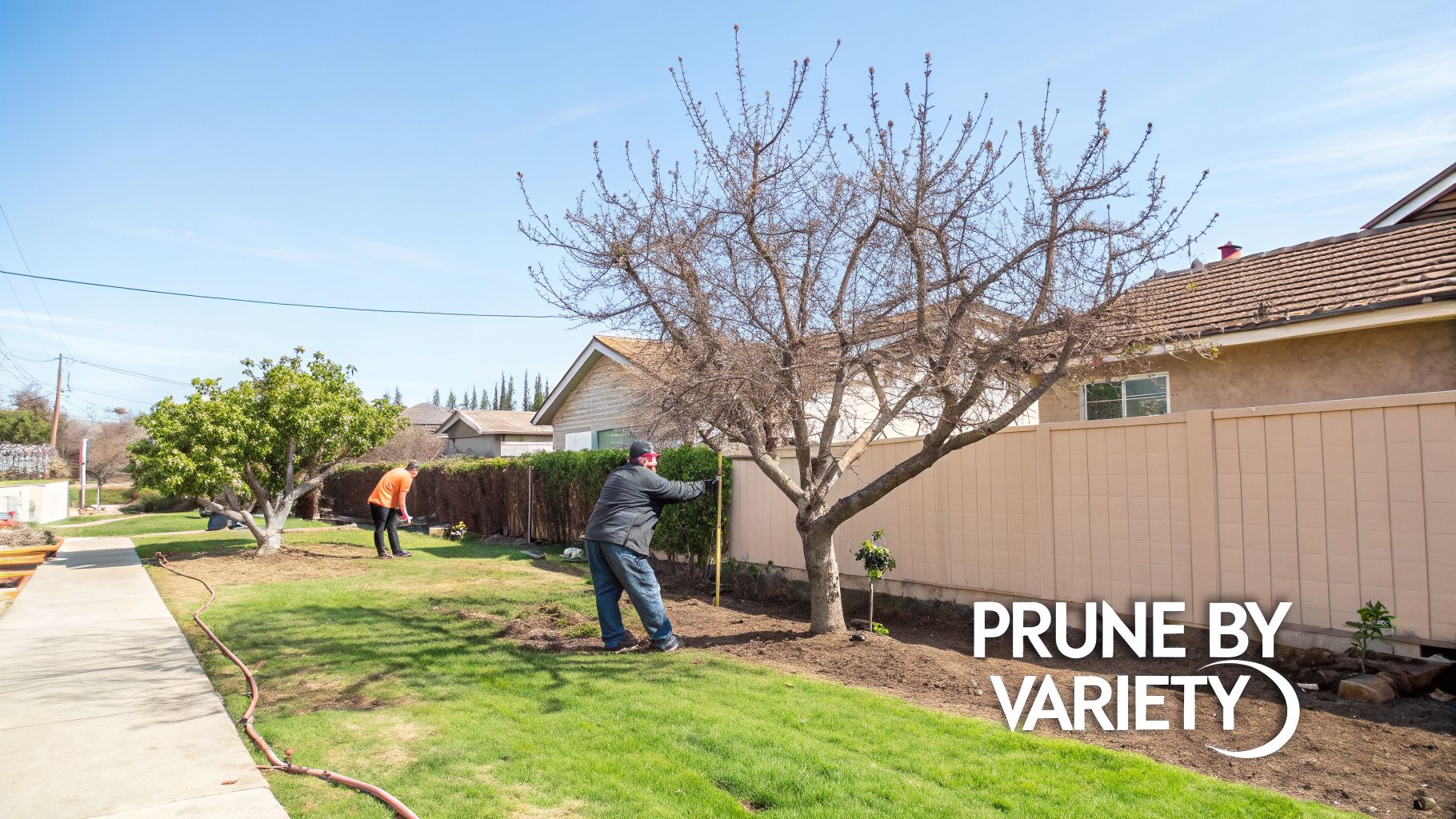
Getting the timing right for pruning is one of the most common questions we get from homeowners across the Central Coast and Newcastle. It’s a simple question with a surprisingly important answer. Making the wrong cut at the wrong time can mean no fruit for a year or, even worse, opening your beautiful plum tree up to disease.
The two main types of plums—European and Japanese—have completely different schedules, and as your local arborists, we want you to have the right advice.
Why Timing Is So Critical
With over 25 years of hands-on experience as arborists in this area, we've seen first-hand what happens when the timing is off.
Imagine you have a 'Santa Rosa' plum (a Japanese variety) in your Terrigal backyard. If you prune it heavily in July, you’re cutting away all the one-year-old wood that was set to produce next season's fruit. You’ve essentially sacrificed your entire harvest. We've seen this happen in suburbs from Woy Woy to Wyong, and it's always a disappointing outcome for the property owner.
On the other hand, if you have a 'Prune d'Agen' (a European variety) on your property in Gosford, winter is the perfect time for structural pruning. The tree is dormant, so the cuts are far less stressful, and the risk of disease is much lower. Pruning these in summer can make them vulnerable to nasty fungal diseases like Silver Leaf, which is a real problem in our humid coastal climate.
Our Pro Tip: The core difference is where the fruit grows. Japanese plums fruit on last year's new growth, while European plums fruit on older, established wood. This single fact dictates the entire pruning schedule.
To help you get it right, here’s a quick reference for our local climate.
Plum Pruning Calendar for the Central Coast, Newcastle & Lake Macquarie
This simple calendar will help you determine the ideal time to prune your specific plum tree, whether you're in Adamstown, Bateau Bay or anywhere in between.
| Plum Variety Type | Primary Pruning Season | Best Months for Pruning | Main Goal of Pruning |
|---|---|---|---|
| Japanese Plums (e.g., Santa Rosa, Mariposa) | Summer (Post-Harvest) | Late January – March | Remove old, unproductive wood and maintain an open shape. This encourages new growth for next year's fruit. |
| European Plums (e.g., Prune d'Agen, Coe's Golden Drop) | Winter (Dormancy) | June – August | Shape the tree's structure, remove crossing branches, and improve air circulation before the growing season starts. |
Remember, this calendar is a guide. Always check that your tree has finished fruiting (for Japanese types) or is fully dormant (for European types) before you start.
This distinction is crucial for a healthy, productive tree. For more general advice, you can learn about the best time to trim trees in our detailed guide. Correct timing isn't just about fruit; it’s about managing tree health and preventing unnecessary stress.
For another perspective, this guide to pruning plum trees in New Zealand shares similar principles that work well in temperate climates like ours. Knowing your specific tree variety is always the first step toward a bountiful harvest and a strong, beautiful tree in your garden.
Winter Pruning for European Plums
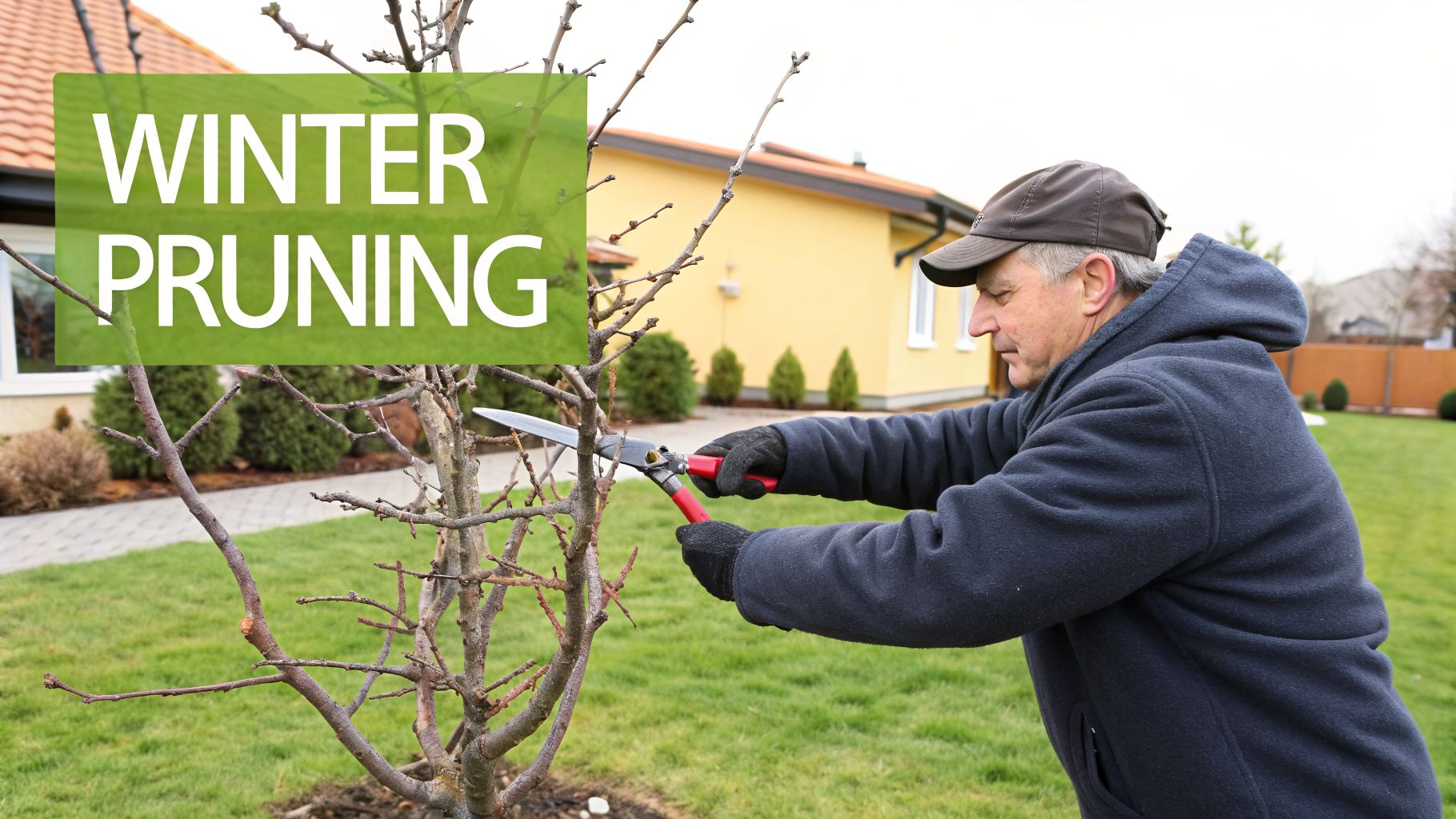
When most of us picture pruning, we think of a crisp winter’s day and a tree with bare branches. For European plum varieties like the 'Prune d'Agen' or 'Coe's Golden Drop'—staples in gardens from Wyong to Newcastle—that classic image is spot on. Winter is the time for major structural work.
Your tree is dormant, which means all its energy is safely stored down in the roots. Pruning now is far less of a shock to the system, allowing the tree to heal and then burst into healthy new growth when spring arrives. This is the approach we take for all our European plum pruning jobs.
Why Winter is the Safest Time
The single biggest reason we prune these varieties in winter comes down to one thing: disease prevention.
Fungal diseases, especially the destructive Silver Leaf, absolutely love fresh pruning wounds exposed to damp, mild weather. In areas like The Entrance or along the shores of Lake Macquarie, where coastal humidity can hang around, cutting at the wrong time is practically rolling out the welcome mat for pathogens.
Here in the temperate climate of coastal New South Wales, the ideal window is during the winter dormant season, typically from June to August. The sap flow is minimal, which dramatically lowers the disease risk. The cold, dry winter air gives those fresh cuts a chance to dry out and start healing before harmful spores get a foothold. For strata complexes and commercial properties where trees are a long-term asset, managing this risk is a no-brainer.
The Goals of a Professional Winter Prune
When our qualified arborists show up for a winter prune, we aren’t just snipping branches at random. We have a clear plan designed to make the tree safe, healthy, and productive for years to come. You could say we're setting the blueprint for the year's growth.
First, we focus on building a strong framework. Our first job is to create a solid, well-spaced structure that can actually support a heavy crop of fruit without branches snapping. We also meticulously scout out and remove any branches that are Dead, Damaged, or Diseased, a critical step for tree health.
Finally, we thin out any branches that cross over or rub against each other. These create wounds and block crucial sunlight from getting into the centre of the tree.
Expert Insight: Good airflow through the canopy is your best defence against fungal problems. An open, vase-like structure allows morning dew and rain to dry off quickly, which is critical in the humid conditions we often see in suburbs from Warners Bay to Tuggerah.
How We Approach Structural Pruning
Let’s imagine a large, established European plum tree in a shared garden at a strata complex in Belmont. It hasn't been touched in years and is now a tangled mess, with dead limbs hanging overhead. This is a classic scenario we see all the time.
Our first step is always a thorough assessment, guided by Australian Standards. We identify the main structural limbs—the tree's "skeleton"—and decide which ones will form a strong future. Using our specialised, sterilised saws and loppers, we make clean, precise cuts just outside the branch collar. This is the swollen ring where a branch joins the trunk, and cutting here allows the tree to heal the wound efficiently without leaving ugly stubs that invite rot.
This isn’t just about the tree's health; it’s about safety. Those wild winter storms with their strong Central Coast winds can easily snap weak or dead branches, posing a real risk to people and property below. Our professional approach, backed by $20M public liability insurance, guarantees the job is done safely and your tree is structurally sound. For a more detailed breakdown of our methods, check out our guide on professional tree pruning services on the Central Coast.
Summer Pruning for Japanese Plums
While reaching for the pruning shears in winter feels like the traditional thing to do, it's the single biggest mistake you can make with Japanese plum varieties. If you have a 'Santa Rosa' or 'Mariposa' in your yard—and plenty of people from Warners Bay to Woy Woy do—you need to hold off until summer.
It's the golden rule for getting a decent harvest. Japanese plums are a bit different; they produce fruit on the wood that grew last year. So, when you prune them in winter, you’re literally snipping off all the branches that were about to give you fruit. We’ve seen this happen time and time again, leaving homeowners scratching their heads about why their perfectly healthy tree is completely barren.
The Right Time for a Summer Haircut
The absolute best time to prune these varieties is right after you’ve picked the last of the fruit. For most of us on the Central Coast, that’s somewhere between late January and March. Think of it as a 'summer haircut' to thank the tree for its hard work and set it up for the next season.
This post-harvest trim does a few important things. First, it keeps the tree’s size and shape in check. Japanese plums can grow with incredible vigour, throwing out long, upright 'water shoots' that won't bear fruit and just clog up the canopy. A summer prune gets rid of this unproductive growth, pushing the tree’s energy where it’s needed most.
Why It Matters: A summer prune is all about redirecting the tree's energy. Instead of putting resources into wild, leafy growth, the tree can focus on developing strong, healthy flower buds for the following year. This is what lays the groundwork for a bumper crop next season.
Letting the Sunshine In
One of the greatest benefits of summer pruning is simply letting more light into the tree. When the canopy is dense and overcrowded, it shades its own fruit, which can lead to uneven ripening and lower-quality plums. By thinning it out, you allow sunlight to hit those inner and lower branches.
This not only helps ripen any remaining fruit but is crucial for encouraging new fruiting wood to develop for the future. A well-timed summer prune is a clear example of how critical timing is for a successful harvest.
Reducing Disease Risk in Our Coastal Climate
Another vital reason for summer pruning is managing disease. Stone fruits are particularly vulnerable to a nasty fungal disease called bacterial canker, which often gets in through fresh pruning cuts. This pathogen thrives in the cool, damp conditions we get in autumn and winter.
For those of us in humid suburbs like Erina, Kariong, or anywhere around Lake Macquarie, pruning in summer is a no-brainer. The weather is warm and dry, allowing the cuts to heal over quickly. This fast healing creates a natural seal, drastically shortening the time bacterial spores have to infect the tree. It's a proactive step that's far more effective than trying to fight an infection once it's already taken hold.
If you're wondering about the best approach for your other trees, our guide on the best time to trim trees offers a fantastic overview for various species.
Essential Pruning Techniques for a Healthy Plum Tree
Knowing when to prune your plum tree is half the battle. The other half is knowing exactly how to make the right cuts to encourage a healthy, productive tree for years to come. This isn't just about hacking off branches; it's about purposefully shaping the tree to get the best possible fruit.
For almost every plum tree we work on, especially here on the Central Coast, we aim for an 'open vase' shape. Picture a wine glass. We achieve this by removing the central, main trunk and encouraging three to five strong branches to grow out and up, creating a hollow centre.
Why We Aim for an ‘Open Vase’ Shape
Think of a dense, overgrown tree as a house with all the curtains drawn. Sunlight and air can't get in, which means fruit struggles to ripen. Even worse, it creates the perfect damp, shady environment for fungal diseases to take hold—a real problem with the coastal humidity around Lake Macquarie and Newcastle.
An open structure completely changes the game. It lets that precious sunlight penetrate deep into the canopy. This doesn't just ripen the plums you have; it kick-starts the growth of new fruiting spurs for next year's harvest. It’s a simple concept that has a massive impact on your crop.
This is especially true for Japanese plums, where a good summer prune after harvesting is all about maintaining this open, sun-loving shape.
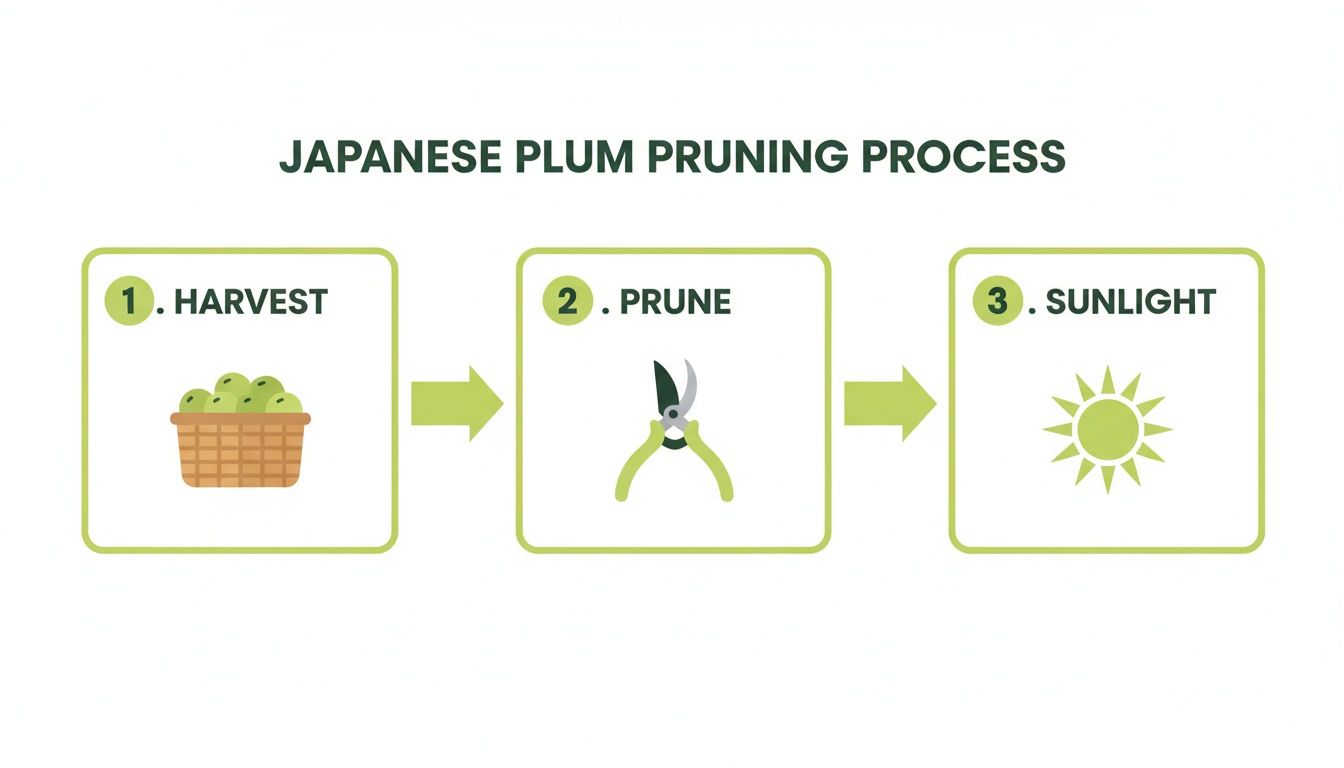
You can see how the process flows directly from harvesting to pruning, all to get that sunlight back into the tree for next season.
Making the Right Cut
Knowing where to cut is what separates a helpful trim from a harmful hack job. After 25 years in the field, we’ve learned that making cuts a tree can heal from quickly is paramount.
Here are the non-negotiables we follow on every single job:
- Cut to an Outward-Facing Bud: When you’re shortening a branch, find a bud that’s pointing away from the tree’s centre. Make your cut on a slight angle about 6mm above it. This simple trick forces new growth to go outwards, maintaining that open shape.
- Find the Branch Collar: Never, ever cut a branch flush against the trunk. Look for the slightly swollen, wrinkly area where the branch joins the trunk—that’s the branch collar. You must cut just outside this line, leaving the collar intact. It contains all the specialised cells the tree needs to seal the wound and prevent rot.
- Leave No Stubs: Leaving a little stub of a branch behind is a recipe for disaster. The tree can't heal over it, and that dead wood becomes an open door for pests and diseases to march right into the heart of your tree.
Our Pro Tip: We live by this rule: always use sharp, clean tools. A dull blade doesn't cut; it crushes wood fibres, leaving a jagged wound that’s slow to heal and prone to infection. We sterilise our saws and secateurs between every tree to stop the spread of disease.
Fruiting Spurs vs. Water Shoots
You also need to know what you’re looking at before you make a cut. On a plum tree, there are two key types of growth to identify.
First, you have fruiting spurs. These are the money makers. They’re short, often knobbly or wrinkly-looking side shoots that produce your fruit year after year. You'll want to protect these!
Then you have water shoots. These are the thieves. They are vigorous, long, straight shoots that rocket skyward, usually from the main branches. They suck energy from the tree, produce little to no fruit, and clog up the canopy. These need to go. Learning to spot the difference is crucial for a successful prune. To get a better feel for what a qualified arborist does, you can read more about the most popular tree pruning techniques we apply in different scenarios.
When to Call a Professional Arborist for Your Plum Tree
While giving your plum tree a light tidy-up can be a satisfying weekend job, there are definite moments when DIY just isn’t the best or safest choice. Knowing when to put down the secateurs and pick up the phone is just as important as knowing the right season to prune. It’s all about protecting your tree, your property, and yourself.
After more than 25 years as arborists working across the Central Coast and Newcastle, we've seen nearly every situation you can imagine. The line between a simple trim and a job needing our expertise often comes down to three things: height, hazards, and the tree's health.
Safety First When Working at Height or Near Hazards
The moment your feet need to leave the ground, the risk factor skyrockets. Balancing on a wobbly ladder with a saw in hand is a recipe for disaster. This is especially true if you’re trying to tackle a big, overgrown plum tree that hasn't seen a proper prune in years.
Here's our non-negotiable rule: any work that requires climbing or ladders should be handled by a qualified arborist. We use professional-grade harnesses and gear that meet strict Australian WHS legislation, making sure the job gets done without anyone getting hurt.
The same goes for trees growing near any kind of structure. Picture a plum tree right up against your house in Gosford, dropping branches on the roof, or leaning precariously over the neighbour’s fence in Warners Bay. One wrong cut could cause thousands of dollars in damage. It's precisely why we carry $20M in public liability insurance—it gives you complete peace of mind that your assets are covered.
When the Tree Shows Signs of Distress or Disease
A healthy plum tree is a vigorous one, but what if it’s not looking so good? Keep an eye out for red flags like large dead limbs, deep cracks in the trunk, fungus growing from the bark, or significant dieback. These symptoms often point to an underlying structural weakness or advanced disease that a simple prune won't fix.
Trying to cut away large, heavy sections from a compromised tree is extremely dangerous. You simply don't know which parts are stable. In these cases, you need a professional diagnosis from a qualified arborist who can properly assess the problem. We can figure out if the tree can be saved with careful pruning or if removal is the only safe option.
Navigating Council Regulations and Permits
One of the biggest headaches for property owners can be dealing with council rules. Depending on where you live—whether it's under Newcastle's heritage tree protection or within specific Central Coast or Lake Macquarie council zones—you may need a permit to prune or remove a tree of a certain size.
Trying to sort out these applications yourself can be a frustrating and time-consuming rabbit hole. As part of our service, we handle this entire process for you. We know the local regulations inside and out and can manage all the paperwork to secure the necessary approvals, making it a seamless experience for homeowners and property managers alike.
Expert Insight: For strata properties, body corporate approvals add another layer of complexity. We regularly work with strata managers in suburbs like The Entrance and Belmont to provide detailed quotes, risk assessments, and compliance documents. This ensures all stakeholders are informed and all work is approved before we even start.
The Benefits of Professional Shaping and Pruning
Ultimately, calling in a professional is about getting the best long-term outcome for your tree. Incorrect pruning doesn't just look bad; it can lead to a host of problems down the track, reducing fruit and making the tree unsafe.
A qualified arborist ensures every single cut is made to promote healthy growth and a strong structure. Our team makes sure your plum tree will be safer, more productive, and a beautiful feature of your property for many years to come.
Your Plum Pruning Questions, Answered
Even with the best advice, a few questions always pop up once you're standing in front of your tree, secateurs in hand. With over 25 years of experience looking after trees for homeowners across the Central Coast, Newcastle, and Lake Macquarie, we’ve heard just about all of them. Here are the answers to the most common queries we get.
How Can I Tell if I Have a European or Japanese Plum Tree?
This is the big one, because getting this right decides your entire pruning schedule for the year. The two types are quite different.
Japanese plums, like the popular 'Santa Rosa' or 'Mariposa' varieties, tend to have that classic large, round, super-juicy fruit. They're also the first to burst into flower in early spring.
European plums, such as 'Prune d'Agen' or 'President', are usually smaller and more oval-shaped with firmer flesh – perfect for cooking. They flower a bit later than their Japanese cousins. If you're still scratching your head, don't worry. A quick photo sent over to a qualified arborist can usually solve the mystery in minutes.
Should I Paint or Seal Pruning Cuts on My Plum Tree?
We get asked this a lot, and the answer from any reputable arborist is a definite no. For years, the thinking was that sealing pruning wounds with paint or tar gave the tree protection. We now know from modern arboriculture that this practice actually causes more problems than it solves.
Expert Insight: Sealing a fresh cut traps moisture and fungal spores right against the wound. This creates the perfect breeding ground for disease and actually gets in the way of the tree’s natural healing process.
A clean, sharp cut made at the right time of year is the best thing you can do. Your tree will naturally form a protective layer of 'callus' tissue over the wound, which is far more effective than any man-made sealant. It's a non-negotiable for all our pruning jobs in Newcastle, Lake Macquarie, and the Central Coast – we let the tree's natural defences take the lead.
How Much Can I Safely Prune from My Plum Tree at Once?
That's a fantastic question, as it's so easy to get carried away. The golden rule is to never remove more than 25-30% of the tree's live canopy in a single year. Taking off more than that can send the tree into a state of shock.
When a tree is over-pruned, its survival instinct goes into overdrive. It panics, sending out a huge flush of weak, vertical shoots called 'water shoots'. This fast, messy growth drains energy that should be going into making fruit, and these shoots won't produce any plums themselves.
If you're dealing with a really large, overgrown tree on your property in a suburb like Erina or Kariong, the safest bet is a gradual reduction. A qualified arborist can map out a multi-year plan to reshape the tree over two or three seasons, ensuring it stays healthy and productive for the long haul.
What Should I Do with the Branches After Pruning?
You've done the hard work, and now there’s a massive pile of branches on the lawn. You've got a couple of great, eco-friendly options.
If the branches are free from any obvious disease, running them through a woodchipper creates a brilliant, nutrient-rich mulch. You can spread this around your garden beds to hold in moisture and keep weeds down.
Smaller twigs and branches can be cut down to fit in your green waste bin. But for a big pruning job, you can quickly end up with more debris than you can handle on a standard suburban block.
When Treecorp Solutions takes care of your pruning, a full site clean-up is always part of our service. We bring our commercial-grade woodchipper to every job, process all the branches right there, and haul all the debris away. We pride ourselves on being "On Time, Every Time" and always leaving your property even tidier than we found it.
If you’re facing a tricky pruning job or just want some expert advice on your plum tree, the Treecorp Solutions team is here to help. Request a free quote online or give us a call for a friendly chat about your tree care needs.