So, how much does it actually cost to get your trees pruned? The short answer is: it depends.
Let's get straight to it: the tree pruning service cost isn't a simple, flat fee. Think of it like a home renovation—the final price depends entirely on the scope of the job. A small ornamental tree in an open front yard in Gosford is a very different project from managing a large, overhanging gum tree in a tight Terrigal backyard. With over 25 years of experience, we're here to help you understand the factors that shape your quote.
What You Can Expect to Pay for Tree Pruning
When you’re trying to budget for tree maintenance, having a ballpark figure is the best place to start. Every job is unique, of course, but after more than 25 years of working with property owners across the Central Coast, Newcastle, and Lake Macquarie, we've got a pretty good handle on typical price ranges.
These figures will give you a clear starting point for understanding the investment required to keep your property safe and your trees healthy for the long run.
Estimated Tree Pruning Costs by Tree Size
The single biggest factor that shapes a quote is the tree's size. It dictates the time, equipment, and crew needed for the job. A small, accessible tree might only need one arborist, whereas a huge, complex tree often requires a full team and specialised machinery to work safely and efficiently.
To help you plan, here's a quick reference for what you might expect to pay in our local service areas.
| Tree Size and Common Type | Typical Height | Estimated Cost Range (AUD) |
|---|---|---|
| Small (e.g., Lilly Pilly, Crepe Myrtle) | Up to 5 metres | $350 – $750 |
| Medium (e.g., Jacaranda, Banksia) | 5 to 10 metres | $750 – $1,500 |
| Large (e.g., Gum Tree, Norfolk Pine) | 10 to 20 metres+ | $1,500 – $3,500+ |
Keep in mind these are indicative ranges. The final quote will always depend on the specifics of your job, which is why a proper on-site inspection is so crucial.
The chart below gives you another way to visualise how these costs scale up.
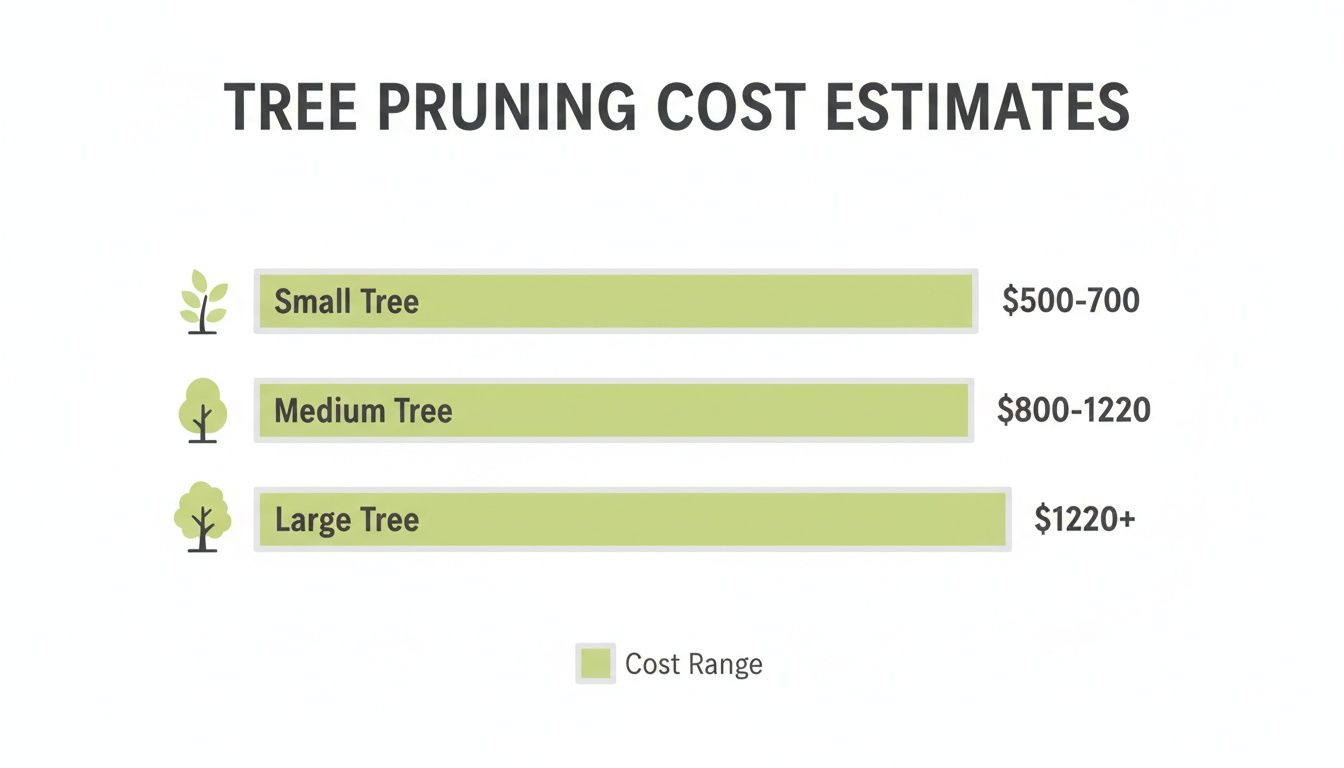
As you can see, the price climbs significantly with the tree's size and complexity. A smaller job on a tree under five metres is quite affordable, while managing a large, mature tree is a more substantial investment in safety and property care. This is why a detailed, on-site assessment is so important.
Key Takeaway: The size of your tree is the single biggest predictor of your pruning cost. A taller tree with a wider canopy requires more labour, advanced safety measures, and specialised equipment, all of which are factored into your final quote.
For a deeper dive into all the elements that make up a final price, you might be interested in our guide on how much an arborist costs. It explains how factors like accessibility and the specific type of pruning work influence the quote our team provides during your free property inspection.
Key Factors That Influence Your Pruning Quote
Every tree is different, and so is every property. That’s why a generic price list just doesn’t cut it. To give you an accurate quote, one of our qualified arborists needs to see the job firsthand. The price ranges are a good starting point, but the final tree pruning service cost really hinges on the unique challenges of your situation.
Imagine the difference between pruning a sprawling Jacaranda in an open yard in Warners Bay versus a towering Norfolk Pine leaning precariously over a neighbour's fence in Gorokan. They're worlds apart. Each one demands a completely different strategy, which in turn affects the time, crew size, and equipment we need to bring.
Let’s break down the key variables our arborists look at on-site.
Tree Size and Canopy Spread
This one’s the most obvious. A bigger tree simply takes more work. It’s not just about how tall it is, but also the spread and density of its canopy. A massive, bushy tree means more branches to cut, more climbing and repositioning for our crew, and a lot more green waste to chip and haul away.
A mature gum tree could easily be a full-day job for a crew of two or three, whereas a small ornamental tree in the front garden might only take a couple of hours.
Property Access and Location
How easily we can get to your tree is a massive factor in the cost. A tree located right next to the driveway in Erina is a walk in the park compared to one on a steep, slippery block behind a pool at The Entrance. Good access means we can get our chipper and other gear right up to the tree, which makes the whole job faster and more efficient.
Here are a few common access headaches we run into:
- Steep or Uneven Ground: Working on slopes requires extra safety gear and makes lugging heavy equipment a real chore.
- Proximity to Structures: If your tree is hanging over the roof, a shed, or your prize-winning rose bushes, we need to use careful rigging techniques to lower each branch down safely. No shortcuts.
- Nearby Hazards: Powerlines are a huge one. Working near live wires is serious business that requires specialised training and sometimes coordination with energy providers, adding another layer of complexity.
- Limited Entry: Narrow side gates or backyards with no vehicle access mean everything—tools, ropes, and all the branches—has to be carried out by hand. That extra labour time adds up.
The Scope of the Pruning Work
"Pruning" can mean a lot of things. What your tree actually needs done is a major driver of the price. Are we just giving it a quick tidy-up or a major structural overhaul?
For instance, simply removing dead or broken branches (what we call deadwooding) is a relatively straightforward safety task. On the other hand, a full canopy reduction to make the tree smaller is a much more technical job. It takes a skilled hand to reduce the size without harming the tree’s long-term health and structure. We always take the time to walk you through what your tree needs so you know exactly what we’re doing and why.
If you're curious about the different types of jobs our team tackles every day, our guide on what qualified arborists do is a great read.
The Health and Condition of the Tree
A tree’s current health also plays a big role. A strong, healthy tree is predictable and much safer to work on. But if a tree is suffering from disease, pests, or has weak, cracking limbs, it becomes a high-risk job.
Safety First: A tree with significant decay or weak branch unions requires extreme care. Our arborists must use advanced climbing and rigging techniques to guarantee the safety of our crew, your family, and your property. That extra level of caution and expertise is naturally reflected in the quote.
We never compromise on safety. Our $20M public liability insurance is there to give you complete peace of mind, especially when we’re dealing with a risky tree. It ensures everyone and everything is fully protected from start to finish.
Why Pruning Small Trees Is a Smart Investment
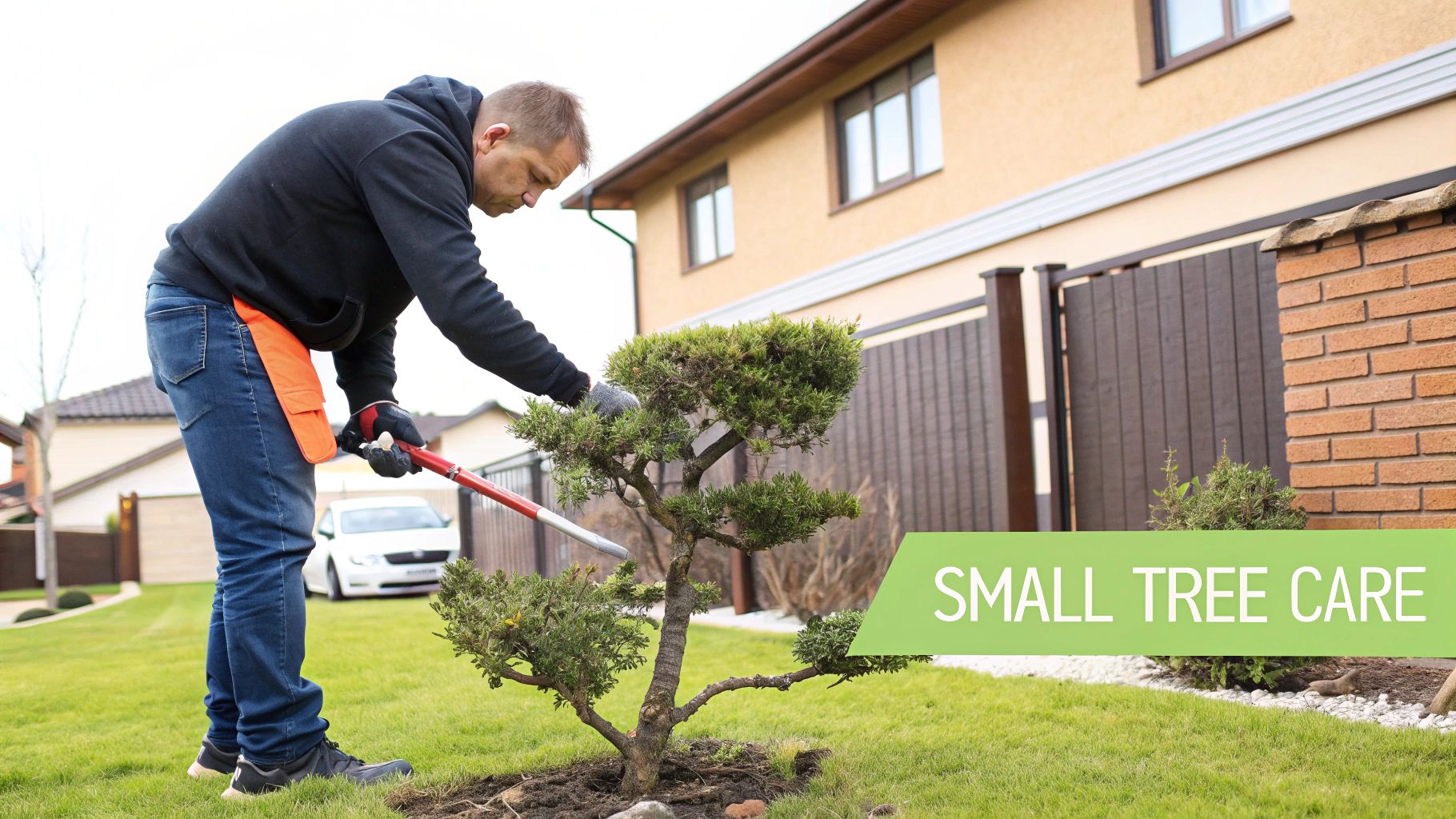
Many homes across the Central Coast and Newcastle feature beautiful smaller trees like Lilly Pillies or Bottlebrush that add wonderful character. They might not seem as intimidating as a towering gum tree, but looking after them properly is a fantastic long-term investment in your property's value and safety.
Pruning these smaller trees is one of our most common jobs. It’s all about proactive care—catching small issues today before they spiral into major headaches tomorrow.
The Benefits of Proactive Care
Let’s imagine you have a lovely Crepe Myrtle in your Woy Woy backyard. Left to its own devices, its branches might start scraping against your roof on windy nights. Or maybe they’ll grow awkwardly over the garden path, creating a sneaky trip hazard.
Professional pruning tackles these problems early on. By carefully shaping the tree, we can improve its structure, encourage more vibrant flowering, and make sure it grows in a way that complements your home, rather than threatening it. This is always far more cost-effective than waiting for a branch to cause real damage.
Here on the NSW Central Coast, the average cost for pruning a small tree (typically up to 5 metres tall) can range from $350 to $750. This price reflects the hands-on work of a qualified arborist who safely climbs and shapes the canopy, all while sticking to strict WHS standards. These jobs often take 1-2 hours and include travel, equipment setup, making precise cuts for tree health, and a full site clean-up afterwards.
This kind of routine maintenance doesn't just keep your garden looking beautiful; it protects your home from damage you can easily prevent. It's a small price for total peace of mind.
A Crucial Task for Strata Properties
This proactive approach is even more critical for strata managers looking after complexes around Wyong or Tuggerah. Neatly maintained trees don't just look good—they significantly boost the aesthetic appeal and perceived value of the entire property, making it more attractive to residents and potential buyers.
More importantly, it’s a matter of safety and liability. Overgrown branches in shared spaces can block walkways, obscure security lighting, or drop debris, creating real risks for everyone living there.
Key Consideration: For body corporates, regular and documented tree maintenance from a qualified arborist is a key part of fulfilling their duty of care. It proves responsible property management and helps minimise the risk of accidents and potential insurance claims.
By keeping smaller trees in check, strata committees ensure their properties remain safe, beautiful, and compliant. You can dive deeper into this by checking out our guide to the benefits of regular tree pruning. Ultimately, consistent care is always smarter—and cheaper—than reacting to an emergency.
Managing Large and Complex Tree Pruning
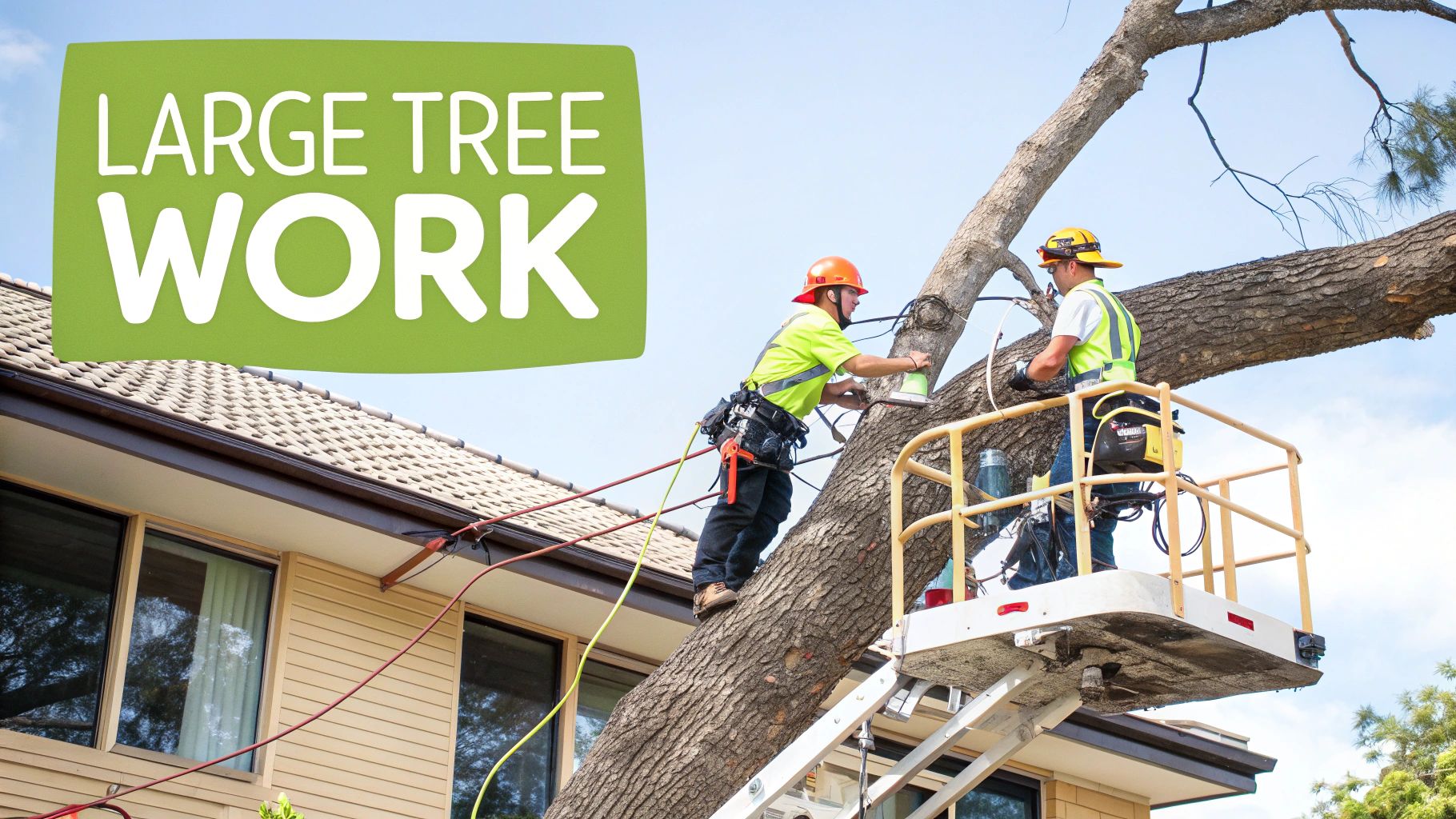
The magnificent, mature trees across Newcastle and Lake Macquarie aren't just local landmarks; they represent a completely different level of challenge and risk. Pruning one of these giants is a world away from trimming a small garden tree. It’s a high-stakes job that absolutely demands specialised skills, advanced equipment, and an unwavering focus on safety.
Imagine that towering gum tree in Warners Bay that’s been dropping heavy branches a little too close to home. This isn't a weekend job for a ladder and a handsaw. Getting it sorted requires a team of qualified arborists, often using an elevated work platform (EWP) or complex climbing techniques just to access the canopy safely.
Specialised Equipment and Safety Protocols
When we're dealing with these large-scale projects, standard tools just don't cut it. Our crews roll up with a full suite of professional gear built for complex, high-risk situations. This frequently includes rigging systems, which let us meticulously lower massive limbs to the ground with total precision—preventing any damage to your roof, garden, or the neighbour's fence.
Safety is, without question, our top priority. Every single complex job kicks off with a detailed risk assessment, sticking to strict WHS legislation. Our $20M public liability insurance is there to give you complete peace of mind, making sure you, your property, and the public are fully protected from the moment we arrive until the job is done.
Key Insight: The higher tree pruning service cost for large trees is a direct reflection of the risk and expertise involved. You're not just paying for someone to cut branches; you're investing in a highly trained crew, specialised machinery, and the comprehensive insurance needed to protect your most valuable asset.
The True Cost of High-Risk Pruning
When we put together a quote for pruning a large tree, the price covers far more than just the hours our arborists spend up in the canopy. It accounts for the entire operation. This includes the skill of a 2-3 person crew working in perfect sync, the use of expensive machinery, and the technical expertise needed to make strategic cuts that protect the tree's health while eliminating the risk.
Large trees over 10 metres, like the mature gums and pines you see all over Newcastle and the Central Coast, can have pruning costs ranging from $1,500 to $3,500 or even more. These high-risk jobs often take a full day and involve multiple certified arborists. While you might see lower national averages for pruning, these complex jobs on large trees make up a huge chunk of industry spending for a reason.
Essential Services for Large Trees
For mature trees, pruning is often all about managing risk, especially with the wild coastal winds we get on the Central Coast. Two of the most critical services we offer for these giants are deadwooding and canopy reduction.
- Deadwooding: This is the process of removing dead, dying, or broken branches from the canopy. These branches are ticking time bombs, ready to fall at any moment and pose a serious threat to anything—or anyone—below.
- Canopy Reduction: Here, we strategically reduce the overall size and weight of the tree's canopy. This makes the tree far less likely to suffer storm damage by letting wind pass through it more easily, drastically lowering the risk of catastrophic failure during a gale.
Navigating these jobs requires a serious level of expertise. You can get a better understanding of the qualifications needed for these advanced assessments in our article on what a Level 5 Arborist does. This kind of knowledge is crucial for making decisions that ensure both the safety of your property and the long-term health of your magnificent trees.
Navigating Council Permits and Hidden Costs
The hands-on work of pruning is just one part of the story. A big, and often forgotten, piece of the total tree pruning service cost comes from sorting out local council rules and dealing with any surprises we find along the way. This is where a professional's experience really pays off, saving you from potential fines and unexpected bills.
A lot of homeowners don't realise you can't always just start pruning branches off a tree, especially the big, significant ones. Local councils have rules in place for a good reason—to protect our region's beautiful urban canopy.
Understanding Council Requirements
Let's say you've got a massive, gorgeous Angophora in your Toukley backyard that needs a serious prune. Because it's a prominent native species, Central Coast Council will almost certainly want to see a permit before any major work begins. Likewise, trying to prune a historic tree in a Newcastle conservation area without the green light can land you with a nasty fine.
Each council has its own playbook, and they can be worlds apart:
- Central Coast Council tends to focus on protecting native species and trees in environmentally sensitive spots.
- City of Newcastle has strict protections for trees in heritage conservation zones, so any pruning needs very careful consideration.
- Lake Macquarie City Council is all about balancing new development with keeping our environment healthy, with clear rules on what you can and can’t do without a permit.
Figuring out if your job needs a permit can feel like navigating a maze, but it’s a step you absolutely can't skip. For a deep dive into the local rules, check out our detailed guide on council approval for tree removal and pruning. As part of our service, we'll assess your trees, let you know if an application is needed, and can even help manage the whole process for you.
Other Potential Costs to Consider
Beyond the pruning itself, a few other things can pop up that might affect the final price. We believe in being upfront about these possibilities from the get-go, so you have the full picture.
A common one is the need for traffic management. If your tree hangs over a busy road in a suburb like Erina or Charlestown, we may need to organise traffic control to keep our crew and the public safe. This isn't optional—it's a requirement under WHS legislation, and we'll factor it into your quote if it's necessary.
Sometimes, the real story reveals itself once we're up in the canopy. We might discover something that wasn't visible from the ground, like a serious termite infestation or a patch of fungal decay weakening a branch. Dealing with these issues is vital for your tree's health and your family's safety. We will always stop, discuss what we've found, and explain any additional work and costs with you before we go any further. Our job is to solve problems, not create new ones.
How to Get an Accurate and Trustworthy Quote

Choosing the right arborist isn’t just about finding the cheapest price—it’s about investing in your property’s safety and the long-term health of your trees. A trustworthy quote is the first step, and knowing what to look for will help you separate the true professionals from the cowboys.
A detailed, written quote is absolutely non-negotiable. It protects both you and the arborist by creating a clear, professional plan of action for your property. Think of it as a blueprint for the job, not just a number scribbled on a napkin.
What a Professional Quote Includes
A proper quote provides complete transparency. It's a clear sign that the company is organised, accountable, and takes pride in their work.
Every quote we provide includes:
- A clear scope of works: We'll list exactly what pruning will be done, referencing specific trees and outlining the techniques we'll use (e.g., deadwooding, crown reduction).
- Insurance details: You'll see clear proof of our current public liability insurance—we carry a $20M policy for your complete peace of mind.
- Clean-up procedures: We confirm that all green waste will be chipped and removed, leaving your property looking immaculate.
- Total cost and terms: You get a fixed price with GST included, so there are absolutely no hidden surprises when the invoice arrives.
To deliver this level of clarity, many professional services now use software that simplifies estimates, quotes, and invoicing. This helps ensure you get an accurate and easy-to-understand breakdown of costs every time.
Red Flags to Watch For
Unfortunately, not everyone in the industry operates with the same professional standards. One of the biggest red flags is hearing the term "tree lopping." This is an outdated and incredibly harmful practice where branches are cut indiscriminately, which can seriously damage your tree’s health and structure.
Important: Using an unqualified operator who "lops" trees can not only kill the tree over time but may also void your property insurance if their work leads to an accident or damage. Always work with a qualified arborist who practises pruning according to Australian Standards.
Another major warning sign is a quote given over the phone without a site visit. An accurate tree pruning service cost can only be determined after a qualified arborist has physically assessed the tree’s size, health, and accessibility. Anything else is just guesswork.
Questions to Ask Any Arborist
Before you agree to any work, empower yourself by asking a few key questions. A true professional will be happy to provide clear, confident answers.
- Are you a qualified arborist? Look for a minimum of a Certificate III in Arboriculture.
- Can I see a copy of your public liability insurance? Don't just take their word for it; ask to see the certificate of currency.
- Do you work to Australian Standards (AS 4373-2007)? This is the industry bible for the Pruning of Amenity Trees.
Here at Treecorp Solutions, our quoting process is simple and obligation-free. We’ll visit your property, listen to what you need, and provide a detailed written quote you can rely on. It’s all part of our ‘On Time, Every Time’ promise to our clients across the Central Coast, Newcastle, and Lake Macquarie.
Got Questions About Tree Pruning? We've Got Answers.
After more than 25 years serving homeowners across the Central Coast, Newcastle, and Lake Macquarie, we've heard just about every question there is about tree pruning. Here are a few of the most common ones we get asked.
How Often Should My Trees Be Pruned?
This is a great question, and the answer really depends on the tree. For most mature, established trees, a professional prune every 3 to 5 years is a solid guideline.
Younger trees, on the other hand, often need a bit more attention—think every 2 to 3 years. This helps them develop a strong, stable structure that will prevent problems down the road. The tree's species, age, and where it’s planted all play a big role.
Is It Cheaper to Prune Trees in Winter?
Often, yes! Pruning during the dormant season in late autumn or winter can definitely be more budget-friendly. Once a deciduous tree drops its leaves, our arborists can see its entire branch structure clearly.
This clear view makes the job quicker and more efficient, which can mean lower labour costs and a better price on your final tree pruning service cost.
What's the Difference Between Pruning and Lopping?
This is a really important one. Pruning is a science and an art, performed by qualified arborists who follow strict Australian Standards. We make precise, strategic cuts to improve a tree's health, keep it safe, and enhance its natural shape.
"Tree lopping", however, is an outdated and incredibly damaging practice. It involves hacking off branches without any thought for the tree's health, leaving behind ugly, stubby wounds. This kind of work is a gateway for disease and pests, and it can make a tree dangerously unstable. If you hear someone use the word "lopping," it's a major red flag.
Can I Just Prune the Tree Myself and Save Some Money?
For tiny jobs on small, young trees you can easily reach from the ground, a little DIY pruning with the right hand tools is usually fine.
But the moment a ladder or a chainsaw is involved, we strongly advise against it.
A Quick Word on Safety: Working at heights with powerful tools is one of the most dangerous jobs out there. Without proper training, safety gear, and insurance, the risk of a life-altering injury or serious property damage is incredibly high. It's a risk that simply isn't worth the potential savings.
Do I Need to Be Home When You Do the Work?
Not at all. As long as our team can safely access the trees and we've already walked through the job with you during the on-site quote, we're good to go.
We can handle everything while you're at work or out for the day. You’ll just come home to beautifully pruned trees and a property that’s been left neat and tidy.
Ready to find out exactly what your pruning job will cost? The team at Treecorp Solutions provides free, on-site assessments to give you an accurate, no-surprises quote.
Request a Free Quote Online or give us a call for any emergency needs.