We all love the beautiful, mature trees that give our local areas their character. But underground, a different story can be playing out. Those same trees can send out powerful roots that crack driveways, damage foundations, and block pipes—a silent, creeping threat to your biggest asset.
Imagine you have a beautiful jacaranda in your front yard in Toukley. While it looks stunning, its roots might be slowly making their way towards your home's foundations. A root barrier acts like an underground wall, a subtle but firm guide for a tree's root system. It doesn't stop the roots; it just steers them away from trouble, protecting your home's foundation, plumbing, and concrete without harming the tree itself. With over 25 years of experience here on the Central Coast, Newcastle, and Lake Macquarie, we've seen first-hand how effective this preventative solution can be.
Your Guide to Protecting Property from Tree Roots
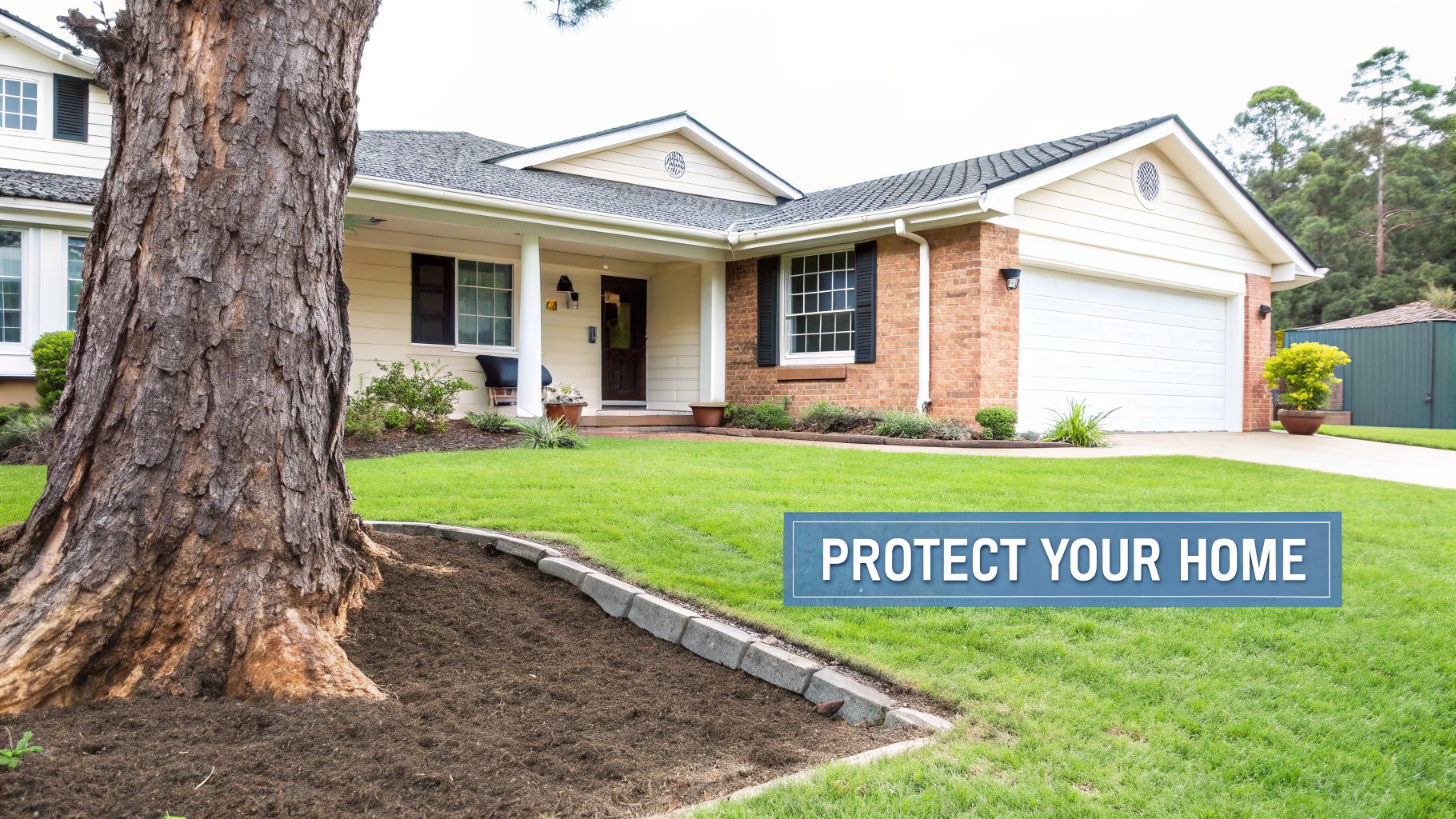
This guide is for any property owner who's noticed the first signs of trouble or wants to prevent it from ever starting. From the magnificent gum trees in Gosford to the sprawling figs in Terrigal, we’ve seen countless cases where roots have caused expensive, disruptive damage. It often happens so slowly you don't even notice it until it’s too late.
A professionally installed tree root barrier is the proactive solution. It’s not about dealing with symptoms like patching up a cracked path year after year; it's about getting to the source of the problem and setting up a permanent defence. It lets you keep the trees you love without the constant worry.
So, what will we cover? This guide breaks down everything you need to know, from how a root barrier works to what to expect during installation. Having this knowledge will help you make an informed decision for your property, whether you're in Umina Beach, Adamstown, or anywhere in between. Of course, prevention is always the best cure. If you're planning new plantings, it's wise to choose your species carefully. You can find out more in our post about trees with non-invasive roots.
Ultimately, managing tree roots is about finding a way to coexist peacefully with the nature that makes our Central Coast and Newcastle neighbourhoods so special. With over 25 years of hands-on experience in this region, our team is here to help you find the right solution to protect your home.
How Tree Roots Actually Damage Your Property
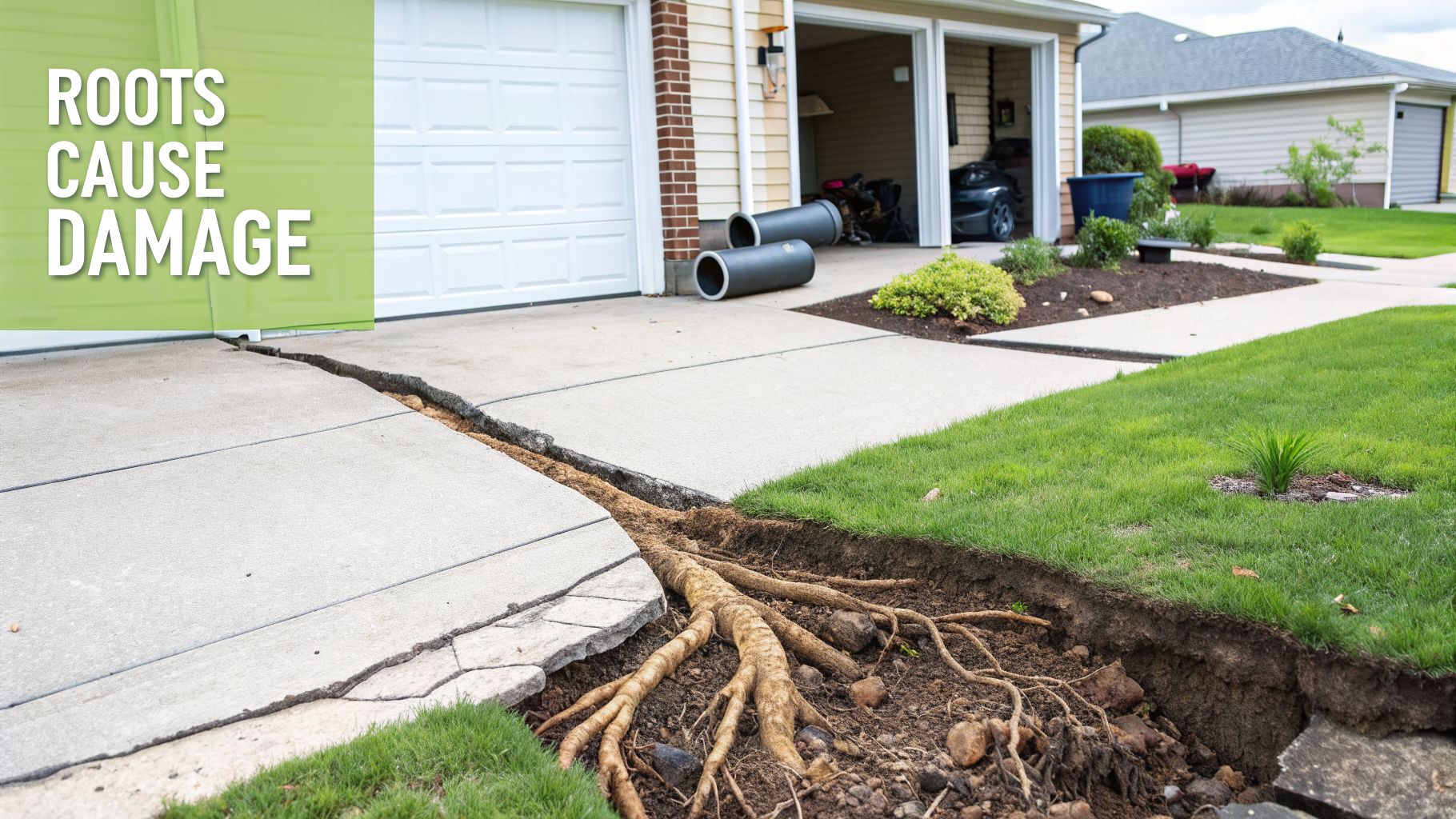
To see why a root barrier for trees is such a valuable tool, you first have to understand what drives a tree to cause damage in the first place. At its core, a tree root system has one simple, powerful mission: find water, air, and nutrients to survive. It's a biological instinct, and roots are incredibly good at finding the path of least resistance to get what they need.
The problem is, the area directly around our homes often provides the perfect target. The soil under your foundation, driveway, or pool deck stays consistently moist compared to the open garden. Even better (for the tree, not you) are your plumbing and sewer lines. A tiny leak can release a constant stream of water and nutrients, essentially sending out a dinner invitation to any nearby roots.
Think about that beautiful Liquidambar near your driveway in Erina or a huge Moreton Bay Fig on a strata property in The Entrance. Their roots are always exploring underground. Once they sense that moisture, they’ll head straight for it, and they have more than enough power to take advantage of the smallest crack in a pipe or slab.
The Mechanics of Root Damage
There’s a common myth that roots act like a jackhammer, forcing their way through solid concrete. The reality is a bit more subtle—they're opportunists. A root will find a tiny, existing hairline crack and simply grow into it.
The real damage comes from what happens next. As that tiny root grows thicker and wider, it exerts a slow, relentless hydraulic pressure from inside the crack. This is what lifts and shatters entire sections of pavement, destabilises retaining walls, and can seriously compromise your home's foundation. In fact, tree roots can lead to major structural issues like foundation cracks and settling, which are never a cheap fix.
A Local Problem: Here on the Central Coast and in Newcastle, our clay-based soils add another layer to the problem. During dry spells, clay shrinks and pulls away from foundations, creating perfect little highways for roots. When the heavy rains come, the soil swells back up, adding its own pressure on top of the growing roots.
Common Hotspots for Root Intrusion
Some parts of your property are far more vulnerable than others. If you know where to keep an eye out, you can often catch these problems before they turn into a nightmare.
- Sewer and Stormwater Pipes: Older terracotta pipes are famous for cracking at the joints, giving roots an open invitation to the water inside.
- Concrete Driveways and Paths: The constant stress from cars and natural ground movement creates small fissures that roots just love to explore and widen.
- Building Foundations: The soil right next to your house slab is often the most consistently damp spot on the property, making it a prime target.
- Retaining Walls and Pools: The immense pressure from a growing root system can easily bow and crack retaining walls or even damage a pool shell.
This is where a root barrier steps in. It acts as a permanent, impenetrable shield that physically blocks and redirects those searching roots, forcing them to grow down and away from your valuable assets. It's a proactive solution that fixes the cause, not just the symptom. Of course, if the tree has already been taken down, you might be dealing with a different challenge. You can learn more about handling the remaining stump and roots in our guide to tree removal from the root.
Choosing the Right Type of Root Barrier
Picking the right root barrier for your property isn't a one-size-fits-all situation. The best choice really hinges on your specific goals, the kind of tree you're dealing with, and exactly what you need to protect.
Think of it like choosing a fence. You wouldn't use a flimsy garden border to contain a big dog, nor would you build a fortress just to keep rabbits out of your veggie patch. It’s all about matching the material and the method to the job at hand.
With over 25 years of experience working on Central Coast properties, we’ve seen pretty much everything that works—and what definitely doesn't. The most common and effective solutions usually fall into a few key categories, each with its own strengths for different scenarios. Let’s break them down so you can get a clearer picture.
Solid Panel Barriers
Solid panel barriers are the heavy-duty option in root management. These are typically made from a tough, recycled material called high-density polyethylene (HDPE). We install these rigid panels vertically in a trench, creating an impenetrable underground wall that forces roots to either dive deeper or change direction entirely.
Imagine a big gum tree with roots making a beeline for your house slab in a suburb like Woy Woy, where the sandy soil lets them travel easily. This is the perfect job for a deep, rigid HDPE barrier. Its sheer strength and longevity make it our go-to for protecting high-value assets like building foundations, swimming pools, and concrete retaining walls.
Flexible Sheet Barriers
Just as the name implies, flexible sheet barriers offer a lot more versatility. Made from materials like polypropylene, they can be easily shaped around garden beds, curved pathways, or underground pipes. While they aren't as rigid as HDPE panels, they're still incredibly tough and do a great job of redirecting roots from smaller to medium-sized trees and shrubs.
So, if you're trying to stop a smaller ornamental tree in Belmont from invading your neighbour's garden bed, a flexible barrier is an ideal and more budget-friendly choice. It gives you reliable protection for less critical infrastructure without the heavy-duty installation that solid panels demand.
Specialised Root Barriers
Beyond the standard physical barriers, there are also a few specialised options out there. Some products come impregnated with a slow-release chemical called Trifluralin. This creates a non-lethal "no-go zone" for roots right at the barrier line. It doesn't harm the tree itself but effectively prunes the root tips as they get close, stopping them in their tracks.
These are often used in delicate situations where you want to minimise excavation or need to protect a dense network of utility lines. Deciding if this is the right approach takes a solid understanding of tree biology, which is where getting professional advice really pays off. You can learn more about what a qualified arborist does in our detailed guide.
Our Professional Recommendation: For most residential and commercial jobs across the Central Coast, Newcastle, and Lake Macquarie areas, we find that HDPE solid panel barriers offer the best long-term value and protection. Their durability is second to none, ensuring that once the job is done, it's done for good.
Ultimately, choosing the right material is a crucial step. Matching the barrier's strength to the tree's potential for root growth is the key to a long-lasting, effective solution.
What to Expect During Professional Installation
You can have the best root barrier material on the market, but it’s only as good as the team putting it in the ground. This is a job where precision is everything. A barrier that’s too shallow, has gaps at the seams, or damages crucial roots during the dig can end up being a complete waste of time and money.
At Treecorp Solutions, we’ve refined our installation into a strict, methodical process. It’s the only way to guarantee the job is done right, keeping your property safe and your tree healthy.
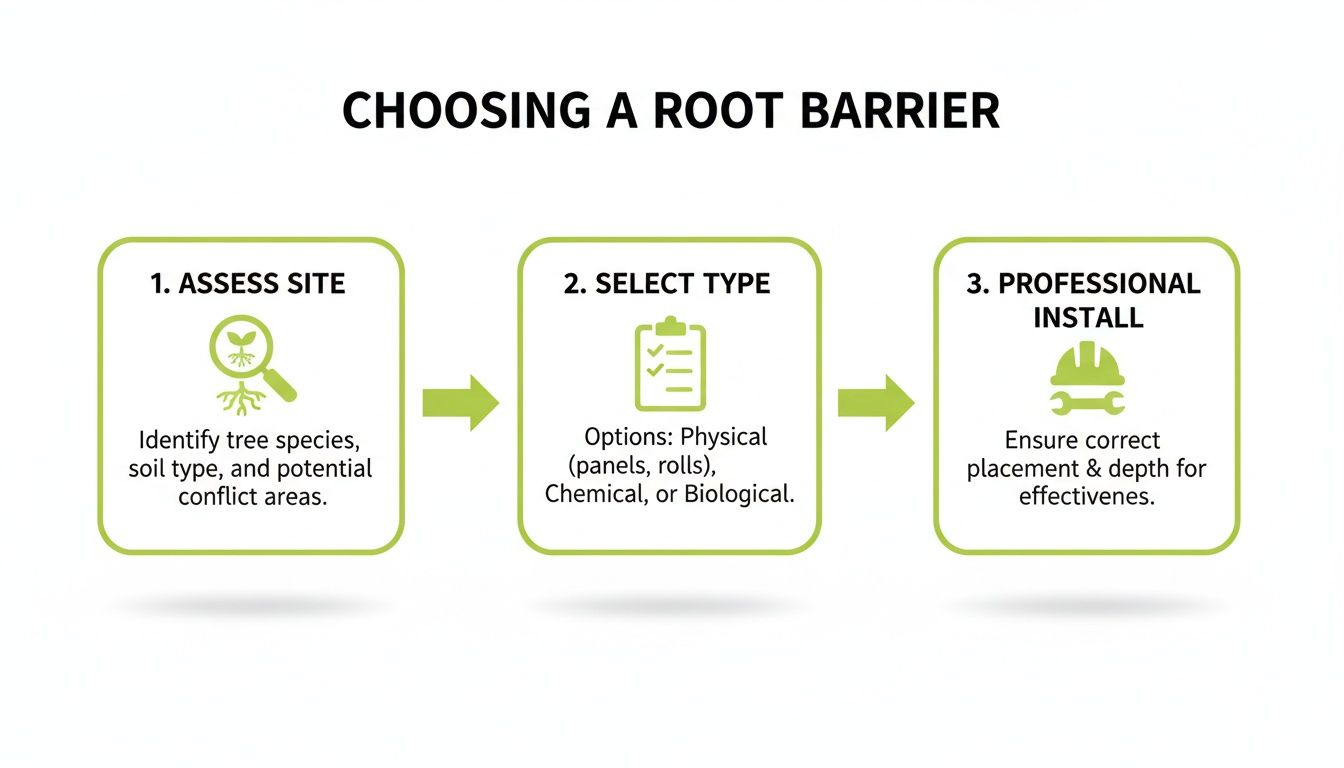
As you can see, the real work starts long before a shovel ever hits the dirt. Careful planning is what ensures a successful installation that will protect your home for decades to come.
Initial Site Assessment and Planning
The first thing our team does on-site is a thorough assessment. This isn’t just a quick glance—it's a detailed investigation to understand the unique underground environment of your property. We carefully map out the tree's main structural roots, which are absolutely vital for its stability and health, and identify which ones can be pruned without harm.
We also use the "Dial Before You Dig" service to locate all underground utilities like water pipes, gas lines, and NBN cables. This is a non-negotiable first step that ensures safety and compliance with WHS legislation. Trying to dig a trench in a dense area like Belmont or Charlestown without knowing what's buried underneath is a recipe for disaster—a risk we will never take.
Precision Excavation and Trenching
With a solid plan in place, we can start the physical work. We excavate a narrow, clean trench along the planned barrier line. The depth here is critical; if it's too shallow, aggressive roots will just dive underneath it and continue on their way.
While the exact depth depends on the tree species and what you're protecting, it’s often between 600mm and 1 metre. In sensitive areas near buildings or utilities, we often use non-destructive digging methods. This homeowner's guide to precision digging gives great insight into how this modern tech avoids causing new problems while we’re fixing the old one.
Our Safety and Insurance Guarantee: Your peace of mind is our priority. Our team is fully qualified, works to all Australian Standards, and we are backed by $20 million in public liability insurance. When we’re on your property, you can rest easy knowing every precaution has been taken to protect your home, your family, and our crew.
Barrier Placement and Backfilling
Once the trench is prepared, we install the root barrier panels. We take great care to ensure they sit perfectly vertical and that every panel is securely joined to the next. This creates a continuous, unbroken shield, because even a tiny gap can become an escape route for a determined root years down the line.
After the barrier is in, we meticulously backfill the trench. We compact the soil in layers to prevent it from sinking over time, leaving the ground stable and level. We also take real pride in our site cleanup. Our "On Time, Every Time" promise means we leave your property just as tidy as we found it—you won't be left with a mess to deal with.
If you're weighing up the investment, our guide on how much an arborist costs can help put the professional installation costs into perspective.
The Long-Term Value of Root Barrier Protection
When you think about installing a root barrier, it's easy to see it as just a fix for a current problem. But it's much bigger than that. It's really a long-term investment in your property's value and a smart way to sidestep some massive financial headaches down the road. The cost of digging up and fixing a cracked foundation, replacing a buckled driveway, or repairing a crushed sewer pipe can easily spiral into the tens of thousands of dollars.
Think of a root barrier as a one-off investment that buys you decades of protection. It’s a permanent line of defence, quietly protecting your biggest assets from the slow but incredibly powerful force of tree roots. By putting a barrier in now, you're not just patching a crack in the concrete; you're preventing the serious structural damage that could come next.
A Lasting Solution Proven Over Time
It’s one thing for us to say a barrier will last, but the proof is in how they perform in the real world—not just a year later, but almost two decades on.
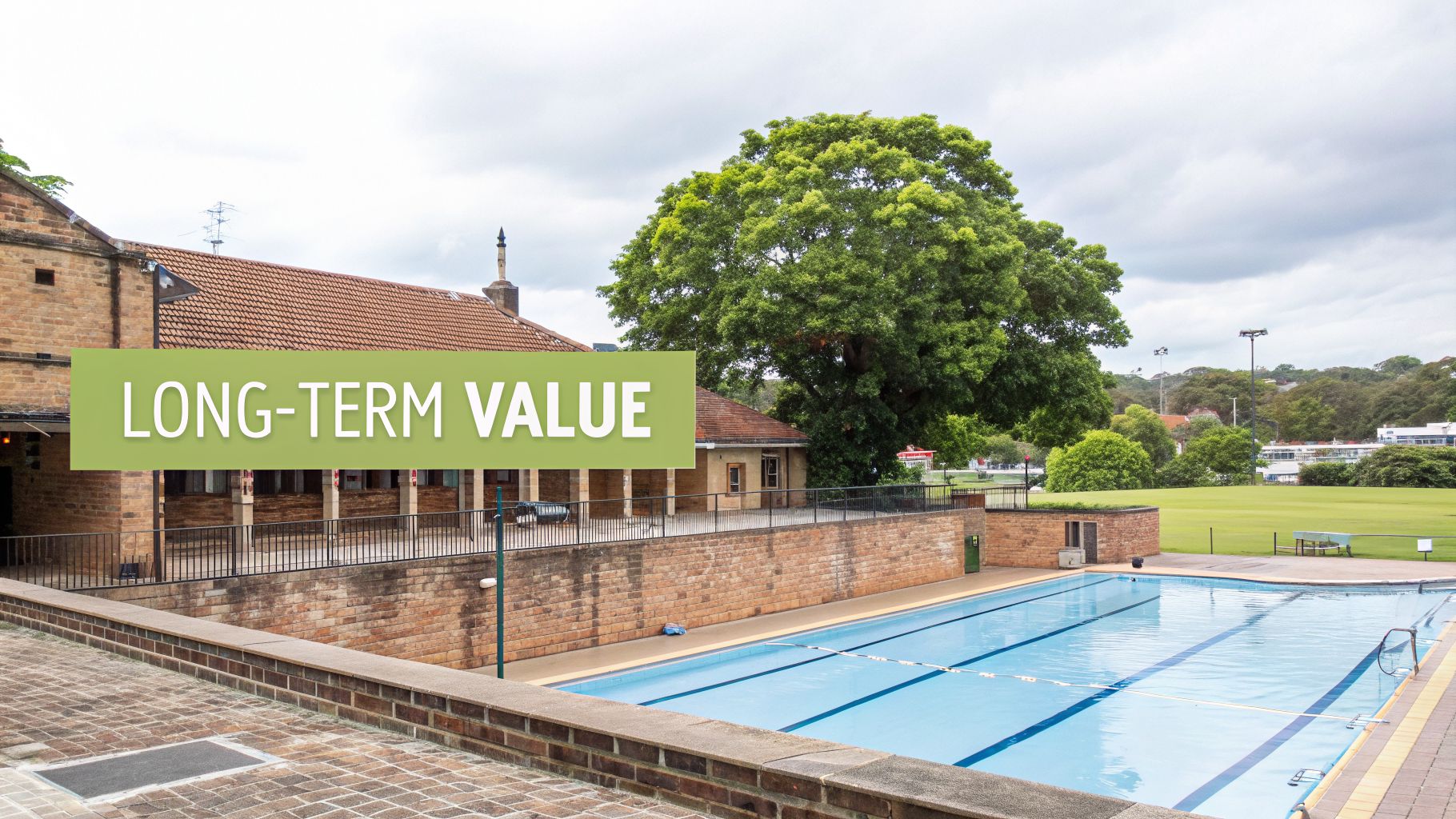
A fantastic case study from a heritage-listed State School swimming pool complex in Australia tells the whole story. An invasive Ficus tree had been causing serious structural damage for years. Back in 2003, a root barrier was installed as part of the repair work. Fast forward to 2021, a full 18 years later, and the results were incredible. The soil moisture had completely stabilised, cracks in the nearby brickwork had actually closed up, and the foundations were solid once again. You can read more about how root barriers protect historic assets on Outdoor Design.
This isn't just a temporary patch. A properly installed root barrier is a genuine, lasting solution that lets you protect your property while keeping the beautiful, mature trees that add so much character—something we see as a huge priority for many heritage properties around Newcastle and the Central Coast.
Protecting Strata and Commercial Properties
For strata complexes and commercial sites, the stakes are even higher. A single case of root damage to shared plumbing or a common driveway in a complex in Gosford or Warners Bay can mean special levies and huge disruptions for every resident.
By proactively installing a root barrier, strata managers can shield the body corporate from massive, unexpected repair bills. It’s a smart, preventative move that secures the financial health of the complex and keeps residents happy.
It’s a similar story for commercial property owners in Tuggerah. Damaged pavement or plumbing isn't just about the cost of repairs; it can lead to business interruption and even liability issues. Using a root barrier to protect your infrastructure is simply good risk management, making sure the property stays safe, functional, and valuable. And with our $20M public liability insurance, you can trust the entire process is handled with total professionalism.
Ultimately, the best way to look at a root barrier is as a long-term protector of your assets. It’s an investment in your peace of mind and financial stability, preserving both the beauty of your landscape and the integrity of your property for years to come.
Navigating Council Permits and Regulations
Let's be honest, dealing with council rules can feel like the trickiest part of any job on your property. The good news? Installing a straightforward root barrier on its own usually flies under the radar and doesn't need a special permit.
But here’s the catch: the work rarely happens in isolation. If installing that barrier involves any significant root pruning, especially on a large, protected native tree, you’ll almost certainly need to get council approval. Every council, whether it's Central Coast, Lake Macquarie, or Newcastle City, has its own set of Tree Preservation Orders and local development rules. This becomes even more critical for heritage-listed trees or any tree located within a conservation area.
When Is a Council Application Necessary?
A permit is typically triggered by any work that might affect the health or stability of a significant tree. Trying to cut back major roots without getting the right advice or a green light from the council is a recipe for disaster. It can lead to massive fines and, even worse, could destabilise the tree, turning it into a genuine safety hazard.
This is a huge consideration for strata managers looking after properties in places like Avoca Beach or Warners Bay. Any work on common property trees not only needs body corporate approval but also requires a careful check of council regulations to sidestep any liability issues down the track.
The Impact of Roots on Public Infrastructure
It's no surprise that councils are deeply invested in managing tree roots—they're one of the main culprits behind damage to public utilities. This is a massive, expensive problem. To give you an idea of the scale, data from one NSW council showed that tree roots were impacting around 23.8% of their stormwater lines and 26.1% of their sewer mains. As you can learn from the research on tree root intrusion, this puts an incredible strain on public funds.
This is exactly why councils take tree management so seriously. Any work you plan on your property that could affect shared infrastructure or a protected tree will absolutely be on their radar.
Expert Tip: Never guess when it comes to council rules. The regulations can be surprisingly complex, and what’s fine in Toukley might be completely different from the rules in Charlestown. Getting professional advice first will save you a world of time, money, and stress.
How a Professional Arborist Can Help
This is where our 25+ years of local experience really make a difference. Navigating the maze of council paperwork is just part of our daily grind, and we’ve designed our process to keep things simple for you.
We start with a thorough check of your tree and property to figure out what’s needed and if it falls under council regulations. If an application is required, we can prepare a detailed arborist report that outlines the proposed work and justifies why it's necessary. We then guide you through lodging the application, ensuring all the right information is there from the start to avoid frustrating delays.
Taking this proactive, by-the-book approach is the best way to make sure your project goes off without a hitch. We handle the red tape so you can feel confident the job is being done properly and legally. If you'd like to read up on the specifics, check out our guide on understanding council approval for tree removal and other major tree works.
Your Top Questions About Root Barriers, Answered
Over our 25+ years of working with trees across the Central Coast, we’ve heard just about every question there is when it comes to root barriers. Homeowners and property managers are rightly curious about how they work and what it all means for their much-loved trees.
To help clear things up, here are some straight-talking answers to the questions we get asked the most.
Will a Root Barrier Harm My Tree?
This is always the first and most important question, and it's a great one. The short answer is no, not when installed correctly by a qualified arborist. A professional installation is a surgical process, not a brute-force one. We carefully map out the critical structural roots—the ones that keep the tree stable—and plan our trench to steer well clear of them.
Think of a root barrier less as a wall and more as a guide. It's not there to starve the tree or cause damage. Instead, it gently redirects any new root growth downwards and away from your property, encouraging a deeper, stronger, and ultimately healthier root system. We never even think about digging until we’ve done a full assessment of the tree's health and stability.
What Does Root Barrier Installation Cost?
The final cost really does depend on the specific job, as no two properties are the same. A few key things will influence the price: the total length and depth of the barrier, the type of soil we're dealing with (sandy Wamberal soil is a lot easier to work with than the heavy clay around Wyong), and how easily we can access the site with our equipment.
But it’s important to look at it as an investment. The upfront cost is almost always a fraction of the alternative. The expense of fixing a cracked foundation, digging up and replacing a blocked sewer line, or relaying an entire driveway can easily climb into the tens of thousands. We always provide a clear, itemised quote before we start, so there are no surprises.
Can I Just Install a Root Barrier Myself?
You can find DIY kits out there, but for any established, mature tree, we really advise against it. Getting the installation right is absolutely critical—not just for the barrier to actually work, but for the health and safety of your tree.
A professional arborist brings the right expertise to the table. We know how to pinpoint the correct depth to guarantee roots are stopped, use specialised gear to minimise disturbance, and work safely around hidden underground utilities. A poorly installed barrier might do nothing at all, or worse, it could compromise a large tree's stability and turn it into a genuine hazard. This is one of those jobs where experience truly matters.
How Long Will a Root Barrier Last?
When we install a high-quality root barrier, it's a permanent fix. The heavy-duty HDPE panels we use are designed to last for decades. They won't rot, they're not affected by chemicals in the soil, and most importantly, they are completely impenetrable to even the most determined tree roots.
Our goal is to install a system that protects your property for the entire remaining life of the tree. That 18-year case study of the heritage pool complex is a perfect real-world testament to how durable these barriers are. It’s a genuine set-and-forget solution.
Ready to protect your property from invasive tree roots? The team at Treecorp Solutions has the local expertise to install a root barrier correctly, ensuring the health of your tree and the safety of your home.
Request a free quote today or call us for an urgent assessment.