Properly mulching your trees is one of the simplest, most effective things you can do to boost their health. It’s far more than just a decorative touch around the garden bed. Think of mulch as a protective blanket for the root system, insulating it from wild temperature swings and locking in precious moisture—something that’s absolutely critical in our varied Central Coast climate. We can help you navigate the best approach for your property.
Why Mulching Trees Is a Must on the Central Coast
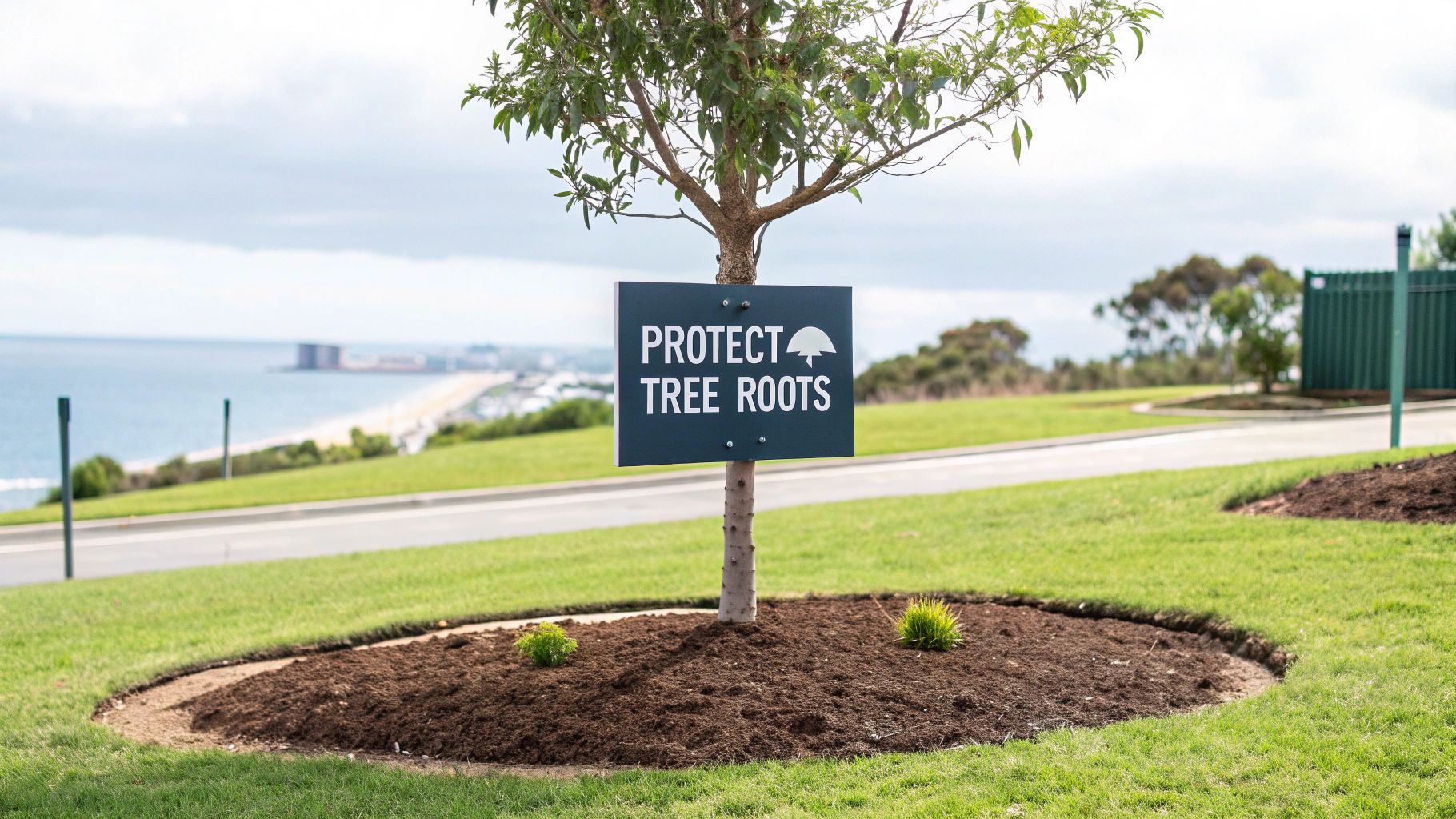
If you own property anywhere from Gosford to Newcastle, you know our local environment can be tough on trees. Between the salty coastal winds whipping through Terrigal and the long dry spells that hit further inland, trees need all the help they can get. This is exactly where mulch comes in.
It’s not just about making your garden look tidy; mulch is a fundamental tool in any good arborist's kit. With over 25 years of experience serving the Central Coast, Lake Macquarie, and Newcastle areas, we’ve seen firsthand the massive difference a proper layer of mulch makes.
The Key Benefits for Your Trees
A healthy layer of mulch creates a stable, nurturing environment right where your tree needs it most—at its base. It helps build a resilient little ecosystem that allows your trees to withstand local challenges and remain a beautiful, safe feature on your property.
Here’s what it really does:
- Moisture Retention: Mulch acts like a sponge, dramatically slowing down water evaporation from the soil. This is invaluable during our hot, dry summers, meaning you'll water less and your trees will be better equipped to handle periods of low rainfall.
- Temperature Regulation: It insulates the soil, keeping the roots cooler in summer and warmer in winter. By shielding them from extreme temperature fluctuations, you seriously reduce the stress on the tree.
- Weed Suppression: A good mulch layer blocks sunlight from reaching the soil, preventing annoying weeds from sprouting up and stealing vital nutrients and water from your tree.
Ultimately, mulching is a proactive investment in the long-term health and stability of your trees. It can turn a struggling plant into a thriving centrepiece of your landscape, whether you’re in Woy Woy or Warners Bay.
Choosing the Right Mulch for Your Local Trees
Not all mulch is created equal, especially when you're dealing with the unique mix of trees we have here on the Central Coast and around Lake Macquarie. Stepping into a garden centre can feel a bit overwhelming with all the choices, but picking the right one is one of the best things you can do for your trees.
The first big decision is whether to go for organic or inorganic mulch. Organic options like wood chips, bark, leaf mould, or pine needles break down over time. This slow decomposition feeds your trees by releasing valuable nutrients back into the soil, which is a massive plus for our sandy coastal soils and the heavier clay you find further inland.
Inorganic mulches, like gravel, pebbles, or recycled rubber, don't break down. They're a low-maintenance way to keep weeds down and can look quite sharp, but they offer zero nutritional value. Worse, stones and gravel can soak up the intense sun on a hot Newcastle summer day and radiate that heat right down into the sensitive root system, essentially baking your tree's roots.
Why We Recommend Woody Mulch for Native Trees
For almost all trees, and especially our iconic native species like eucalypts and banksias, we almost always recommend a coarse, woody mulch. Imagine you’ve just had a big gum tree pruned at your property in Charmhaven. The wood chips from that job are the perfect resource for your garden beds.
This type of mulch does a brilliant job of mimicking a natural forest floor, where fallen leaves and branches slowly decompose. It encourages a healthy ecosystem of beneficial fungi and microorganisms that our native trees absolutely rely on to pull nutrients from the soil. A thriving soil biome is the foundation of a healthy, resilient tree.
As arborists with over 25 years of hands-on experience in this region, we've seen time and again that coarse wood chip mulch strikes the perfect balance. It delivers fantastic moisture retention, weed suppression, and soil improvement for our specific local conditions, while still allowing water and air to get down to the roots where they're needed most.
Comparing Common Mulch Types for Central Coast Gardens
To make things a bit easier, here’s a quick comparison to help you choose the best mulch for your local tree species and garden needs.
| Mulch Type | Key Benefit | Best For | Local Consideration |
|---|---|---|---|
| Coarse Wood Chips | Soil health & moisture retention | Native trees (Eucalypts, Banksias) and established gardens | Ideal for mimicking the natural bushland floor in areas like Gosford. |
| Pine Bark | Aesthetically pleasing & long-lasting | Garden beds, acid-loving plants | Can be slightly acidic, so it's great for Azaleas but use sparingly around sensitive natives. |
| Sugar Cane Mulch | Rapid breakdown & nutrient release | Vegetable gardens and annuals | Can blow around in coastal winds at The Entrance; best to wet it down after applying. |
| Pebbles/Gravel | Low maintenance & weed barrier | Cacti, succulents, and decorative areas | Radiates heat, which can stress tree roots during intense summer heatwaves. Avoid placing it near trunks. |
Ultimately, a good quality, coarse organic mulch is your best bet for promoting long-term tree health across the Central Coast.
Mulch Types to Approach with Caution
While most organic options are great, a few can cause more harm than good. Finely shredded mulches or those with a lot of grass clippings tend to compact over time. They can form a dense, water-repellent mat that stops rain from ever reaching the soil, effectively starving the tree of moisture even when it's pouring.
Likewise, those brightly dyed mulches might catch your eye, but they can contain unknown chemicals. For the long-term health of your trees and the safety of your garden's entire ecosystem, sticking with natural, unprocessed materials is always the smartest move. If you're managing various species and aren't sure what's best, you can learn more about trees with non-invasive roots and their specific needs in our other guides.
How to Apply Mulch and Avoid Common Mistakes
Applying mulch seems simple enough, but this is exactly where good intentions can go sideways. We see it all the time across the Central Coast—property owners who want the best for their trees but accidentally cause harm through a few common mistakes. Getting the application right is the key to protecting your trees, not putting them in danger.
The single biggest blunder we see, from Newcastle right down to the suburbs of Lake Macquarie, is the dreaded "mulch volcano". This is what happens when mulch gets piled high against the tree trunk, creating a cone shape that looks almost like a volcano erupting from the ground. It might look tidy to some, but it’s one of the worst things you can do for a tree’s health.
The Problem with Mulch Volcanoes
Think of it like wearing a wet scarf wrapped tightly around your neck, 24/7. That's essentially what a mulch volcano does to a tree trunk.
The constant moisture trapped against the bark creates a perfect breeding ground for fungi, rot, and disease. It softens the bark, leaving it vulnerable to pests and eventually causing the trunk to decay. This decay compromises the tree’s structural integrity, which is a massive safety risk, especially for large trees near your home or in the common areas of a strata complex.
How to Create a Perfect Mulch Doughnut
The correct method is to create what we call a "mulch doughnut". This simple technique gives you all the benefits of mulching without any of the dangerous downsides. It’s a straightforward and effective method our arborists use on every job, whether it’s a residential garden in Erina or a commercial property in Tuggerah.
Here's a simple process for choosing and applying mulch to guarantee a healthy outcome for your trees.
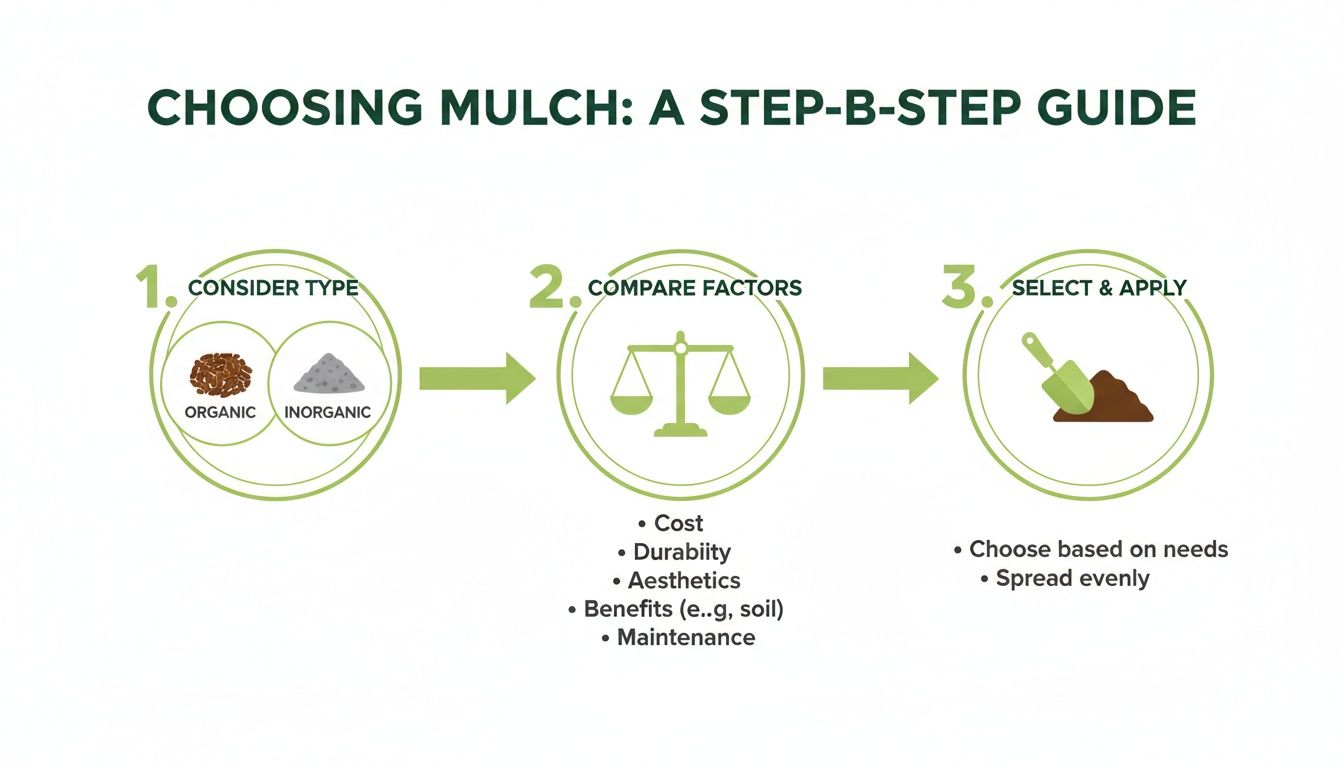
This visual guide breaks it down, from picking an organic or inorganic type to comparing the pros and cons before you even start spreading it. At the end of the day, the goal is to choose a mulch that will improve your soil health and then apply it correctly.
Here’s how to get it right:
- Clear the Area: First, clear away any weeds, grass, or old, compacted mulch from the base of the tree. You want a clean circle extending out to the tree's dripline (the edge of its canopy) if you have the space.
- Leave a Gap: This is the most important step. Keep the mulch 10-15 cm away from the tree trunk itself. This air gap is crucial; it lets the trunk breathe and stay dry, which stops rot and disease from ever taking hold. You should always be able to see the root flare—the part where the trunk widens out as it meets the soil.
- Apply the Right Depth: Spread an even layer of mulch about 5 to 10 cm deep over the cleared area. Any thinner and it won’t do much to stop weeds. Any thicker, and you risk suffocating the roots by blocking air and water from getting to the soil.
If you're not confident about applying mulch correctly or just want to ensure it’s done to a professional standard, you can find great advice from professional mulching services. Proper technique is just as critical as the type of mulch you use, and it ties into other areas of tree care, too. For instance, knowing how far to keep mulch from the trunk is similar to understanding the right places to make a cut—which is why having a good grasp of safe and effective tree pruning can make you a much better caretaker for your garden.
The Real Impact of Mulching on Tree Health in NSW
Mulching isn't just a chore to tick off the gardening list; it's one of the best investments you can make for the long-term health of your trees. More than that, it's a crucial step in protecting our local NSW environment. It's how you give your trees a fighting chance against the unique challenges our climate throws at them, from the salty coastal air in Terrigal to the dry, tough conditions further inland.
A good layer of mulch can dramatically reduce water evaporation from the soil. That means less time spent watering for you and a more resilient tree, especially during the council water restrictions our hot summers often bring. For our strata and commercial clients across the Central Coast, this adds up to real savings on maintenance and water bills over time.
Supporting Our Urban Canopy
What you do on your property has a ripple effect on the health of our region's urban canopy. Healthy, well-cared-for trees mean cleaner air, welcome shade that cools our suburbs, and vital support for local wildlife. By simply making sure your trees are properly mulched, you help them thrive, making them stronger and less vulnerable to disease or stress.
Healthy, mulched soil is a living ecosystem. It encourages beneficial microorganisms and fungi to create a symbiotic relationship with your tree's roots, helping them pull in essential nutrients and water far more efficiently. This is the natural foundation of a strong, long-lasting tree.
Unfortunately, looking after our green spaces is more important than ever. In New South Wales, tree cover loss has been shockingly high. Smart tree care, including proper mulching, plays a huge role in strengthening the trees we already have and protecting our local environment.
A Defence Against Climate Extremes
Picture a beautiful spotted gum in your backyard in a suburb like Toukley. During a heatwave, bare soil can bake rock-hard, reflecting heat straight up and cooking the tree's delicate root system. A layer of organic mulch acts like a natural blanket, keeping the soil temperature stable and protecting those fine feeder roots from getting fried.
This insulation works the other way during the cooler months, too, shielding roots from sudden cold snaps. It’s this consistency that allows a tree to put its energy into healthy growth instead of just fighting to survive. To get the full picture, exploring the broader mulching benefits can offer deeper insight into just how valuable it is. When you understand this, you're better equipped to spot a thriving tree versus one showing early signs of trouble, a topic we cover in our guide to recognising sick tree symptoms.
Using Wood Chips After Tree Removal or Pruning
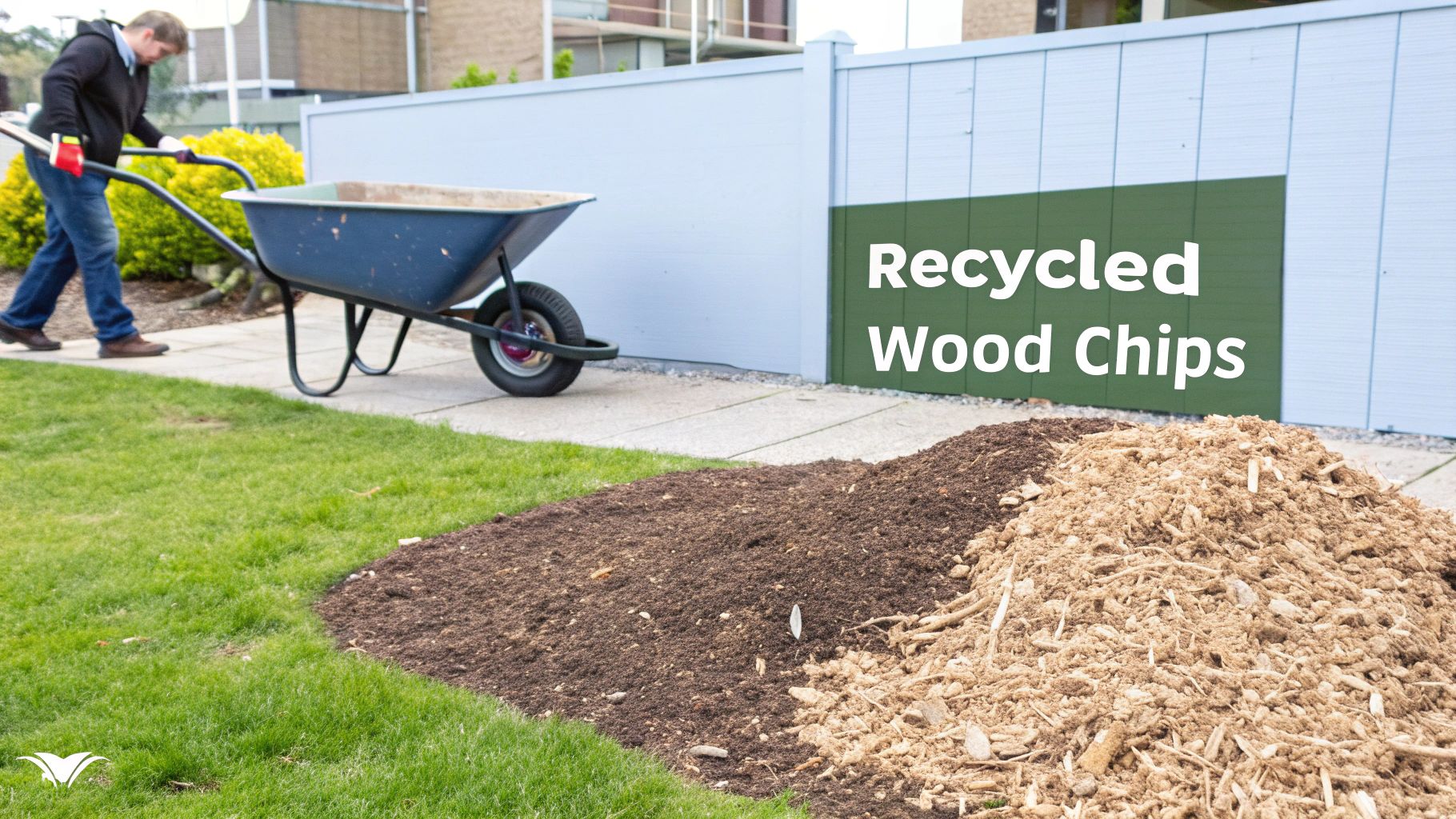
After we’ve finished a tree removal or pruning job on your property, you’re often left with a valuable, overlooked resource: wood chips. Instead of you paying to have this green waste hauled away, we can process the branches right there on-site with our industrial woodchipper. This turns them into high-quality, organic mulch ready for your garden.
This approach is simply a smart, sustainable way to handle the debris from our work. It saves you the cost and hassle of disposal and gives you a fantastic, nutrient-rich product for your garden beds at no extra expense. It’s a genuine win-win, turning a byproduct of our job into a long-term asset for your landscape.
Is It Safe to Use Chips from Any Tree?
A common—and very sensible—question we get from clients in Newcastle and Lake Macquarie is whether it's safe to use chips from a tree that was removed due to disease. The short answer is yes, but only when handled by professionals. The heat generated during the industrial chipping process is intense enough to neutralise many common pathogens.
Beyond that, our qualified arborists are trained to identify diseases. We will never chip and spread material that poses a risk to your other plants. It’s a core part of our commitment to leaving your property healthier than we found it, and it's backed by our comprehensive $20 million public liability insurance.
A Smart Strategy for Strata and Commercial Properties
For strata committees and commercial site managers, this on-site recycling offers significant benefits. Imagine we've just completed routine pruning on several large gum trees in a shared common area in a Gosford complex. Instead of paying for removal, that green waste becomes fresh mulch for the garden beds right then and there. This requires body corporate approval, which we can help facilitate.
This strategy is not only highly cost-effective but also enhances the appearance and health of community gardens. It streamlines maintenance budgets by turning a routine task into an opportunity to improve the landscape without purchasing and transporting commercial mulch.
This approach is also incredibly efficient. We manage the entire process, from pruning and chipping to the final clean-up, ensuring minimal disruption for residents or tenants. If the job involves removing a tree entirely, you'll also need a plan for what’s left of the base. You can learn more about how we handle that final step in our guide to professional tree stump grinding. Our goal is to provide a complete service that adds lasting value.
When to Call an Arborist for Tree Health Issues
While laying down some mulch is a fantastic weekend job for any homeowner, some situations absolutely require a professional touch. Knowing when to step back and call in a qualified arborist is key to ensuring the long-term health and safety of your trees—and your property. If you're ever in doubt, getting a professional opinion is always the safest bet.
Picture this: you have a few massive, old gum trees on your Terrigal property, and the ground around their roots is rock-hard and compacted. Just throwing a layer of mulch on top isn't going to fix the real issue. An arborist can properly assess the soil compaction, possibly recommending advanced techniques like air spading to gently loosen the soil before the right mulch is even applied.
Remediation and Large-Scale Projects
One of the most common reasons we get called out is to fix the damage from years of bad mulching. If you’ve just inherited a garden with a thick “mulch volcano” piled up against a mature tree, we have the tools to safely remove the excess, check the trunk for rot or disease, and apply a correct mulch ring to set it on the path to recovery. Never ignore signs of bark decay at the base of a tree.
For larger sites, like strata complexes in Newcastle or commercial properties in Lake Macquarie, managing the mulch for every tree is a big job that needs a strategic approach. We handle these large-scale projects efficiently, making sure every tree gets what it needs for optimal health. It’s a critical part of our comprehensive tree health assessments.
A professional touch with mulch isn't just about looks; it's a genuine investment. For instance, in Australian agriculture, trials revealed that proper mulching boosted grape yields. It’s a powerful testament to its impact on productivity and resilience.
Ultimately, professional mulching fits into a bigger picture of total tree care. You can learn more about what arborists do and see how it all connects with pruning, pest management, and regular health checks. Our team is fully insured with $20 million public liability, giving you complete peace of mind that the job will be done right, every single time.
Common Questions We Hear About Mulching
After 25+ years of looking after trees on the Central Coast, Lake Macquarie, and Newcastle, we've heard just about every question there is when it comes to mulch. Here are some of the most common ones we get from property owners, with clear, practical answers.
How Often Should I Top Up the Mulch Around My Trees?
Because organic mulches like wood chips are constantly breaking down and feeding the soil (which is exactly what we want!), they need a top-up every year or two. The goal is to keep a consistent layer of about 5-10cm.
You'll know it's time for a refresh when the mulch looks thin and you can easily see the soil peeking through. Just be careful not to keep piling new mulch on top of old, compacted layers. Too much mulch can suffocate the roots, preventing that all-important air and water from getting through.
Is It Okay to Use Grass Clippings as Mulch?
It's a common question, but we strongly advise against using fresh grass clippings around your trees. When green clippings are piled up, they tend to mat down into a dense, almost waterproof blanket.
This thick layer not only stops rain and air from reaching the soil but also generates a surprising amount of heat as it decomposes. This heat can scorch the fine, sensitive feeder roots that sit just below the surface, causing serious damage to the tree. A coarse, woody mulch is always a much healthier and safer bet.
Does Mulch Attract Termites to My House?
This is a really important concern for homeowners in our area, and it’s smart to be cautious. While termites can live in woody mulch, they're mainly attracted to the moisture it holds, not the wood itself as a food source.
The safest and most effective way to protect your home is to always keep mulch at least 15cm away from the foundation. This creates a dry, clear inspection zone, making it incredibly difficult for termites to build their tunnels and reach your house without being spotted.
If you have any serious worries about termite activity, your best course of action is to call in a professional pest control expert for a proper assessment.
Keeping your trees healthy is a year-round job. For professional advice on the right way to mulch, or for any other tree care needs on your Central Coast, Lake Macquarie, or Newcastle property, the team at Treecorp Solutions is here to help.
Request a free quote online or give us a call on 0477 477 419 for any emergency services.