When you're looking at a block of land you want to develop, one of the first questions is always about the budget. So, what's the real story on the land clearing cost per acre in Australia? Generally, you can expect it to fall somewhere between $2,000 and $8,000. But honestly, that figure can swing wildly depending on what’s actually on your property and where it is.
Your Guide to Australian Land Clearing Costs
Getting a handle on the potential costs is the essential first step in planning your project. Think of it like building a house – the final price is a direct result of the design, materials, and sheer complexity of the job. Clearing a flat, lightly treed acre in a suburb like Wyong is a completely different ball game to tackling a dense, sloping block tucked away in the hills behind Warners Bay.
With over 25 years of hands-on local experience, we’ve helped countless property owners and developers across the Central Coast, Newcastle, and Lake Macquarie nail down their budgets. A lot goes into the final quote, and understanding these factors is the key to making sure there are no nasty surprises. For a deeper dive, check out our guide on comprehensive land clearing services.
This chart gives you a quick snapshot of the cost ranges you can expect, based on what your site looks like.
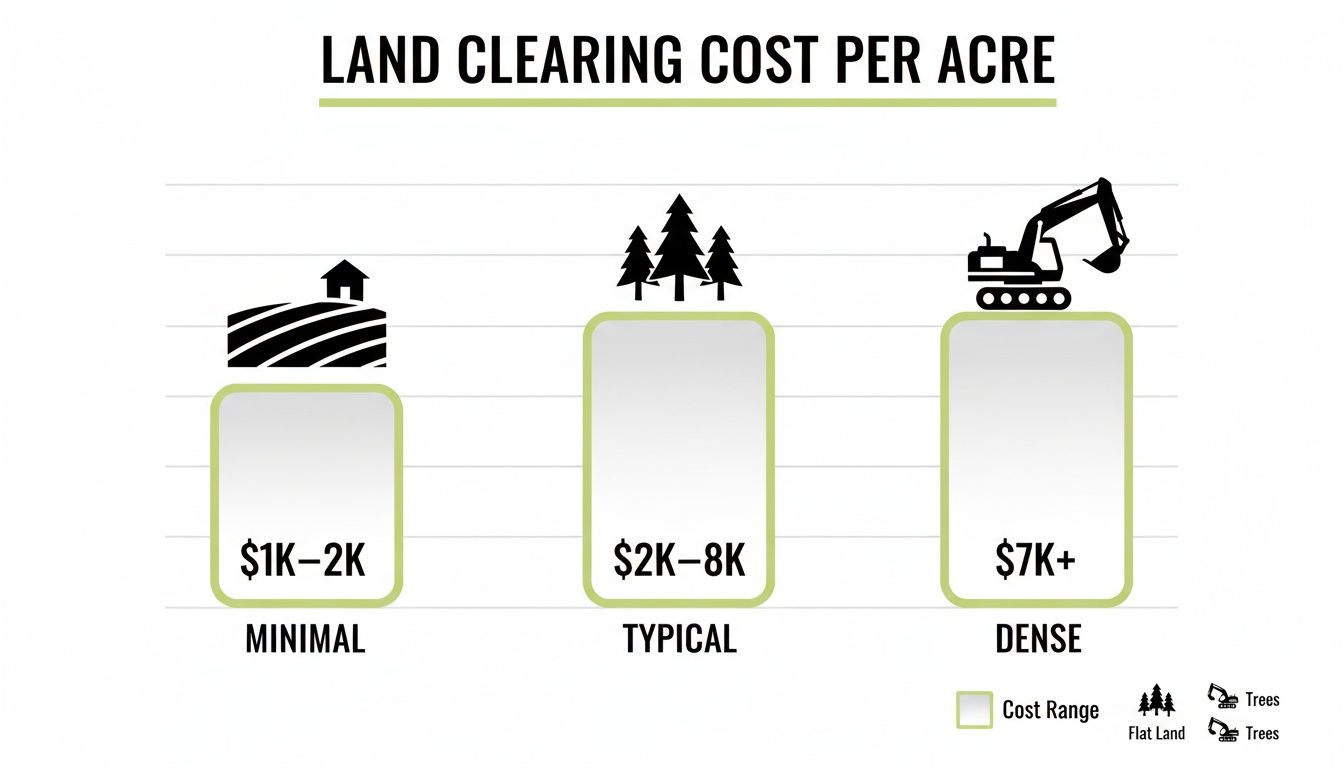
As you can see, how thick the vegetation is and how tricky the terrain is are the biggest things driving the final cost per acre.
To give you a clearer idea, here's a quick reference table to help you benchmark your project.
Estimated Land Clearing Costs Per Acre at a Glance
| Site Condition | Typical Cost Range Per Acre (AUD) |
|---|---|
| Minimal: Light grass, few small trees, flat | $1,000 – $2,500 |
| Typical: Moderate shrubs, some medium trees, gentle slope | $2,500 – $5,000 |
| Dense: Thick forest, large trees, steep slope, rocks | $5,000 – $8,000+ |
Remember, these are ballpark figures. Every single block of land is unique, but this table provides a solid starting point for your initial budgeting.
Benchmarking Your Project Costs
These ranges are a great starting point. For example, a minimal job on flat ground with just some light scrub might only set you back $1,000 to $2,000 per acre. This is the most straightforward type of clearing, often managed quickly with the right machinery.
On the other hand, a hilly or densely forested block in places like Lake Macquarie or Newcastle could easily push the costs up to $7,000 or more per acre. That jump in price comes down to needing specialised machinery, more skilled labour, and qualified arborists to get the job done safely and efficiently.
In the next section, we’ll break down exactly what influences these numbers – from how easy it is to get machinery onto your site to the best way to deal with stubborn tree stumps.
Key Factors That Determine Your Final Price
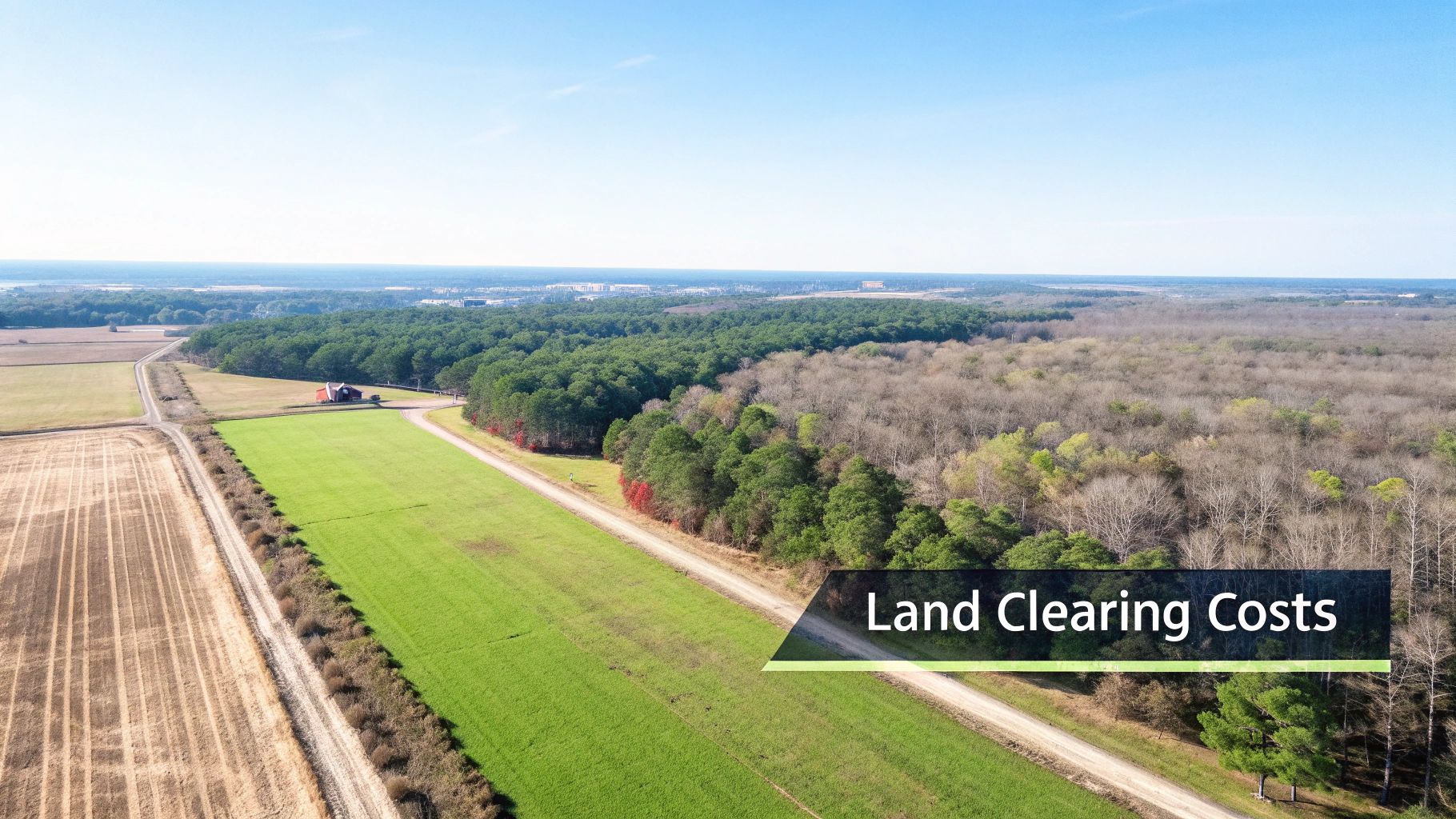
No two blocks of land are ever the same, which is why a one-size-fits-all price for clearing just doesn't exist. When our qualified arborists visit your property for an assessment, we're not just looking at the size; we’re evaluating a whole range of variables that directly impact the labour, machinery, and time required to get the job done safely.
Understanding these factors will help you see exactly what goes into building an accurate quote. It’s the difference between a simple job and a complex project, and it explains why the land clearing cost per acre in Australia can vary so much from one site to the next.
Vegetation Density and Type
The first thing we look at is what’s actually on the land. A block covered in light scrub and a few saplings is a world away from one dominated by mature, dense bushland. It's far quicker and easier to clear, requiring less intensive machinery and labour.
The type of trees also plays a massive role. Imagine a one-acre block in Toukley with a handful of small Melaleucas versus a property of the same size in Belmont filled with towering, mature gum trees. The second job requires highly skilled arborists, more powerful machinery, and a much more methodical approach to safely dismantle and remove the large trees, which is always reflected in the final cost.
Site Access and Accessibility
How easily can we get our equipment onto your property? This is a critical question we ask on every job. Wide, open access from the road lets us bring in larger, more efficient machinery like excavators and forestry mulchers, which can speed up the clearing process significantly.
On the flip side, a site with narrow or restricted access, like a battle-axe block behind a home in Gosford, presents a logistical challenge. It might mean we have to use smaller, specialised machinery that takes longer to do the same work, or it could require more hands-on manual labour, impacting the overall cost.
Before you get a quote, have a think about any potential access issues. Are there any narrow gates, steep driveways, or overhead power lines that might complicate things? Mentioning these upfront helps us give you a much more accurate initial assessment.
Terrain and Ground Conditions
The lay of the land is another huge price driver. A flat, level paddock is the most straightforward scenario for our team. The machinery can move around easily, and the work can progress at a steady, efficient pace.
But once you introduce a slope, the complexity and safety considerations increase dramatically. A steep, rocky hillside near Lake Macquarie, for example, demands a completely different strategy. Our team needs to use specialised techniques and equipment to work safely on inclines, and the presence of rocks can slow down machinery and cause extra wear and tear. This additional risk and operational complexity will always be factored into the price.
Stump Removal and Grubbing
Clearing the trees and undergrowth is only part of the job. What you decide to do with the stumps will have a significant impact on the final cost. Leaving them in the ground is the cheapest option, but it’s often not practical if you plan to build or landscape.
There are two main options for dealing with stumps: stump grinding, which grinds the stump below the soil surface, or grubbing. Grubbing is the complete removal of the stump and its root ball from the ground, usually with an excavator. It’s more intensive and therefore more expensive, but it's essential for preparing a site for building foundations or underground services.
To get a better handle on this, you can learn more about what grubbing is and why it's necessary for certain projects. The number, size, and species of the stumps will all influence the time and machinery needed for this stage of the clearing process.
How a Professional Arborist Prices a Job
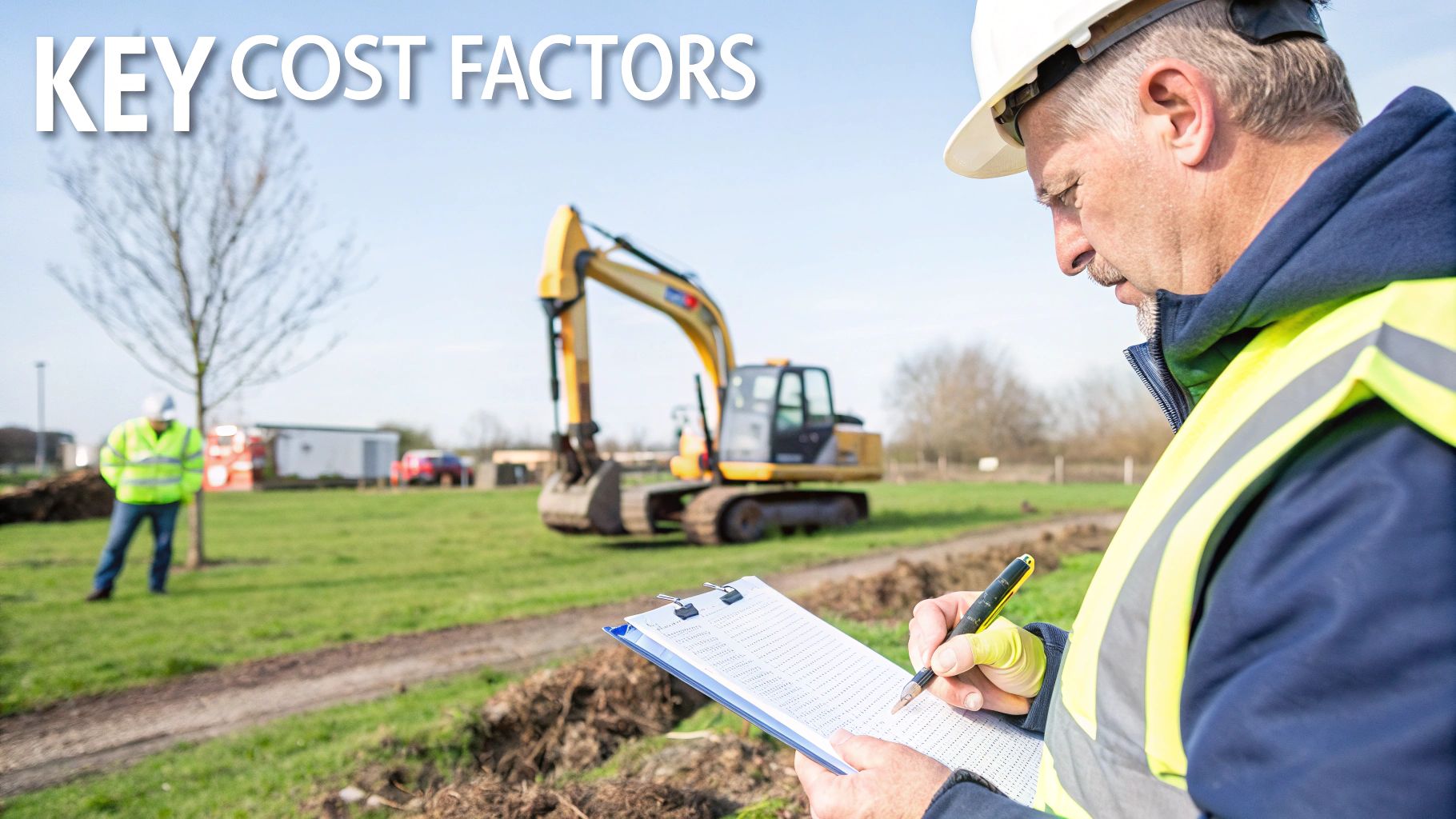
When you get a quote from a professional arborist, you're not just looking at a number pulled out of thin air. A proper quote is a detailed breakdown of the labour, machinery, risk, and expertise needed for your specific block of land. At Treecorp Solutions, we believe in being completely upfront, so let’s pull back the curtain on how we build a quote you can trust.
It helps to understand the different ways a job can be priced, as there isn't a single method that fits every project. The best approach always depends on the scale and complexity of the work.
Common Pricing Models Explained
For a large, straightforward project—like clearing a few acres of consistent bush for a new housing development—a per-acre rate makes the most sense. It gives you a clear, scalable number for budgeting.
But for more complex jobs, a fixed project fee is often the better way to go. Imagine you have a tricky block on the waterfront at The Entrance with established gardens you want to keep and difficult access. In this case, a fixed project fee offers total certainty. You know the final cost right from the start, with no risk of the budget blowing out if the job takes a bit longer than first thought. It covers every challenge we can anticipate, from start to finish.
Hourly rates are less common for big land clearing jobs but can be useful for smaller tasks or when the full scope isn't clear from the outset. We'll always recommend the model that gives you the most clarity and value for money.
What Is Included in Our Quotes
A professional quote is a comprehensive document. It has to account for every single part of the job to ensure your project is completed safely, legally, and on time. We detail the full scope of works so you know exactly what your investment covers.
We want you to feel completely confident when you work with us. That’s why every quote we provide is backed by our $20M public liability insurance. This isn't just a number on a page; it's your absolute protection against the unexpected, ensuring your property and financial interests are secure.
Here’s a look at the key components you'll find itemised in our quotes:
- Skilled Labour: This covers our team of qualified and experienced arborists and machine operators. They bring the expertise needed to work safely and get the job done right.
- Specialised Machinery: The cost includes using our commercial-grade gear, like excavators, forestry mulchers, and stump grinders, along with the fuel to run them.
- Debris Disposal: We factor in the responsible management of all green waste, whether that means hauling it away for tipping or the more budget-friendly option of mulching it on-site.
- Insurance and Compliance: Your quote includes the cost of our comprehensive public liability insurance and our unwavering commitment to full WHS compliance.
The industry is also seeing rising costs that naturally influence pricing. Recent data for a typical one-acre block shows that while flat land with some vegetation might cost $1,500-$3,000, hilly sites near Newcastle can climb towards $6,750. This reflects the real-world expenses of machinery hire, fuel, and significant wage increases, which any professional quote has to account for. You can find out more about what goes into the real cost of clearing land from industry reports.
This level of detail means no hidden surprises down the track. It’s how we build the trust needed for a successful project. And if stump removal is a big part of your job, it really helps to understand the specifics. Check out our detailed guide on stump and tree removal costs for more information.
Navigating Council Permits and Regulations
One of the biggest hurdles in any land clearing project is getting the paperwork right. It’s a classic mistake to assume you can just fire up the machinery on your own property. The reality is, councils across the Central Coast, Newcastle, and Lake Macquarie have firm rules to protect our local environment, and ignoring them can lead to massive fines and painful project delays.
With over 25 years of local experience, we’ve seen it all. We know how easy it is for property owners to get caught out by red tape. That's why we don't just clear trees; we act as your partner in compliance, helping you navigate the rules before a single branch is touched.
Understanding Local Tree and Vegetation Laws
Every council area, from Gosford right up to Newcastle, has its own specific playbook for what you can and can't clear. These rules are usually laid out in a Development Control Plan (DCP) and often include Tree Preservation Orders (TPOs). A TPO is a legal protection placed on specific trees or groups of trees, meaning they can't be removed or even pruned without a direct green light from the council.
These aren’t just arbitrary rules. They’re in place to protect important local species, maintain the unique character of suburbs like Terrigal or Warners Bay, prevent soil erosion, and preserve vital habitats for native wildlife. The regulations can get incredibly specific, covering everything from the species and size of a tree to its location near a waterway or heritage site.
Navigating these rules is a core part of our service. As qualified arborists, we can identify protected species on your block and figure out which trees fall under council protection. It saves you the headache of trying to decipher complex local government documents on your own.
How to Check Your Council Requirements
Your first port of call should always be your local council. Whether you're in the Central Coast Council area, the City of Newcastle, or Lake Macquarie City Council, their planning or environment department holds all the answers. They are the ultimate source of truth and can tell you precisely what's needed for your block of land.
Typically, you'll need to provide them with a few key things: a site plan showing your property boundaries and the area you plan to clear; details of the vegetation, including the number, species, and size of the trees; and the reason for clearing, whether it’s for a new build, bushfire mitigation, or another valid purpose.
The process might seem a bit daunting, but it's a step you simply can't skip. The penalties for illegal clearing are severe, and councils don’t mess around when it comes to issuing stop-work orders and hefty fines. If you’re feeling lost, a great place to start is our guide on the process for gaining council approval for tree removal.
Smart Ways to Manage Your Clearing Budget
While professional land clearing is a non-negotiable investment for your property, there are definitely clever ways to manage the expense. Getting the best value isn’t about cutting corners on safety or quality; it’s about making smart, efficient decisions. With a bit of forward planning, you can bring the overall cost down and make sure your budget is working as hard as it can.
One of the biggest impacts on your final bill comes from what happens to all the green waste. The traditional way involves loading all the cleared vegetation into trucks, hauling it away, and dumping it at a waste facility. You end up paying for every single step of that journey. Thankfully, there’s a much better way.
The Power of Onsite Mulching
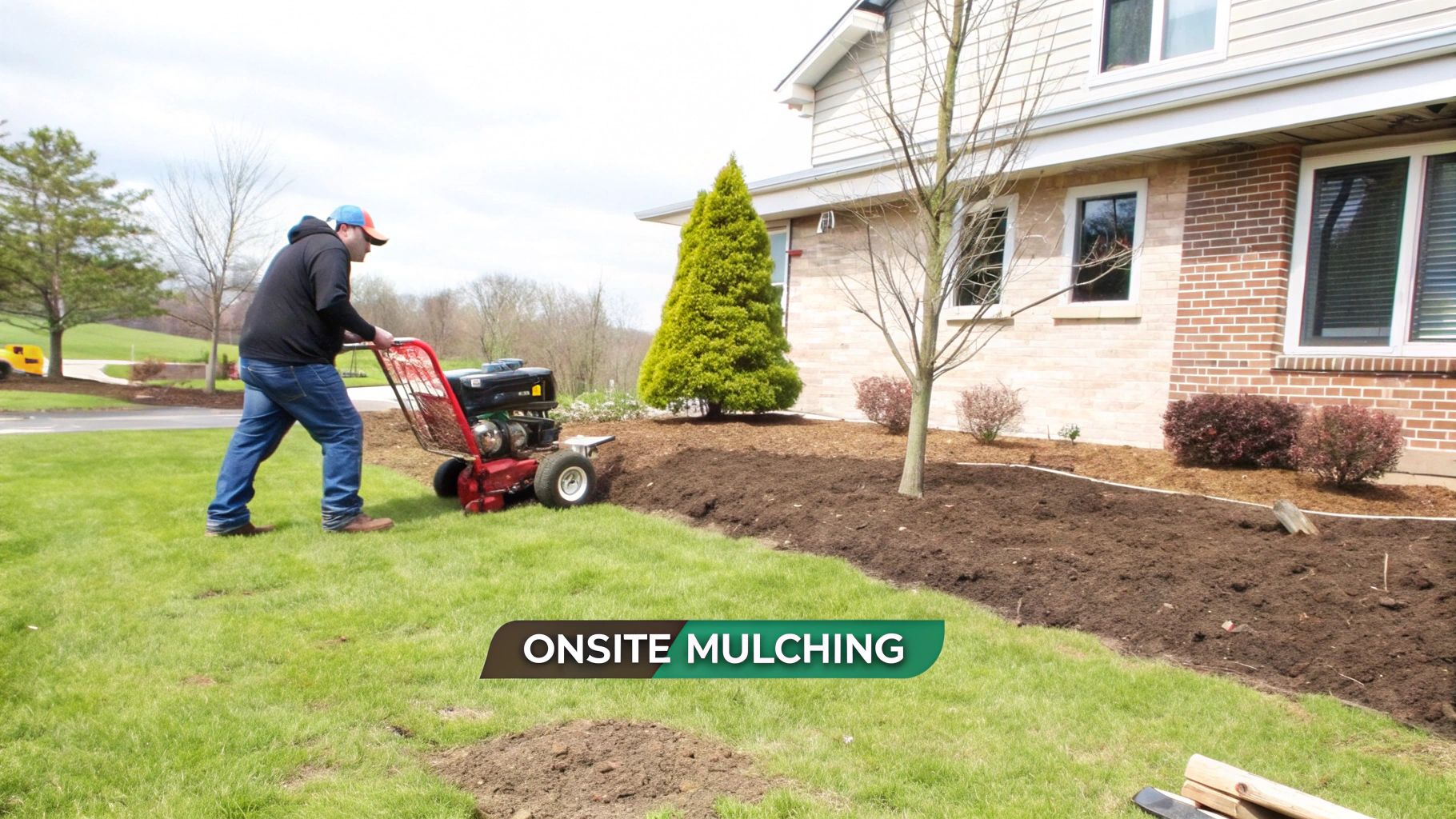
The single biggest cost-saving move we recommend is onsite mulching. Instead of paying to get rid of every cleared tree and shrub, we bring in a powerful forestry mulcher that processes everything right there on your property. This instantly turns a costly waste product into a valuable resource for your land.
This method completely knocks out two major expenses: transport and tip fees. You're no longer paying for truckloads of material to be driven across the Central Coast or Newcastle, and you’re not covering the ever-increasing disposal costs at commercial facilities. The savings add up incredibly fast.
Here's a quick comparison to show you what we mean. For a typical one-acre block, the difference is night and day.
Cost Comparison: Traditional Clearing vs Onsite Mulching
| Cost Component | Traditional Haul-Away (Estimate) | Onsite Mulching (Estimate) |
|---|---|---|
| Machinery & Labour | $2,000 – $3,500 | $2,000 – $3,500 |
| Trucking & Haulage | $1,000 – $2,000 | $0 |
| Tip/Disposal Fees | $800 – $1,500 | $0 |
| Total Estimated Cost | $3,800 – $7,000 | $2,000 – $3,500 |
As you can see, the savings are significant. Mulching doesn't just save money; it leaves you with a nutrient-rich layer that improves soil health and suppresses weeds.
A good benchmark for land clearing in eastern Australia, including NSW, is around $2,500 per acre when you use efficient onsite mulching. This approach can slash costs by up to 40% by eliminating transport fees and often streamlining the job down to a single machine and operator.
Precise Planning Prevents Overspending
Another simple but effective way to keep your budget in check is to be crystal clear about your boundaries. Before any work kicks off, take the time to precisely mark out the exact area you need cleared. This simple step prevents "scope creep," where more land gets cleared than necessary, adding avoidable costs to your final bill.
Work with our team to define the perfect footprint for your new home, shed, or landscaping project. We’ll make sure every square metre we clear is essential to your plan, which protects any valuable trees you want to keep and saves you money in the process.
Scheduling and Timing
If your project timeline has some wiggle room, scheduling the work during the off-season can sometimes lead to better pricing and availability. The peak season often sees high demand, but planning your clearing for a quieter period might give you a bit more budgetary breathing room. When you request a quote, have a chat with us about your timeline. We can give you advice on the best time to schedule the work for your property in suburbs like Erina or Belmont.
Ultimately, a well-managed budget comes down to smart planning and choosing the most efficient methods. If you're wondering how these factors might look for your specific project, our team can help you get a much clearer picture. It can also be helpful to see how individual trees are priced, which you can do with our tree removal cost calculator.
Why Hiring a Professional Is Non-Negotiable
When you're looking at the numbers for the land clearing cost per acre in Australia, it's natural to think about ways to trim the budget. Perhaps you could handle some of it yourself? But let's be clear: this isn't a weekend DIY project with a rented chainsaw. Land clearing is a high-stakes job where one small mistake can lead to massive, expensive consequences.
Hiring a qualified, insured arborist isn't just another line item on the invoice; it’s the only truly safe and reliable way forward. The risks of going it alone are huge, from a tree landing on your neighbour's roof to causing serious personal injury or unknowingly breaking strict environmental laws.
The Real-World Risks of DIY Clearing
Picture this: you're trying to clear a steep, tricky block in a dense Newcastle suburb like Merewether. The ground is unstable, big gum trees are leaning at odd angles, and you’re hemmed in by other homes. Without an expert's eye for physics and planning, a tree could easily fall the wrong way, smashing a fence or, much worse, crashing into a house.
Even with hired machinery, you might find it’s not up to the task—getting bogged down or, in a nightmare scenario, rolling over on uneven ground. Suddenly, what started as a money-saving idea has morphed into a dangerous, expensive disaster. This is exactly where professional experience becomes your most valuable asset.
Your Safety Net: Full Insurance and Compliance
When things go wrong on a land clearing site, the financial and legal fallout can be devastating. That’s precisely why our $20 million public liability insurance is a non-negotiable part of every single project we do. It’s not just a certificate on the wall; it’s your absolute guarantee that you're protected from liability if an accident happens.
Beyond that, we stick rigidly to Australian Standards (AS 4373-2007, Pruning of Amenity Trees) and all Work Health and Safety (WHS) laws. This professional commitment means every stage of the job is managed safely and by the book, protecting our crew, your property, and the public. The upfront cost of hiring a professional team is a small price to pay for guaranteed safety, full legal compliance, and total peace of mind.
The Dangers Hiding in Plain Sight
It’s not just the obvious risk of falling trees. A block of land is full of hidden hazards that only a trained professional can spot and manage. An experienced arborist identifies hidden decay in trees that look solid, assesses unstable ground for heavy machinery, and knows how to work safely around hazards like overhead power lines.
We also know the local council rules from the Central Coast to Lake Macquarie inside out, ensuring your project stays compliant and you avoid the risk of enormous fines for clearing protected species. When you choose a professional team with over 25 years of experience, you're investing in a proven process that sees these risks coming and deals with them before they ever become a problem.
Frequently Asked Land Clearing Questions
Starting a land clearing project can feel a bit daunting, and it always brings up plenty of questions. With over 25 years of experience clearing blocks across the Central Coast, Newcastle, and Lake Macquarie, we've pretty much heard them all. Here are some straightforward answers to the queries we get most often from property owners just like you.
How Long Does It Take to Clear One Acre of Land?
This one really depends on the block itself. Clearing a single acre can take anywhere from a couple of days to more than a week. If you've got a flat, lightly wooded block with good machine access, things will move pretty quickly.
But, if we're dealing with an acre full of dense, mature trees, rocky ground, or a steep slope, it's naturally going to take longer. The complexity and extra safety measures needed add to the timeline. As part of our free property assessment, we’ll give you a realistic timeframe based on exactly what we see on your site. Our "On Time, Every Time" promise isn't just a slogan—we stick to that schedule to keep your project moving forward without delays.
Do I Need a Council Permit to Clear Land in NSW?
In almost every situation, the answer is yes. Councils right across NSW—including Central Coast Council, City of Newcastle, and Lake Macquarie City Council—have strict rules to protect our local environment and tree canopy. Trying to clear land without the right approvals can result in a stop-work order and some seriously hefty fines.
Our decades of local experience mean we know the ins and outs of the permit process. We can help guide you through it to make sure your project is fully compliant from the get-go, saving you the headache and potential costs of getting it wrong. Never rely on a verbal "okay" from anyone. Always get your council approvals in writing before a single tree is touched.
What Happens to the Green Waste After Clearing?
You've got a few options here, and we can help you figure out the most cost-effective one for your project. We can absolutely haul all the green waste away to a proper disposal facility, but we often recommend onsite mulching as a smarter, cheaper alternative.
We bring in powerful machinery that turns all the cleared vegetation into a nutrient-rich mulch, right there on your property. This approach saves you a huge amount on transport and tip fees, and you're left with a valuable resource for your garden or landscaping later on.
Can You Clear a Block with Difficult or Limited Access?
Absolutely. This is where real experience and specialised equipment make all the difference. We’ve managed countless jobs on tricky sites, from tight suburban blocks in places like Charlestown to steep, hard-to-reach properties out in the hinterland.
Our team is highly skilled at planning and executing these complex jobs safely and efficiently. We always start with a thorough site assessment to map out the best approach, making sure we get the job done right, no matter what obstacles are in the way.
Ready to get a clear, accurate picture of your land clearing project? The team at Treecorp Solutions is here to provide a free, no-obligation property assessment and quote.
Get Your Free Quote Today