

For anyone with a garden on the Central Coast, Newcastle, or around Lake Macquarie, a good mulch is your best friend. It needs to do three jobs exceptionally well: lock in moisture during our dry spells, keep the weeds at bay, and slowly enrich the soil as it breaks down.
While you’ve got plenty of options, from our 25+ years of experience as qualified arborists, we’ve found that a quality, aged arborist wood chip mulch consistently comes out on top. Think of it as the perfect protective blanket for your garden beds.
Your Quick Guide to the Best Mulch for Local Gardens
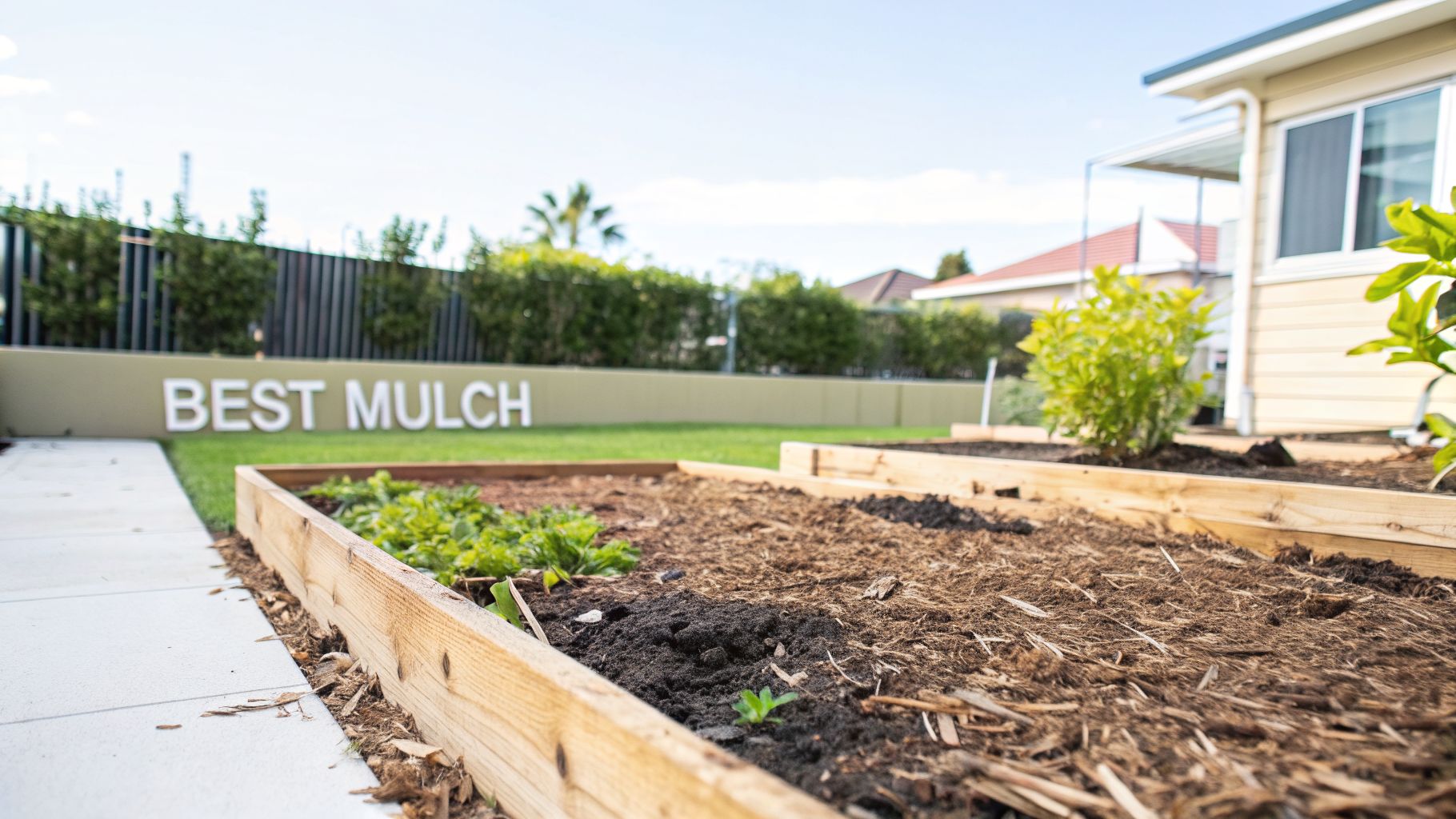
Choosing the right mulch can seem a bit overwhelming, but we're here to make it simple. It’s like picking the right coat for the season – you need something that protects against our harsh summer sun and the occasional torrential downpour, without causing more problems than it solves.
Laying down a layer of high-quality mulch is one of the smartest investments you can make for the health and resilience of your garden.
As experienced arborists, we see the real-world results of good and bad mulching choices every day, from little backyards in Gosford to sprawling strata properties in Terrigal. The best options work with our local climate, not against it, and they all help you save on water—a huge win for any property owner.
Why We Champion Arborist Wood Chip Mulch
So, why do we recommend arborist wood chips so often? Simple. This isn't the uniform, bagged stuff you grab from a hardware store. It’s a rich mix of wood, bark, and leaves that comes directly from the trees we prune and remove right here on the Central Coast.
That diversity is its secret weapon. It creates a mulch that:
- Breaks down slowly, feeding your soil a steady, balanced diet of organic matter.
- Lets water soak through easily but dramatically slows down evaporation once it’s in the soil.
- Forms a dense, interlocking mat that weeds find almost impossible to push through.
Here in the humid conditions of the Central Coast and Newcastle, a good layer of hardwood chip mulch from an arborist service can seriously cut down your garden's thirst. Local data shows that a 75-100mm layer of this premium mulch can lead to a 40-60% reduction in how much you need to water. That's a massive saving, especially during our long, dry summers.
The right mulch does more than just make your garden look tidy. It builds healthier soil, saves you time on watering and weeding, and protects your plants from the stress of our coastal climate.
Understanding what a qualified arborist does gives you a better idea of why the mulch we produce is such a high-quality, living product.
To give you a clearer picture, let’s quickly compare some of the most common mulch types you'll come across.
Comparing Common Mulch Types for Central Coast Gardens
Here’s a quick rundown of the usual suspects to help you decide what’s best for your garden beds, keeping our local conditions in mind.
| Mulch Type | Key Benefit | Typical Lifespan | Best For |
|---|---|---|---|
| Arborist Wood Chip | All-rounder: soil health, weed suppression, water retention. | 2-4 years | Almost everything! Trees, natives, and general garden beds. |
| Decorative Bark | Looks tidy and uniform. | 1-3 years | Formal garden beds where aesthetics are the top priority. |
| Compost | Excellent soil conditioner and nutrient booster. | 6-12 months | Vegetable gardens and hungry flowering plants. |
| Straw/Lucerne | Fantastic for moisture retention and weed control. | 6 months | The veggie patch, especially for short-season crops. |
| Rubber Mulch | Very long-lasting and doesn't decompose. | 10+ years | Playgrounds or paths, but not recommended for garden beds. |
| Gravel/Pebbles | Permanent, low-maintenance ground cover. | Permanent | Succulent gardens, pathways, and fire-prone areas. |
While decorative barks and gravel have their place, nothing beats the all-round performance of arborist chips for building a thriving, resilient garden here on the Coast.
Why Mulching Is Essential for Central Coast Gardens
Think of mulch as a protective blanket for your soil. A good layer is your garden's best defence against the baking summer sun we get in places like Wyong or Tuggerah, and it dramatically cuts down on how much water simply evaporates into thin air. For you, that means less time wrestling with the hose and a very welcome drop in your water bill.
It's also a fantastic natural weed barrier. By covering the soil, mulch blocks the sunlight that pesky weeds need to get started, saving you hours of back-breaking work pulling them out later. Honestly, it’s one of the simplest tricks to keep your garden beds looking tidy all year round.
The Secret to Building Healthy Soil Over Time
Beyond just saving water and stopping weeds, using organic mulches like arborist wood chips is a long-term investment in your soil's health. As these materials slowly break down, they release a steady stream of essential nutrients right where your plants need them. It’s like a slow-release fertiliser and a protective shield, all in one.
This whole process improves the very structure of your soil, helping it hold onto moisture and creating a light, airy environment where plant roots can really thrive. Imagine a garden bed in a suburb like Warners Bay; with a good mulch layer, it will resist getting compacted by heavy rain, which allows water to soak in deeply instead of just washing away.
Mulching isn't just another chore to tick off the list; it's the foundation of a resilient, low-maintenance, and vibrant garden. It protects your soil, conserves precious water, and builds fertility season after season.
Beating the Coastal Heat and Slashing Water Use
Here on the Coast, the benefits of mulch are even more obvious. That intense summer sun can stress plants out and dry the ground in what feels like minutes.
Studies relevant to our region show a stunning 60% reduction in watering needs for mulched gardens. In areas across Lake Macquarie where summer evaporation is sky-high, organic mulches also keep the soil temperature a crucial 10-15°C cooler. This is vital for protecting delicate plant roots from getting cooked and helps your plants survive a brutal heatwave.
Plus, if you've got a sloped block—a common sight across many Central Coast properties—a coarse mulch is perfect for stopping soil erosion and water run-off. You can dig into the full findings about mulching benefits to see just how big an impact it can have on your garden.
Choosing the Right Mulch for Your Garden's Needs
Not all mulches are created equal. The best one for your garden depends entirely on what you’re trying to achieve. Just like you wouldn't use the same soil for every single plant, the right mulch is about matching the material to the mission.
We see a huge variety of options used across Newcastle and the Central Coast, so let's break down the most common types to see where each one truly shines. Understanding the unique requirements of your garden is the first step. Think of it like a specialised cactus soil—it creates a custom-designed growing environment for those specific plants to thrive. Your goal dictates the best choice.
Organic Mulches: The Living Options
Organic mulches are the ones that break down over time, constantly feeding the soil as they go. As arborists, we’re big fans of these because they build a healthier, more resilient garden ecosystem from the ground up.
- Arborist Wood Chips: This is our top recommendation for most situations. It’s a fantastic mix of wood, bark, and leaves, creating a slow-release source of nutrients. It's chunky enough to let water through but dense enough to stop weeds in their tracks.
- Pine Bark: Popular for its tidy, uniform look, decorative bark is great for formal garden beds in suburbs like Erina. It lasts a reasonable time but offers fewer soil-building benefits than arborist chips.
- Sugar Cane Straw: A brilliant choice for veggie patches. It breaks down very quickly, adding heaps of organic matter to hungry soil, and it’s excellent for locking in moisture.
Inorganic Mulches: The Permanent Solutions
Inorganic mulches, like pebbles or gravel, don’t decompose. They are more of a permanent landscaping feature.
These materials are excellent for creating low-maintenance, modern looks and are a smart choice for fire-prone areas or pathways. However, they have a big drawback in our sunny climate: they absorb and radiate a lot of heat. On a hot summer afternoon, this can stress or even cook the roots of nearby plants.
This simple graphic shows exactly why mulching is so crucial for garden health, breaking down its three core jobs.
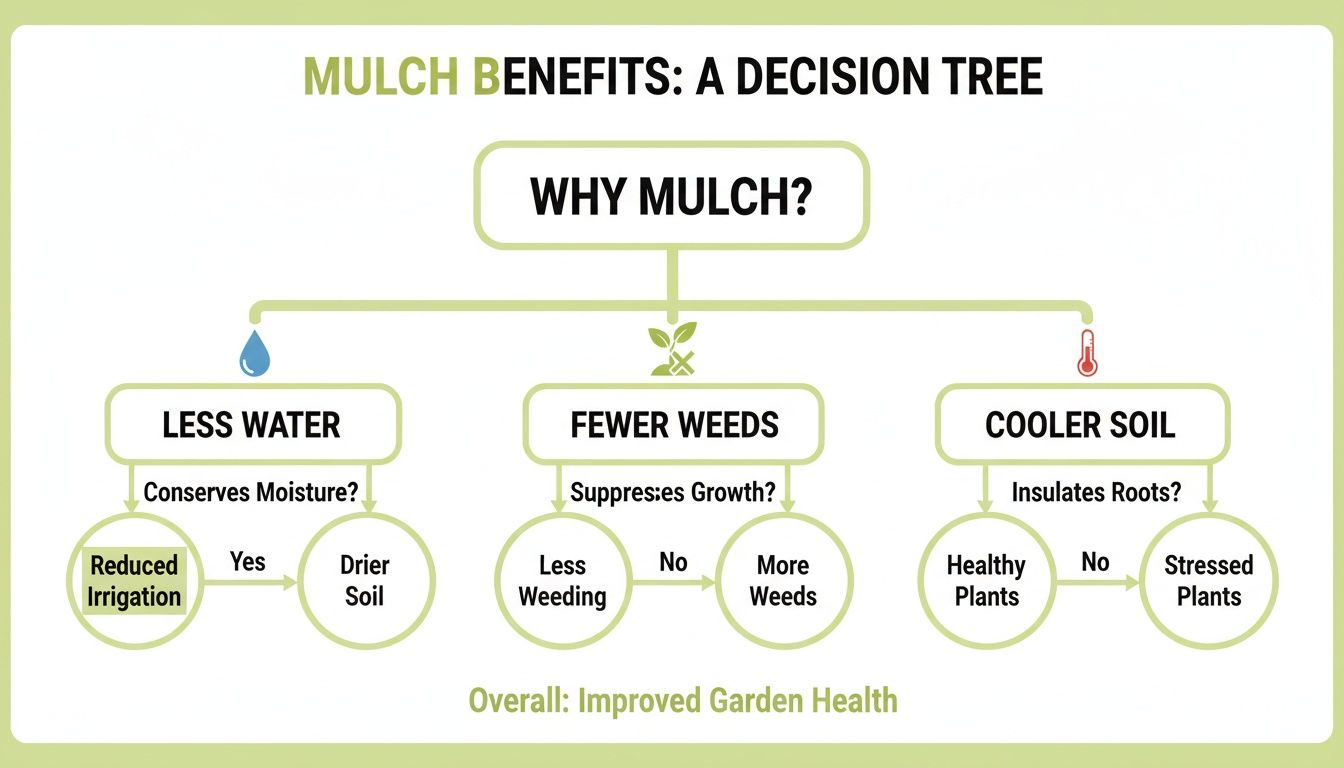
As you can see, the main goals are always to reduce watering, suppress weeds, and regulate soil temperature. It's all about creating a better environment for your plants to thrive.
The best mulch isn't just a topping; it's a tool. For a native garden needing low-phosphorus inputs, aged arborist chips are perfect. For a low-maintenance commercial entrance, decorative bark might be better. Choose based on the job you need it to do.
Ultimately, picking a good mulch for your garden means looking beyond aesthetics. Think about water retention for your plants in Summerland Point, weed control for a rental property in Gorokan, or soil improvement for a new veggie bed in Wangi Wangi. Making an informed choice now will save you time, water, and effort down the track.
And if you've recently had trees removed to make way for new garden beds, you might find our guide to tree stump removal on the Central Coast helpful for finishing the job properly.
How to Apply Mulch Like a Professional Arborist
Putting down mulch might seem as easy as tipping out a bag and spreading it around, but the way you do it makes a world of difference for your garden's health. With over 25 years of hands-on experience across the Central Coast, we’ve seen what works and what doesn't. It all starts with good prep.
Before you even think about laying down mulch, get in there and give the area a thorough weeding. If you just cover existing weeds, you're giving them a head start. Get them out first.
Next, give the soil a good, deep watering. Applying mulch to already moist soil is like putting a lid on a pot—it locks that moisture in, creating a reservoir your plants can draw from when the sun is beating down.
Getting the Depth Just Right
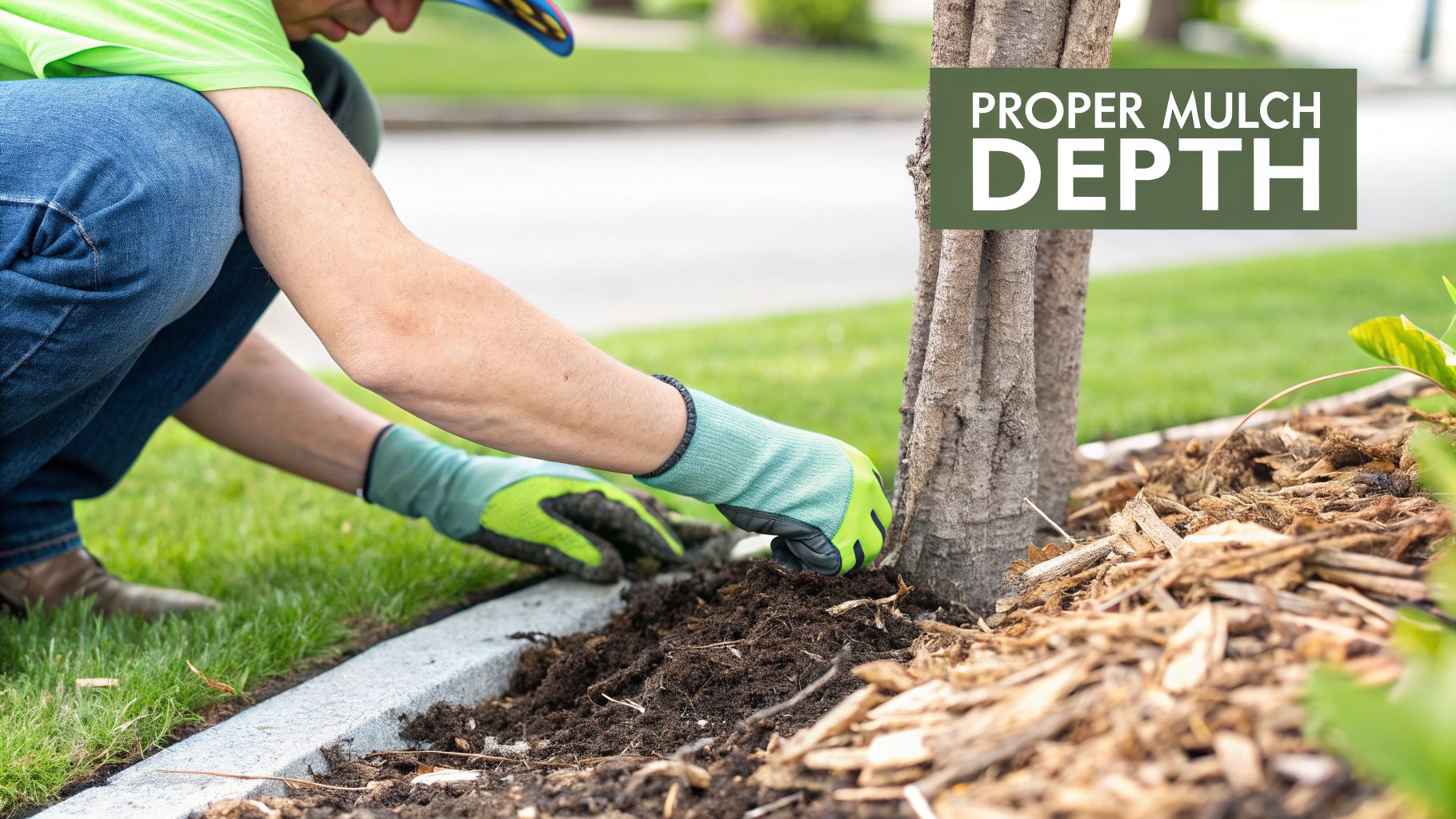
Once your garden bed is prepped, it’s time to spread the mulch. We always aim for a consistent layer between 75mm and 100mm deep. This really is the sweet spot for stopping weeds and holding onto that precious soil moisture.
- Too thin (less than 75mm): A shallow layer just won't cut it. Sunlight will get through, letting weed seeds sprout, and it won't be thick enough to insulate the soil from our hot summer sun.
- Too thick (more than 100mm): Piling it on too high can be just as bad. An overly deep layer can actually stop rain from ever reaching the soil, suffocating your plant's roots and starving them of water.
A good, even layer gives you all the benefits without any of the drawbacks. It’s a simple detail that makes a huge impact.
Avoid the Dreaded 'Mulch Volcano'
This is probably the single most common and damaging mistake we see, especially around trees. ‘Volcano mulching’ is when you see mulch piled up high against the trunk of a tree, forming a cone shape. It might look tidy to some, but it’s a death sentence for your trees.
Crucial Safety Tip: Always keep mulch at least a hand's width (about 10-15cm) away from the base of tree trunks and plant stems. This creates a small, mulch-free circle that lets the bark breathe.
When mulch is packed against a tree trunk, it traps moisture right against the bark. This is an open invitation for fungal diseases and rot to set in, which can girdle the tree and cut off its supply of water and nutrients. For anyone wanting to dive deeper into professional tree care, understanding what an arborist is and how we keep trees healthy is a great place to start.
Remember, a flat, donut-shaped application is the professional standard. It’s the best way to protect your valuable trees and shrubs for years to come.
Expert Mulching Solutions for Tricky Gardens
Every garden has its tricky spots, and a one-size-fits-all approach to mulching rarely works. Over our 25+ years working across the Central Coast, we’ve tackled just about every landscape challenge you can imagine, from steep slopes in Woy Woy to high-traffic common areas in The Entrance.
The key is matching the right mulch to the specific problem you need to solve.
Imagine you've got a sloping block in Woy Woy. During a heavy downpour, bare soil can easily wash away, taking your precious topsoil with it. A coarse, chunky arborist wood chip is perfect for this. The varied sizes interlock to form a stable mat that slows water down, preventing erosion and helping moisture soak in where it’s needed most.
Mulching Native Gardens
For native gardens, which are popping up everywhere from Umina Beach to Warners Bay, the choice of mulch is critical. Australian plants are adapted to low-phosphorus soils, and rich, compost-heavy mulches can actually do more harm than good.
Aged eucalyptus or mixed native arborist wood chips are ideal. They mimic the natural leaf litter of the bush, breaking down slowly without overloading the soil with nutrients. This helps suppress weeds while supporting the delicate balance our local flora thrives in.
The Best Mulch for Vegetable Gardens
Your veggie patch has completely different needs. Here, you want a mulch that breaks down relatively quickly to enrich the soil for hungry, fast-growing plants like tomatoes and zucchinis.
We often recommend lucerne or sugar cane straw for vegetable beds. They are brilliant at retaining moisture and keeping weeds down during the growing season. Better yet, by the end of the season, they have mostly decomposed into the soil, adding valuable organic matter and improving its structure for your next crop.
For more extensive property preparation, you might be interested in our guide to residential land clearing services.
Mulching for Strata and Commercial Properties
For strata managers overseeing properties in places like Toukley or Belmont, mulch needs to be tidy, long-lasting, and low-maintenance. Decorative pine bark or premium arborist chips are excellent choices for common areas and entrances.
They provide a neat, professional finish that holds its colour and structure for a long time, reducing the need for frequent top-ups. Their durability makes them a cost-effective choice for high-traffic areas, ensuring the property looks well-maintained while still delivering all the essential soil health benefits.
Turn Your Garden Waste into High-Quality Mulch
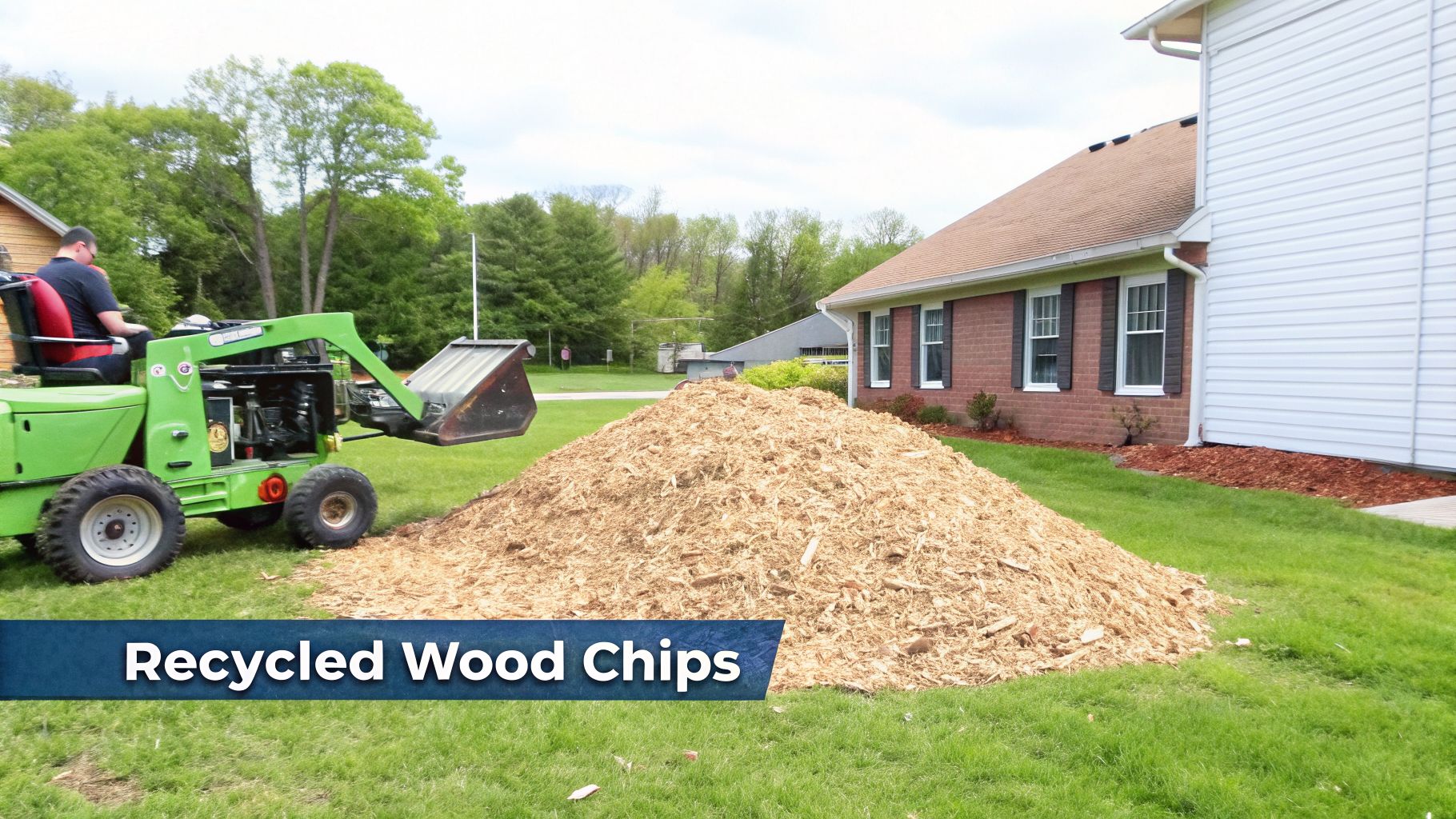
After a big pruning job or tree removal, you’re usually left with a massive pile of green waste. But instead of paying to haul it all away, what if you could turn it into a valuable resource for your garden?
That’s exactly what we do. We can process that waste right there on your property, turning cleared branches and trees into high-quality, aged arborist wood chip mulch. It's an efficient, eco-friendly solution that recycles on-site and leaves your landscape healthier than we found it.
This isn't the same stuff you get in bags from the hardware store. It's sustainably sourced from your own yard, so you know it’s free from unknown contaminants and perfectly suited to the local garden conditions here on the Central Coast.
From Cleanup to Garden Gold
Our on-site service doesn’t just leave your property looking immaculate after a job. It also creates a fantastic mulch that will feed your soil for years to come.
Imagine you've had a large gum tree removed from your property in Forresters Beach after a big storm. Our team can handle the entire process, from the initial tree work to the final mulching, safely and efficiently, leaving you with a valuable garden resource instead of a disposal problem.
Our on-site mulching service offers a sustainable cycle: we clear problematic trees and branches, then process them into a rich, organic mulch that directly nourishes the rest of your garden.
You can have complete peace of mind knowing our work is backed by our comprehensive $20M public liability insurance.
Of course, there are other ways to create great soil amendments. If you're keen to try your hand at it, you can learn how to compost at home.
And if you’ve recently had trees cleared and are now staring at the leftovers, you might also want to read our guide to professional tree stump grinding services.
Your Top Mulch Questions Answered
After more than 25 years as arborists working across Newcastle and the Central Coast, we get asked pretty much everything there is to know about mulch. Here are the straight-up answers to the questions we hear the most.
Will Mulch Bring Termites to My House?
This is a big concern for a lot of homeowners, but the short answer is no. A good quality garden mulch won't attract termites. These pests are on the hunt for big, solid pieces of timber to feast on, not the small, separated pieces you find in a typical arborist wood chip mulch.
The real danger isn't the mulch itself, but how it's applied. To keep your home safe, make sure you always leave a gap of at least 15cm between your mulch and your home’s foundation or any other timber structures. This little buffer zone stops moisture from building up against your walls and gives you a clear line of sight to spot any potential pest activity early.
When Is the Best Time of Year to Mulch?
Honestly, you can put mulch down at any time, but if you want to get the most bang for your buck on the Central Coast, aim for late spring or late autumn.
- Late Spring: Getting a fresh layer down before summer really kicks in is an excellent strategy. It helps lock moisture into the soil, giving your garden a fighting chance against our hot, dry spells.
- Late Autumn: Mulching in autumn acts like a protective blanket. It shields the soil from heavy winter downpours, stops erosion, and starts breaking down to feed the soil for a massive growth spurt in spring.
Plus, laying mulch at either of these times gives you a massive head start on weed control right when they're about to go crazy.
By timing your mulching for late spring or autumn, you give your garden the best possible defence against the seasonal extremes of our coastal climate.
Will Fresh Wood Chips Rob My Plants of Nitrogen?
It’s true that very fresh, green wood chips can temporarily "borrow" nitrogen from the very top layer of soil as they begin to decompose. However, properly aged arborist wood chips—the kind we produce after a tree removal or pruning job—have already started that process. This means the nitrogen-drawing effect is massively reduced by the time it gets to your garden.
If you’re still a bit worried, especially around heavy feeders like your veggie patch, there’s a simple fix. Just sprinkle a light layer of a nitrogen-rich fertiliser, like blood and bone, directly onto the soil before you spread the mulch. This gives your plants an immediate food source while the mulch works its long-term magic on the soil structure.
Ready to give your garden the protection it deserves? The team at Treecorp Solutions provides high-quality arborist mulch and professional application services across the Central Coast, Newcastle, and Lake Macquarie. Request a free quote online or call us for expert advice.


