So, you're wondering what it costs to clear a block of land on the Central Coast? The honest answer is: it varies. A lot. The cost of land clearing can run anywhere from a few thousand dollars for a straightforward job to tens of thousands for a large, tricky site. There's simply no one-size-fits-all price because every single block of land has its own unique set of challenges.
As a team of arborists with over 25 years of experience, we're here to give you a clear, honest guide. We'll walk you through the factors that influence the final price, so you can understand exactly what you're paying for.
Understanding Your Land Clearing Estimate
Getting a realistic figure for clearing your land is the first step, whether you're planning a new build in Newcastle or reclaiming your backyard in Gosford. With over 25 years of experience as qualified arborists, the first thing we do is walk the property with you. We've seen it all, and believe us, every patch of dirt tells a different story.
Imagine two typical Central Coast properties. The first is a mostly flat block in Erina with some grass and a handful of small, non-native shrubs. The second is a dense patch of bush in Terrigal, covered in mature gum trees and sitting on a steep, awkward slope. The difference in the machinery we'd need, the time it would take, and the sheer complexity is huge—and the price will naturally reflect that.
Our goal here is to give you a clear idea of what drives that final price. Knowing what goes into a professional quote is crucial, even though every project is different. If you're dealing with individual large trees, you can get a better sense of those specific costs by learning more about how a tree removal cost calculator works.
Quick Guide to Land Clearing Cost Factors
To give you a clearer picture, this table breaks down the key variables that can swing your land clearing costs up or down. These are the main things a qualified arborist will look at when putting together your quote.
| Cost Factor | Low Impact (Lower Cost) | High Impact (Higher Cost) |
|---|---|---|
| Vegetation | Grass, small shrubs, minimal trees | Dense bushland, mature native trees |
| Site Access | Wide, flat entry for large trucks | Narrow, steep, or obstructed access |
| Terrain | Level ground, stable soil | Sloping block, rocky or wet soil |
| Permits | No protected species or overlays | Requires council approval, arborist reports |
| Waste Removal | Minimal green waste, mulched on-site | Large volumes of timber, stumps, soil |
As you can see, a flat, easily accessible block with minimal vegetation will always be on the lower end of the cost spectrum. Conversely, a steep, rocky site with protected trees and tight access presents a far more complex—and expensive—job.
Breaking Down Your Land Clearing Quote
When a land clearing quote lands in your inbox, it can look like just a big number. But here at Treecorp Solutions, we believe in total transparency. With over 25 years of experience clearing blocks all over the Central Coast, Newcastle and Lake Macquarie, we want you to see exactly what you’re paying for. Every single item on our quotes is there for a good reason, tied directly to the real-world challenges of your specific property.
Think of it like getting a quote to build a house—the final price depends on the size, the materials, and how complex the design is. Land clearing is no different. Understanding the 'why' behind the cost is key, and it all boils down to a handful of factors we check out during our first site visit. This way, you get a straight-up, accurate price from the get-go, with no nasty surprises later on.
Vegetation Type and Density
The first thing we look at is what’s actually growing on your land. A block in Wyong covered in lantana and small shrubs is a world away from a large property in Matcham thick with mature Blackbutt and Ironbark trees. The type, size, and sheer volume of the vegetation tell us what gear, time, and manpower we’ll need.
Clearing light scrub and grass is fairly quick work, often handled with smaller machines like bobcats and mulchers. But a site with dozens of large, established trees? That calls for a highly skilled crew of qualified arborists, heavy-duty machinery like excavators and cranes, and a meticulous, safety-first plan. The bigger and denser the vegetation, the more labour-intensive—and therefore costly—the job will be.
Tree Size and Health
It’s not just about how many trees you have; their individual size and condition are huge cost drivers. A small, healthy tree is usually a straightforward removal. A towering, 30-metre gum tree that’s dead or diseased, on the other hand, is a serious hazard. These are the trees that can drop limbs without warning, putting our crew, your property, and your neighbours at risk.
Taking down a hazardous tree requires specialised rigging techniques and a careful, piece-by-piece process to get it on the ground safely. This is a job for certified, experienced arborists, which naturally affects the project’s cost. We never cut corners on safety, and managing these high-risk trees is a critical part of any professional quote.
This diagram shows how the main costs break down into three core areas: the site itself, the trees, and the slope.
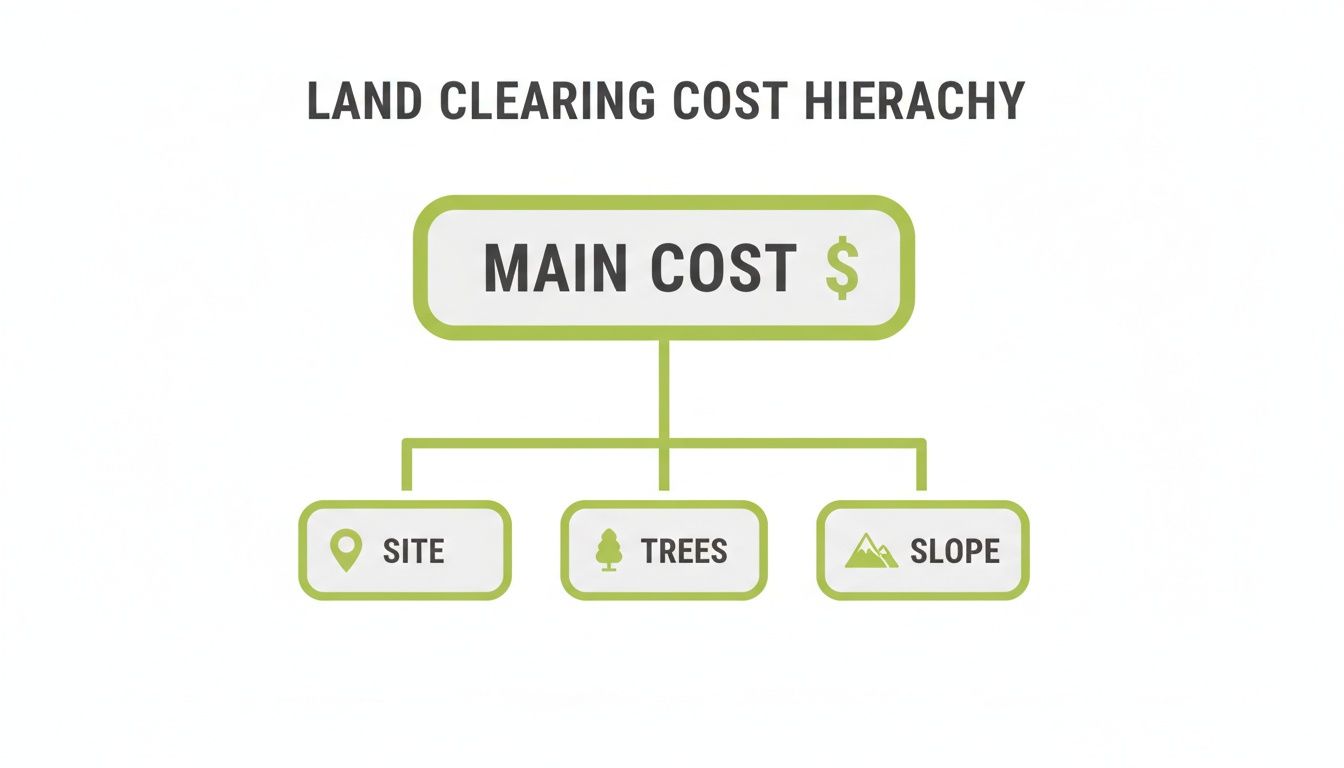
As you can see, these elements form the foundation of any accurate quote, each one influencing the equipment, time, and team needed for the job.
Site Access and Terrain
How easily can we get our machinery onto your block? It’s one of the first questions we ask ourselves at every site inspection. A flat block in Tuggerah with wide street frontage is a dream—we can drive our trucks and excavators right in, get the work done efficiently, and get out.
Now, compare that to a steep, battle-axe block in Wamberal with a narrow driveway and overhead power lines. In tricky spots like that, we might need to bring in smaller, specialised gear or even use cranes to lift equipment over obstacles. Difficult access slows things down and adds a layer of logistical complexity, which has to be factored into the final cost. The terrain itself—flat, sloping, or a steep hillside—also dictates the type of machinery and safety protocols we have to use.
Machinery and Equipment Needs
The right gear for the job is dictated by everything we've just covered. A simple clearing might only need a forestry mulcher and a skid steer. A more complex project with big trees, stubborn stumps, and rocky ground, however, will demand a whole fleet of heavy machinery. This could include excavators, bulldozers, wood chippers, stump grinders, and even cranes for safely dismantling huge trees in tight spaces.
The cost of hiring, fuelling, and running this specialised equipment—along with the certified operators who know how to use it safely—is a major part of your quote. With our 25+ years of local know-how, we know exactly which machine is right for which job. Using the wrong equipment isn't just inefficient; it's downright dangerous. Our experience means we match the machinery to your site’s unique needs, saving time and money while keeping safety as our top priority.
Waste Removal and Disposal
So, the land is cleared. What happens to all the leftover green waste? You can be left with tonnes of timber, soil, roots, and mulch. The cost of getting rid of all this material is a crucial part of the quote that some contractors conveniently forget to mention. We believe in giving you an all-inclusive price.
We can chip smaller branches and trees right there on-site, leaving you with great mulch for your new garden. For the big stuff—large timber and stumps—we’ll haul it away in trucks to a licensed green waste facility. The volume of waste and the tip fees are all calculated into your project total. Your site is left clean and ready for whatever’s next.
This also includes processes like grubbing, which is the complete removal of stumps and roots from below the soil. To get a better handle on this vital step, you can learn more about what is grubbing and why it matters for creating a truly clear site.
Council Permits and Regulations
Finally, you can't just clear land without thinking about the local council. Navigating their regulations is a non-negotiable part of doing the job right. Many trees, especially native species over a certain size, are protected by local Tree Preservation Orders. Clearing land without the right permits can lead to massive fines and stop-work orders.
Our team has years of experience dealing with the Central Coast, Newcastle, and Lake Macquarie councils. We can help you figure out if your project needs a permit, guide you through the application, and make sure all work is done in line with local environmental rules. This expertise saves you from legal headaches and ensures your project goes off without a hitch.
Hidden Costs And Essential Safety Considerations
When you get a quote for land clearing, it should cover a lot more than just the obvious stuff like labour and machinery. With over 25 years in this game, we've seen firsthand how overlooking the finer details can create massive, expensive headaches for property owners and strata managers down the track. It's the hidden risks and long-term consequences that really show the value of hiring a qualified arborist.
One of the biggest ones? Insurance. Trying to save a few bucks by hiring an uninsured operator is a huge gamble with your most valuable asset. Our $20M public liability insurance isn't a luxury; it’s your non-negotiable protection. This is what protects your property, your neighbours, and the public from the financial disaster of an accident. Without it, you could be left personally on the hook for thousands in damages.

The Long-Term Price Of Cutting Corners
The real cost of land clearing doesn't always show up on the initial invoice. A shoddy job can create problems that linger for years. When a site is cleared the wrong way, without proper respect for the landscape and Australian Standards, you're just asking for trouble.
Here are a few things we see all too often. Imagine you've got a sloped block in a coastal spot like Avoca Beach. If it's cleared too aggressively, the first big downpour will strip the topsoil, turning your land into a mudslide and causing runoff issues for your neighbours. Scraping the land bare can also create the perfect blank canvas for invasive weeds like lantana to take over.
Ignoring Tree Preservation Orders (TPOs) is another rookie mistake with a hefty price tag. Councils in Newcastle and on the Central Coast have very strict rules. Illegally removing protected trees can lead to massive fines and stop-work orders, completely derailing your project. This is exactly where the know-how of an experienced arborist team pays for itself. We don't just clear land; we do it right and do it safely the first time, protecting your investment.
Why Safety And Compliance Are Priceless
Beyond the immediate financial costs, proper safety planning is everything. A job site that adheres to solid construction safety plans is one where risks are managed and costly accidents are prevented. For strata managers looking after communal areas in complexes around Lake Macquarie, this isn't just a good idea—it's a legal duty of care under WHS legislation.
Our 'On Time, Every Time' promise is built on a foundation of safety and meticulous planning. A rushed, disorganised job just ramps up the risk of accidents, property damage, and delays. All of that ends up costing you more in money and stress.
We also have to consider the ecological impact of clearing. Between 2018 and 2021, NSW saw a 31% increase in the clearing of native woody vegetation. For homeowners with overgrown blocks in suburbs like Terrigal or The Entrance, this statistic highlights the serious environmental cost of unchecked clearing, which can make soil erosion and flood risks even worse in our coastal areas. Sometimes, you need a formal assessment before you can even start. Understanding the cost of an arborist report is a crucial part of that process.
Why Responsible Land Clearing Matters More Than Ever
Clearing your land isn't just a one-off project; it’s a decision that plugs directly into the bigger picture of our local environment. Here on the Central Coast and up through the Hunter, we're seeing more and more pressure on our beautiful natural spaces.
When you decide to clear a block, you’re not just making way for a new build or a garden—you're interacting with a delicate ecosystem. This isn’t about making you feel guilty. It's about understanding that every project has an impact, and partnering with a conscientious team of arborists means you can get the job done right. It’s about transforming your property while protecting its long-term health and value from nasty surprises like soil erosion and habitat loss.
The Bigger Environmental Picture
It's no secret that land clearing is on the rise across the state. In 2023, New South Wales saw a huge 47% surge in land clearing, with an incredible 66,498 hectares of native bushland removed.
While agriculture is the main driver state-wide, the development pressure in our growing communities from Wyong to Warners Bay certainly plays its part. You can discover more about these findings on the Nature Conservation Council's website. For you, the property owner, this context matters. It’s the reason local councils have their regulations, and it’s why professional arborists prioritise methods that minimise unnecessary damage.
Navigating Regulations and Protecting Your Asset
This increased environmental awareness is directly reflected in local council rules. A huge part of our job is making sure your project complies with every regulation, protecting you from potential fines and legal headaches down the track. Working with a qualified arborist means you have a partner who understands the local landscape—both literally and legally. We can help you figure out what’s allowed and what’s not before a single machine even arrives on site.
Working with professionals who understand WHS legislation and Australian Standards is your best defence against long-term problems. It’s not just about what you remove, but how you do it, ensuring the stability and health of the land that remains. A careless job on a sloped block near Lake Macquarie could lead to serious erosion during the next heavy downpour. A responsible approach involves selective clearing and ground stabilisation techniques that preserve the integrity of your land.
We also help you navigate the often-confusing world of council applications. You can learn more by checking out our guide on council approval for tree removal. Ultimately, responsible land clearing is an investment. It ensures your project is completed safely, legally, and sustainably, adding value to your property without taking away from the beautiful local environment we all share.
Deciding Between DIY and a Professional Arborist
It’s always tempting to think you can save a bit of money by tackling a land clearing project yourself. And for some really small jobs, you absolutely can. If your goal is to pull out a few overgrown shrubs or clear some minor weeds on your property in Forresters Beach, a weekend of hard work with the right garden tools might be all you need. We’re all for empowering homeowners to manage their own patch of paradise.
However, you have to know where to draw the line. The moment a project involves large trees, steep slopes, or any kind of machinery, the risks jump up dramatically. What looks like a cost-saving measure can quickly spiral into a dangerous and expensive mistake.
When to Call in the Professionals
The simple truth is, most land clearing jobs are not DIY projects. Imagine trying to remove a few small, stubborn stumps on your Tuggerah property. It’s tough work, but maybe you can manage it. Now, picture taking down a 20-metre-tall gum tree with dead branches hanging precariously over your home or your neighbour's fence.
The difference in skill, equipment, and safety planning required is massive. Without the right training and gear, you're facing some very real risks like personal injury, property damage, and legal trouble with council. When you're weighing up the decision, understanding the full scope of expert land clearing and site prep services shows just how much value the professionals bring. They don’t just show up with machinery; they bring the know-how to manage every single risk on site.
The True Cost of DIY Gone Wrong
Hiring a professional arborist isn’t just about paying for their time; you're investing in safety, efficiency, and your own peace of mind. Our team turns up with over 25 years of experience, the right machinery for any job, and—this is the big one—$20 million in public liability insurance. This insurance is your safety net, protecting you from any financial disaster if something unexpected happens.
A qualified arborist does more than just cut down trees. We assess the entire site, spot hidden hazards like underground power lines, and create a strategic plan that follows all WHS legislation and Australian Standards to the letter. If you’re thinking about hiring an expert, it’s worth getting your head around how they price a job. Learning more about what an arborist costs and why gives you a much clearer picture of the value they provide.
In our experience, the money you might save on a DIY job is nothing compared to the potential cost of an accident, a council fine, or long-term damage to your property. For minor gardening, roll up your sleeves and get stuck in. But for anything that involves clearing significant vegetation or felling trees, the safest and most cost-effective decision is always to call a qualified, insured arborist.
Your Checklist for an Accurate Land Clearing Quote
Getting a solid price for your land clearing project really comes down to asking the right questions. To make sure you’re comparing apples with apples, you need to give every contractor the same clear brief and ask for a detailed breakdown in return. Think of it like this: the clearer you are about what you need, the more accurate and reliable the quotes will be.
With over 25 years of hands-on experience right here on the Central Coast, we’ve seen firsthand how a little prep work can save you a world of confusion and unexpected costs down the track. This checklist is designed to give you the confidence to talk to any contractor, knowing exactly what to look for. It’s your best tool for spotting the true professionals who value transparency and safety as much as you do.

What to Prepare Before You Call
Before you even pick up the phone, it pays to gather a few key details. Having this info ready helps a professional team give you a much more accurate initial idea of the job.
First, clearly define your scope. Know exactly what you want cleared and mark out the boundaries on your property if you can. Are you clearing an entire block in Morisset for a new build, or just a patch in your Woy Woy backyard for a granny flat? Walk the area and make a note of any obvious hazards like overhead power lines, steep slopes, or nearby structures. Finally, if you’ve already been in touch with council, have any emails or permit documents handy.
Key Questions to Ask Every Contractor
Once you're ready to get quotes, use these questions to properly vet each company. A professional outfit will have no trouble answering every single one.
Ask to see a copy of their $20 million public liability insurance and check that their on-site team leaders are qualified arborists. You should also ask about their on-site safety protocols and how they comply with WHS legislation and Australian Standards. Most importantly for understanding the true cost of land clearing, ask them straight: "Does your quote include stump grinding, all waste removal, and a final site cleanup?" Some mob will list these as optional extras, which can blow your final bill way out.
We’ve always believed an informed client is our best partner. A trustworthy contractor will welcome your questions and give you clear, straight answers. If a company gets vague about their insurance or safety, treat it as a major red flag. When you’re ready, we invite you to use these very questions when you contact us.
A Few Common Land Clearing Questions
Here are some of the questions we hear all the time from property owners across the Central Coast, Newcastle, and Lake Macquarie. With over 25 years of hands-on local experience, we've put together some clear, straightforward answers to help you plan your project with confidence.
Do I Need a Council Permit for Land Clearing?
This is probably the most critical question, and the honest answer is: it depends. Council regulations can be a real maze and they differ quite a bit between the Central Coast, Newcastle, and Lake Macquarie LGAs. Whether you need a permit usually comes down to your property's zoning, any environmental overlays, and the type, size, and even the species of the plants you want gone.
For instance, clearing a small patch of pesky lantana in your Toukley backyard probably won't require any paperwork. But if you’re looking to remove mature native trees on a property in a sensitive coastal zone like Killcare or a heritage area in Newcastle, you can bet you’ll need council approval. Figuring out these rules is a big part of what we do. We can assess your property and give you the right guidance on the permit process.
How Long Does a Typical Clearing Project Take?
The timeline for a land clearing job can be anything from half a day to several weeks. Just like the cost, the timeframe is completely dictated by the size and complexity of the job. A small, flat residential block with a bit of scrub and a few saplings? We could have that cleared and tidied up in a single day.
On the other hand, a multi-acre block with dense, mature forest, a steep slope, and tricky access could easily take a week or more. Things like weather, the specific machinery needed, and the careful removal of hazardous trees all factor in. We always give you a realistic timeline right from the start so you know exactly what to expect.
Is Stump Grinding Included in the Land Clearing Cost?
This is a fantastic question to ask, as it’s a common spot for hidden costs to pop up. Often, stump grinding is quoted as a separate line item and isn't automatically included in the initial clearing price. Clearing might just mean cutting everything to ground level, leaving the stumps and root systems in place. We believe in being upfront, so we always make this crystal clear from the get-go.
Leaving stumps behind can cause all sorts of headaches for new construction or landscaping, and they can even lead to regrowth or become a haven for termites. We’ll have a chat about your final plans for the land to advise if stump grinding is necessary and make sure it's clearly detailed in your quote.
Ready to get a clear, accurate picture of what your land clearing project involves? The team at Treecorp Solutions has the local expertise and equipment to get the job done safely and efficiently.