Proper palmetto tree pruning is about so much more than a quick tidy-up. It's a critical part of maintaining the health, safety, and iconic coastal look of these palms. We know the real work is in strategically removing old, dead fronds to head off any potential hazards and encourage strong, healthy new growth—a job best left to the pros. With over 25 years of local experience, we can guide you on how to care for your palms the right way.
Why Smart Palmetto Pruning Is More Than Just a Tidy Up
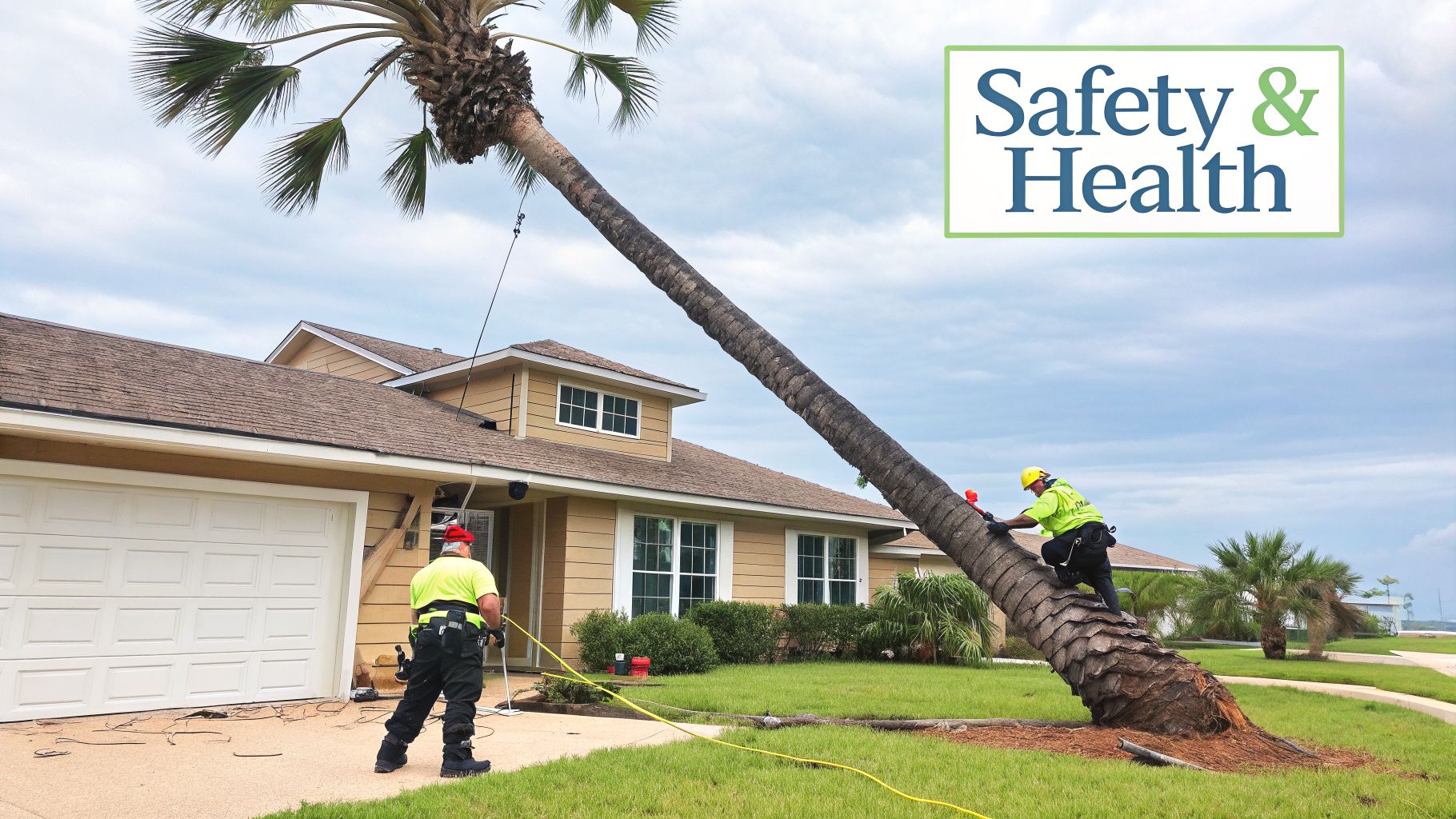
With over 25 years of experience as arborists across the Central Coast, Lake Macquarie, and Newcastle, we've seen first-hand what happens when palmetto palms are left to their own devices. These beautiful trees, a common sight from Terrigal to The Entrance, can quickly turn into a serious liability if they aren't maintained the right way. It’s not just about looks; it’s about managing risk for your property.
The Real Risks of Neglected Palms
Our number one concern with unpruned palmettos is falling fronds. These can be surprisingly heavy, and when they're torn loose by the strong coastal winds we get so often, they can do real damage to roofs, cars, and fences. Worse, they pose a serious safety hazard to anyone walking underneath.
Imagine you own a home in Gosford with a big palmetto overhanging your driveway. During a storm, a bunch of dead fronds comes crashing down. This is a common call-out for us, and it perfectly illustrates why proactive pruning is so important. Regular maintenance removes these risks before they become emergencies.
Health and Longevity vs a Quick Fix
Proper palmetto tree pruning is a careful, deliberate process. It’s all about removing only the dead or dying fronds without damaging the tree’s trunk or its central growth point. This promotes the tree's long-term health, allowing it to focus its energy on new, vibrant growth rather than sustaining dead weight.
This careful technique is a world away from aggressive pruning, which can wound the tree and leave it wide open to pests and disease. This is especially crucial now, as our region faces growing environmental pressures from things like coastal salt damage and drought.
In New South Wales, tree cover loss reached a staggering 2.88 million hectares between 2001 and 2021. This makes preserving our healthy, established trees more important than ever. You can explore more on these Australian tree statistics and their impact on our environment.
Special Considerations for Strata Properties
For strata managers and body corporates in areas like Wyong or Warners Bay, the duty of care is even higher. Neglected palms in shared community spaces create a significant liability, and it’s something we help manage all the time.
Regular, professional palmetto tree pruning is a non-negotiable part of property maintenance under WHS legislation. It ensures the safety of residents and visitors while protecting the body corporate from potential claims. With our $20M public liability insurance, you get the peace of mind that comes from knowing you're covered by professionals who put safety above all else.
Reading the Signs: When to Prune Your Palmetto
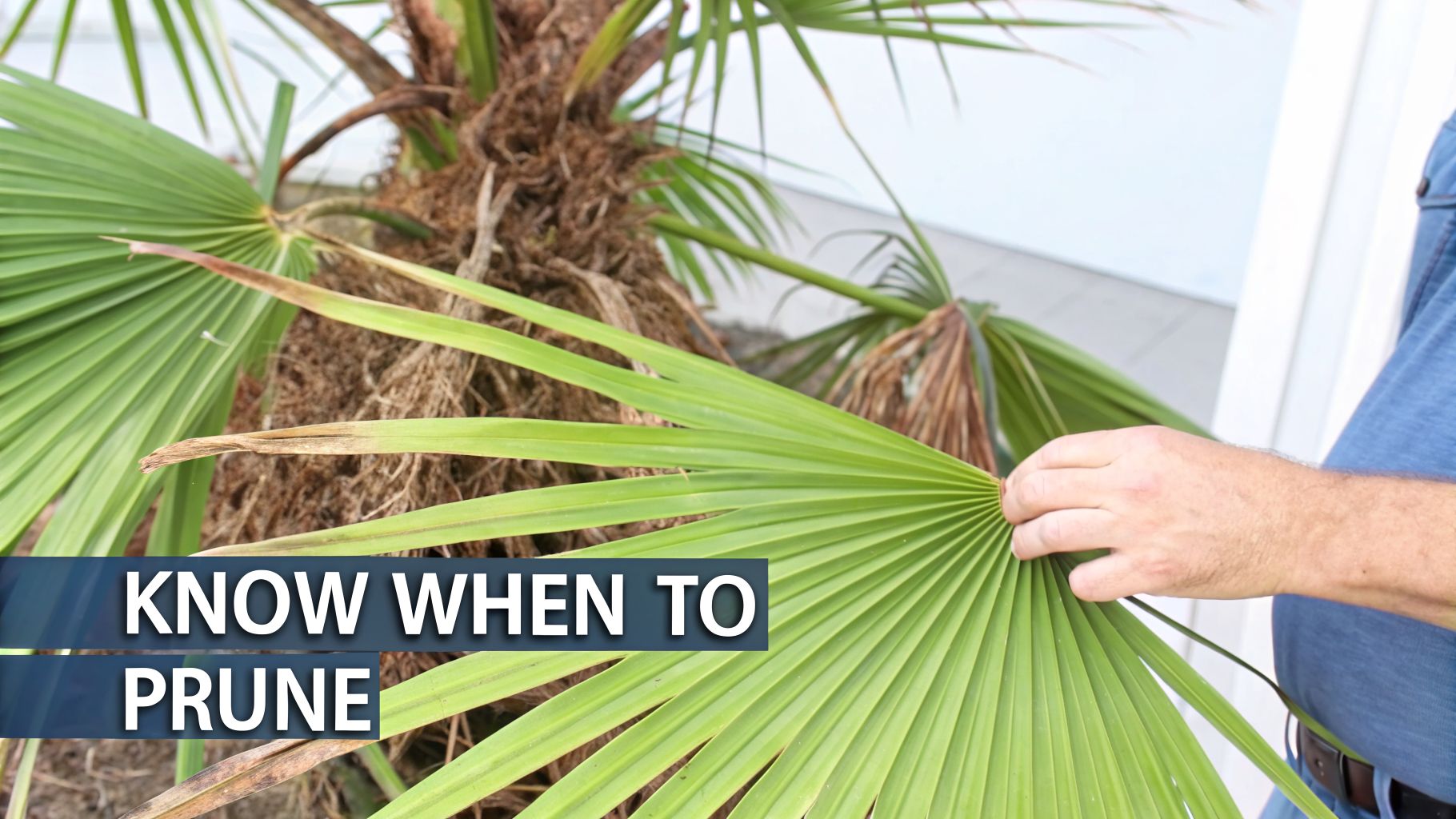
Getting the timing right for pruning your palmetto is one of the most important things you can do for its health. If you prune at the wrong time of year, you risk putting the tree under serious stress, leaving it wide open to pests and disease. After 25 years working with palms from Newcastle all the way down to the Central Coast, we’ve learned to read the seasons—and the trees themselves—to know exactly when to make the cut.
For any major pruning, late spring is your best bet. This gives the palm the entire summer growing season to heal up and push out healthy new growth. Pruning just before winter, on the other hand, can leave the tree exposed and much more vulnerable to damage from a cold snap. If you want to dive deeper into seasonal timing, check out our guide on the best time to prune trees in Australia.
What to Look For Before You Cut
The most obvious signal is colour. A frond that’s completely brown, dry, and brittle is dead. You can remove those at any time without hurting the tree. It’s the yellowing or drooping fronds that seem to cause the most confusion for property owners.
It’s absolutely crucial to understand that these dying fronds are still providing vital nutrients back to the palm. Think of it as the tree drawing energy back from its old leaves before letting them go. If you remove these fronds too early, you're essentially cutting off the tree's food supply and forcing it to burn through precious energy reserves. This matters because it weakens the tree's natural defences.
Our Arborist's Rule of Thumb: If a frond has any green or yellow left in it, just leave it be. Only prune fronds that are completely brown or are hanging down below a horizontal line from the trunk. This simple rule ensures you’re not accidentally starving your palm.
How Local Conditions Make a Difference
Where you live also plays a big part in your tree's health. A palmetto in Wamberal, for example, might show signs of salt burn on its fronds from those relentless coastal winds. While it might look a bit rough, it doesn’t always mean the frond is dead or needs immediate removal.
On the flip side, trees in more sheltered suburbs like Warners Bay might hold onto their fronds for much longer. We always assess these local factors before even thinking about a pruning schedule, making sure we’re only doing what’s best for the tree’s long-term health.
The Right Tools and Safety Gear for the Job
If you're thinking about tackling a few low-hanging, completely dead fronds on your palmetto yourself, grabbing the right gear isn't just a good idea—it's non-negotiable. As professional arborists with 25+ years of experience, we roll up to jobs with a truck full of specialised equipment, but for a small DIY cleanup, a few key items are essential for both your safety and the health of your tree.
First up, let's talk about what you'll use to actually cut the fronds. For reaching anything that's a bit high while keeping your feet firmly on the ground, a good quality cordless battery pole saw is a great help. It’s a much safer option than trying to balance on a ladder. For any fronds you can easily reach, a standard handsaw will do the trick.
No matter which tool you use, the blade must be sharp and clean. A dull blade doesn't cut; it tears. This shreds the fibres of the palm trunk, leaving behind a ragged, ugly wound that’s basically an open invitation for pests and diseases to move in.
Personal Protective Equipment (PPE) Is a Must
Even if you’re just pruning one or two fronds, proper Personal Protective Equipment (PPE) is critical. We never start a job without it, and neither should you. Think of it as your uniform for any tree work, no matter how small the task feels.
Your basic PPE kit should include:
- Safety Glasses: Palm fronds and bits of bark can splinter and fly off without warning. Protecting your eyes is the top priority.
- Heavy-Duty Gloves: Palmetto trunks are incredibly rough, and the frond stems can be surprisingly sharp. A decent pair of gloves will save you from plenty of cuts and scrapes.
- Sturdy, Closed-Toe Footwear: Boots with a good grip are essential. They’ll protect your feet from falling debris and give you stable footing while you work.
Our critical safety warning: Never, ever use a ladder for tree pruning. Ladders on uneven ground are incredibly unstable and are a leading cause of serious, life-changing injuries for homeowners. If you can’t reach it safely from the ground, it’s a job for a professional.
This brings us to a crucial point about knowing your limits. A small, accessible frond might be a manageable task. But the second a job involves height, working near power lines, or dealing with heavy, unstable branches, it’s strictly time to call a qualified and insured arborist.
Our crews are trained extensively in working safely at heights and follow strict WHS protocols every single time. To get a better sense of our commitment to safety on every job site, you can read about our WHS and safety standards. It’s a level of precaution that’s simply not possible to replicate without professional training and equipment.
Professional Cutting Techniques for a Healthy Palm
There’s a right way and a very wrong way to prune a palm frond. As qualified arborists, we see the aftermath all the time: a clumsy cut that wounds the trunk, leaving an ugly scar that’s a perfect entry point for pests and rot. The techniques we use are all about making clean, precise cuts that help the palm heal quickly and stay healthy for the long run.
For the lighter, dead fronds that you can easily reach, a sharp handsaw is usually all you need. The aim is to make a single, clean cut as close to the trunk as you can get without actually slicing into it. Leaving a long, jagged stub just invites decay and can trap water, leading to a host of problems later on.
Handling Heavier Fronds and Fruit Stalks
When you’re dealing with heavy, green fronds, there’s a real danger of the frond’s weight causing it to tear a strip of bark right off the trunk as it falls. To stop this from happening, we use a professional technique known as the three-cut method. It might sound a bit involved, but it’s a straightforward and safe way to control the frond's fall.
Here’s the breakdown:
- The Undercut: Make a shallow cut on the underside of the frond, about 30 centimetres out from the trunk. This cut acts as a safety hinge, preventing the bark from tearing.
- The Top Cut: A few centimetres further out from your first cut, slice down from the top of the frond until it snaps and falls away. All the dangerous weight is now gone, leaving just a short stub.
- The Final Cut: Now you can safely remove the remaining stub with a clean, final cut close to the trunk.
This method gives you complete control and protects the tree from nasty, damaging wounds. We apply this same careful approach when we're removing messy fruit or flower stalks. Say you have a palm in your Erina home that’s dropping sticky fruit all over your garden path; we’d remove the entire fruit stalk right back at the trunk, keeping your property clean without harming the palm.
The image below shows the essential safety gear you'll need for any pruning that involves a saw.
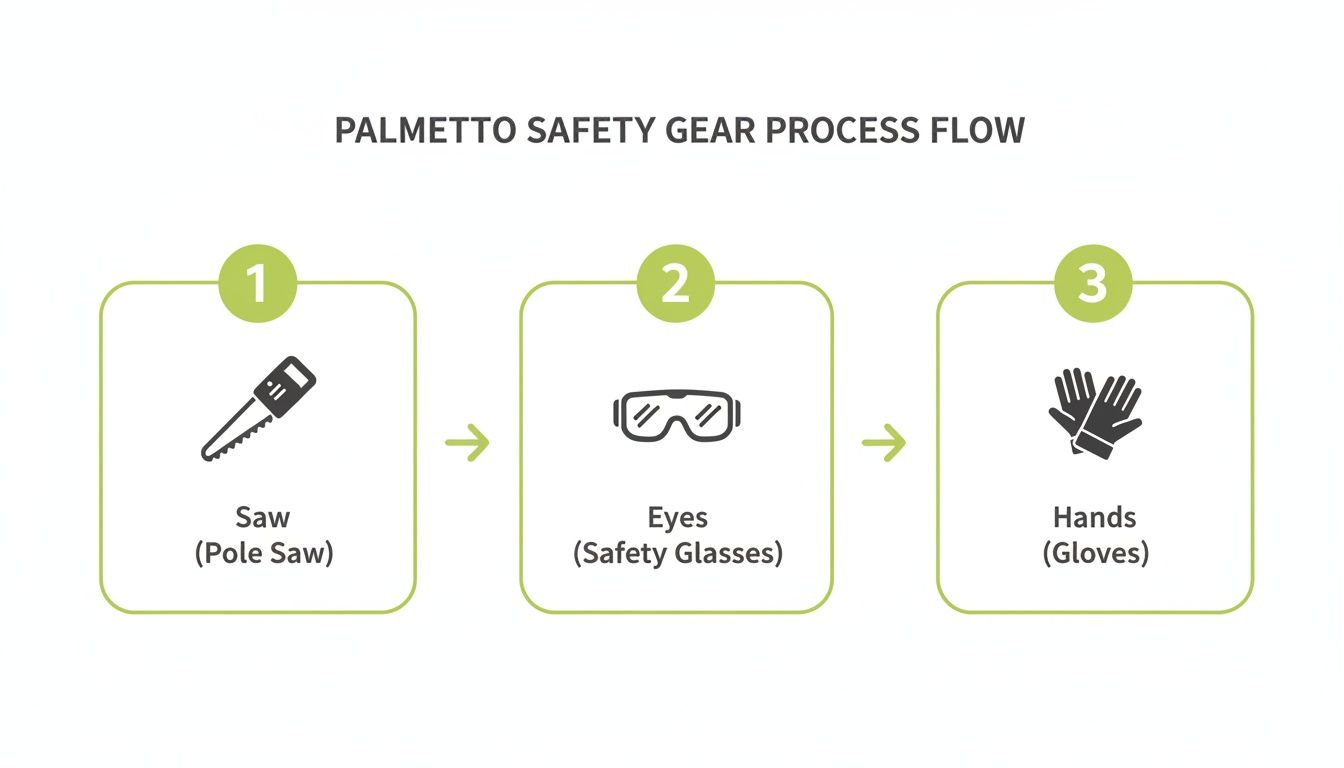
As you can see, using a saw—whether it's a handsaw or a pole saw—always requires, at a minimum, safety glasses and heavy-duty gloves to protect you from flying debris and sharp edges.
How Close to the Trunk Should You Cut?
This is where experience really makes a difference. You want to cut the frond off neatly, leaving a smooth surface behind. Cutting into the trunk itself is one of the worst mistakes you can make. Unlike other trees, palms don’t heal bark wounds. That scar will be there forever.
Our Pro Tip: Aim to leave a small, tidy base of the frond attached, but no more than a centimetre or two. This protects the trunk while still looking neat and preventing the stub from rotting. Getting this just right is a key part of professional palmetto tree pruning.
These cutting techniques are just one part of the expert tree work we do. Similar precision is crucial for the complex art of shaping a tree's canopy for both health and appearance. It's skills like these that show the difference between a quick tidy-up and professional arboriculture that preserves the long-term health and value of your trees.
Common Pruning Mistakes and How to Avoid Them
With over 25 years in the tree game, we’ve been called out to fix countless problems caused by well-intentioned but dodgy palmetto pruning. It's frustrating to see a beautiful palm weakened by a few simple mistakes, so we want to run you through the common errors we see across the Central Coast and how to steer clear of them.
The single biggest mistake we see? Over-pruning. You’ve probably spotted palms that have been hacked into a ‘pineapple’ shape, with just a sad little tuft of fronds at the top. While some might think this looks neat, it’s actually starving the tree.
Green fronds are the palm’s solar panels; they create food through photosynthesis. When you remove them, you force the tree into survival mode. This weakens it and makes it a prime target for pests and disease, which matters because a stressed tree is far more likely to fail in a storm.
Damaging the Trunk
Another common but incredibly damaging mistake is using climbing spikes on a palm’s trunk. Unlike a gum tree, a palm doesn't have bark that can heal over wounds. Every single puncture from a climbing spike leaves a permanent, ugly scar that becomes an open invitation for rot and insects to move right in.
Our team always uses non-damaging access methods, like an Elevated Work Platform (EWP), to protect the trunk’s integrity. We're "On Time, Every Time" and committed to leaving your property better than we found it.
Our Pro Arborist Tip: Never, ever let someone use climbing spikes on your palm trees. The damage is irreversible and can seriously shorten the tree’s life. Always ask a pruning service how they plan to get up into the canopy.
Managing Green Waste
Properly cleaning up and getting rid of palm fronds is another hurdle many people don't anticipate. These fronds are surprisingly bulky, heavy, and awkward to handle, and they don’t break down quickly in a compost bin. Just leaving them piled up creates a perfect nesting spot for rats and other pests.
When we complete a palmetto pruning job on your Tuggerah or Lake Macquarie property, our service includes hauling away all the green waste, leaving your yard exactly as we found it. This complete approach also applies to our professional dead wooding services, ensuring no hazardous debris is left behind.
A little bit of aftercare goes a long way, too. After a prune, just make sure the palm gets enough water, especially during dry spells, and hold off on using any harsh chemicals or fertilisers near the base. A healthy, well-hydrated palm will bounce back quickly and get right back to thriving.
Knowing When to Call in a Professional Arborist
Knowing your limits is the most important part of tree safety. While pruning one or two low-hanging, dead fronds might seem like a manageable weekend job, there are clear signs that it’s time to put the tools down and call a qualified, insured arborist.
If the job involves working at any real height, dealing with palms near power lines, or pruning on a sloped or tricky block, the risk is simply too great for a DIY attempt. These situations demand specialised equipment and extensive training to keep everyone and everything on your property safe. We often see homeowners get into trouble trying to manage large palms themselves, especially after a big storm rolls through the Central Coast.
Navigating Permits and Strata Rules
Another key time to get us involved is when paperwork enters the picture. Council regulations can be a minefield, varying between the Central Coast, Lake Macquarie, and Newcastle councils, particularly for large trees or those in heritage zones. It’s a maze we navigate for clients every single day, handling the permit process so you don’t have to. You can find out more about the broader scope of our work by learning what a qualified arborist does.
For strata properties in suburbs like Toukley or Belmont, the rules are even stricter. Gaining body corporate approval is often the first hurdle, and the safety standards for shared community spaces are completely non-negotiable. Our $20M public liability insurance provides that essential layer of protection for everyone involved.
When a Storm Hits, Don't Risk It.
If wild weather has left large, heavy fronds hanging precariously from your palmetto, this is a serious hazard. Trying to remove them yourself can be incredibly dangerous. This is an emergency, and it’s what our 24/7 emergency service is for.
We can provide a prompt, safe resolution to prevent injury or costly property damage. For any situation you’re unsure about, the best first step is always a free, no-obligation property assessment and quote. It gives you a clear picture of the job scope and costs, so you can make an informed, safe decision.
Your Palmetto Pruning Questions Answered
We get a lot of questions from property owners across the Central Coast, Newcastle, and Lake Macquarie about how to best care for their palmetto trees. Here are the answers to some of the most common ones we hear.
How Often Should I Have My Palmetto Trees Pruned?
For most healthy palmettos on the Central Coast, a professional prune once every one to two years is plenty. This is usually just to clean up dead or dying fronds and get rid of any old fruit stalks.
Of course, this isn't a hard and fast rule. If we've had a rough storm season, or your palm is in a tricky spot (like over a driveway), it might need a bit more frequent attention. The overall health and age of the tree play a big part, too.
Will Pruning My Palm Make It Grow Faster?
This is a common misconception. Proper palmetto pruning is all about health and safety, not trying to force it to grow faster. When you remove dead fronds, you’re simply allowing the palm to redirect its energy into new, healthy growth.
The real danger is over-pruning. Cutting into green fronds can seriously stress the tree, slowing its growth by robbing it of its ability to photosynthesise and create food.
Is It Okay to Leave Cut Frond Stubs on the Trunk?
It’s best to cut the frond close to the trunk without nicking or damaging the trunk itself. Leaving long stubs, which some people call 'boots', can look messy and untidy. Over time, these stubs can start to decay, creating the perfect hideout for pests.
A clean, close cut not only looks better but also helps the palm heal properly.
A professional arborist knows exactly where and how to make the cut. It's a skill that ensures the long-term health and a clean look for your palm.
Do I Need a Council Permit for Palmetto Tree Pruning?
Generally, no. If you're just doing routine pruning to remove dead fronds from a palmetto, you typically won't need a council permit.
However, the rules can differ slightly between Newcastle and Central Coast councils. This is especially true if you’re dealing with a particularly tall tree or if your property is in a heritage conservation area, like some parts of Newcastle. If you're planning any major pruning or even a full removal, it's always smart to check first. We can help you figure out any local council requirements.
For a professional assessment of your trees and a no-obligation quote, trust the local experts with over 25 years of experience. Contact Treecorp Solutions today or call us on our phone number for 24/7 emergency service. Get your free property assessment.