Ever thought about what happens to all those leftover branches after a winter prune in your Gosford garden? Or the mountain of wood chips from a tree removal in Terrigal? Most people see it as waste to be hauled away, but we see it as the beginning of something incredible: garden gold.
Here on the Central Coast, many gardeners treat mulch and compost as two completely different things. But after more than 25 years as arborists in the region, we've learned they're two sides of the same coin. Using the right mulch for compost is one of the best things you can do for your garden's health. We can help you navigate local council rules and turn tree waste into a valuable resource, all while ensuring everything is done safely and professionally, backed by our $20M public liability insurance.
Turning Tree Waste Into Garden Gold
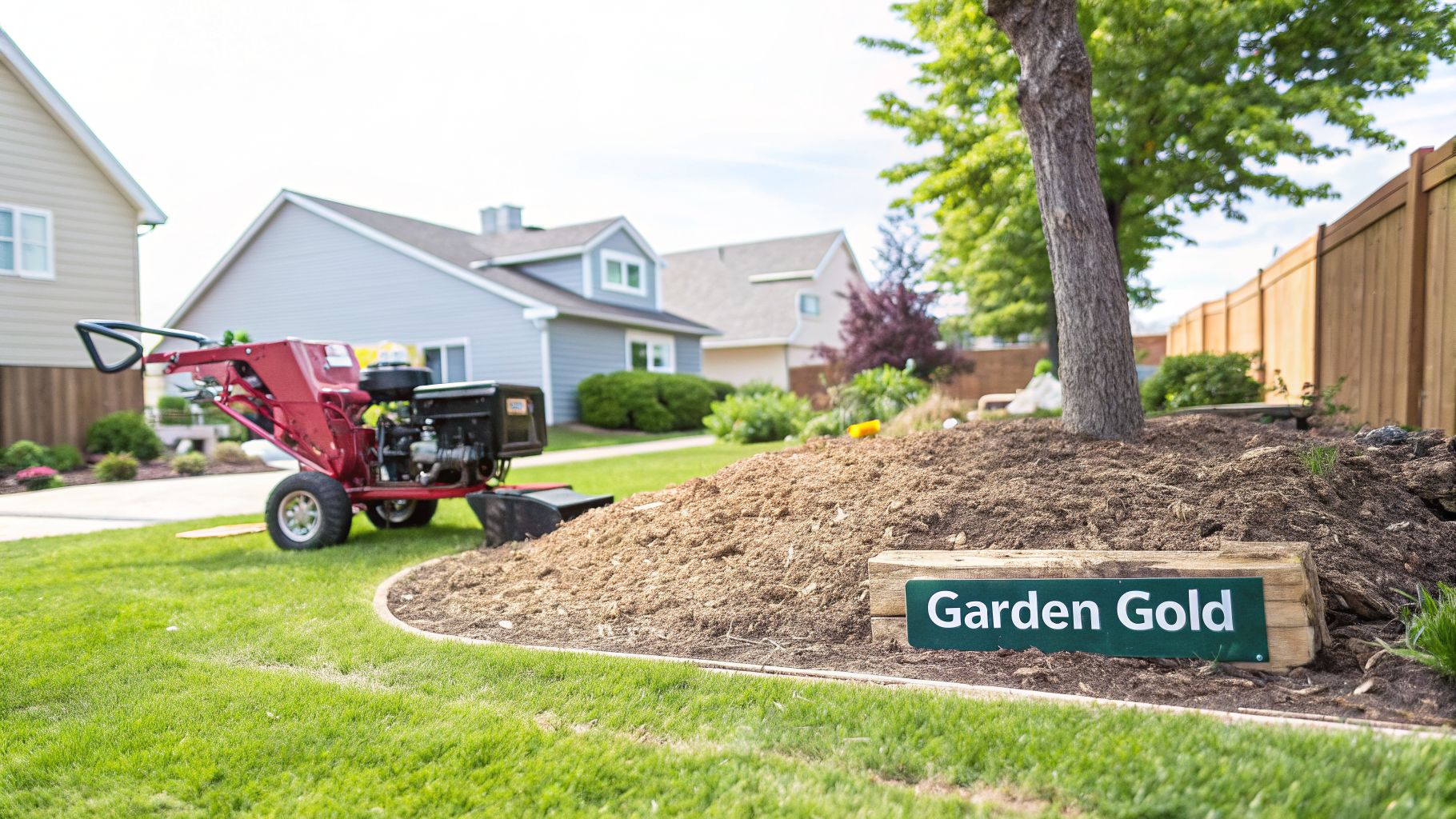
One of the best parts of our job is showing you how to turn a pile of wood chips into a powerhouse soil conditioner. The fresh mulch from our wood chippers is a brilliant source of carbon—the essential 'brown' material your compost pile needs to get cooking.
We're going to share the same advice we give our clients every day, showing you how to balance the materials from your own backyard to create that rich, dark 'black gold' that will make your garden beds sing.
From Waste Stream to Valuable Resource
It’s easy to underestimate the sheer scale of organic recycling, but it's a massive industry. In NSW alone, businesses generated over $772.6 million in sales from compost and mulch products in 2021-22.
Local firms processed a staggering 309,218 tonnes of garden organics and 301,525 tonnes of timber. For builders clearing blocks in Wyong or Tuggerah, turning this 'waste' into a resource is a smart, council-compliant practice we handle all the time.
This is so much more than just tidying up. It's about creating a sustainable cycle right on your property. That wood from a recent tree job—or even the grindings left over after stump grinding—is the first step. It can become a moisture-retaining layer that slashes your water bills or break down into compost that fuels a thriving soil ecosystem.
By turning what many see as waste into a key ingredient for soil health, you're not just tidying up your property; you're actively improving its ecosystem. It’s a simple, effective way to close the loop on your garden's green waste.
The Foundation of Good Compost
So, what makes mulch such a great compost ingredient? Think of your compost bin as a bustling city of microscopic workers. To do their job properly, they need a balanced diet of two things: 'browns' (carbon) and 'greens' (nitrogen).
Wood chip mulch acts as the 'browns', a slow-release energy source. It adds bulk and creates air pockets, which is crucial for stopping your pile from turning into a dense, smelly, anaerobic mess. The 'greens' are your kitchen scraps, fresh lawn clippings, and garden weeds. The world of organic recycling is always evolving, with some even exploring new methods like raising larvae on organic waste to break down materials.
For now, though, let's get your traditional compost pile working smarter, not harder.
Choosing the Right Mulch for Your Compost
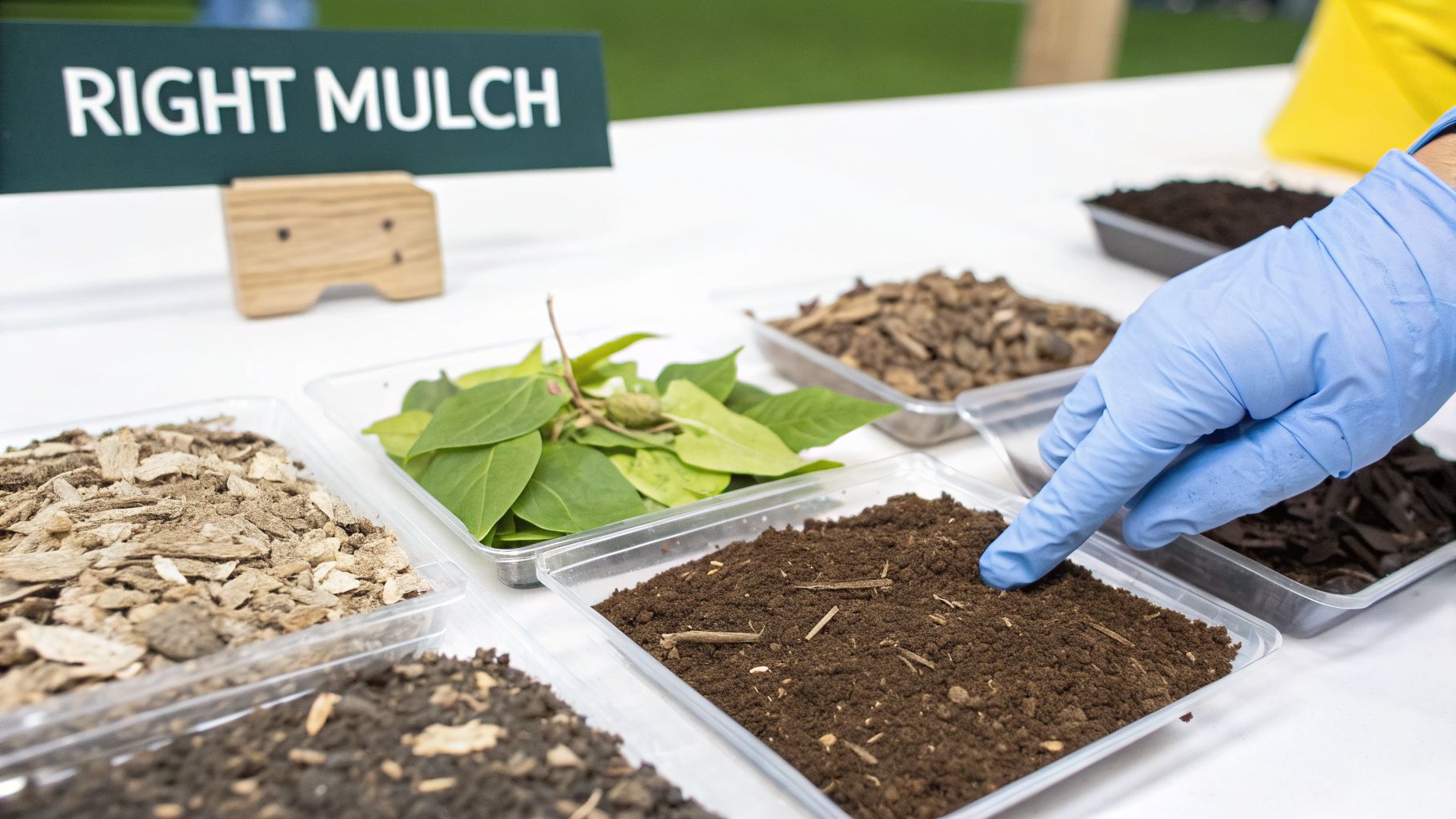
As arborists working across the Central Coast and Newcastle, we can tell you one thing for sure: not all mulch is the same, especially when you plan on composting it. The type of wood, how big the chips are, and whether the mulch is fresh or has had time to age all make a massive difference to your compost’s success.
Imagine the mulch from a tough old gum tree in a Lake Macquarie backyard versus the leftovers from a softer pine. The dense gum tree mulch breaks down slowly, giving your compost incredible long-term structure and aeration. The pine, on the other hand, will decompose much quicker. Both are excellent choices as mulch for compost, they just play slightly different roles in the pile.
Fresh vs Aged Mulch
One of the first questions we get from clients in places like Toukley and Belmont is about using fresh versus aged mulch. You can absolutely use chips straight from the grinder, but if you’re new to composting, we usually suggest starting with aged wood chip mulch.
Why? Because aged mulch has already begun decomposing, so the microorganisms have had a head start. Fresh mulch can sometimes "rob" nitrogen from its immediate surroundings as microbes pull it in to break down all that carbon. In a well-managed pile with plenty of nitrogen-rich "greens," it’s not an issue, but aged mulch is definitely more forgiving for beginners.
Why Chip Size Matters
Chip size is another one of those things that can make or break your compost pile. It’s a bit like cooking – a whole potato takes far longer to cook than one that’s been diced. The same idea applies here. If the chips are too large, they'll take years to break down. If they're too small, like sawdust, the material compacts, squeezes out air, and can lead to a smelly anaerobic mess.
The sweet spot is a mix of small-to-medium-sized chips, which is what our professional wood chippers are designed to produce. This blend offers the perfect balance of surface area for microbial action and structure for airflow. After all, the wood chips from our jobs aren't just debris; they're useful by-products from tree pruning or the remains of a stubborn stump. If you’re curious, our guide to the stump grinding process on the Central Coast shows how we turn these into valuable garden resources.
Our Pro Tip: When you get a load of mulch from an arborist, look for a good variety of textures. A mix of leafy green material with the woody brown chips is a fantastic sign. It brings both carbon and a bit of nitrogen to the party right from the start, giving the composting process a brilliant kick-start.
Balancing Carbon and Nitrogen for Perfect Compost
This is where the real magic of composting happens, and honestly, it’s where most people get a bit stuck. Think of your compost pile like a living thing that needs a balanced diet. Once you get the hang of the recipe, it's actually quite simple.
Mulch, especially the woody kind we create from tree work, is your main carbon source. We call these the ‘browns’, and they provide the slow-burning energy for all the microscopic workers in your pile. On the flip side, you have your ‘greens’—things like kitchen scraps, fresh grass clippings, and garden weeds. They’re packed with nitrogen, which is the protein that helps those microbes multiply and get to work.
Finding the Right Ratio
A common mistake we see on properties from Woy Woy to Newcastle is a compost pile that’s either all woody mulch or a slimy, smelly heap of wet kitchen scraps. Neither of these will break down properly.
The secret lies in the Carbon-to-Nitrogen (C:N) ratio. The sweet spot is roughly 25-30 parts carbon to 1 part nitrogen by mass. You don’t need a science lab to figure this out, though. A good rule of thumb is for every bucket of 'greens' you toss in, you’ll want to add about two to three buckets of woody mulch for compost. This simple layering approach is the key to success.
Imagine you've just mowed the lawn at your home in The Entrance. Those fresh, nitrogen-rich clippings are perfect ‘greens’. Instead of letting them become a slimy mat, layer them with a few buckets of wood chips from a recent tree pruning. This creates a ‘lasagne’ effect, balancing moisture and air just right.
The Bigger Picture of Organic Recycling
This small action in your backyard is part of a massive, vital process. Australia's organics recycling industry processes a staggering 7.7 million tonnes of material every single year. Over three million tonnes of this comes directly from garden organics, turning waste from our pruning and deadwooding jobs into affordable soil conditioners.
For strata bodies in Newcastle or commercial sites in Tuggerah, the tree waste we manage often gets turned into compost that's sold back into urban landscaping markets. The scale of this industry and its environmental benefits are truly impressive.
Layering is your best friend. A layer of greens, a layer of browns, a sprinkle of water. Repeat. This simple method prevents the two most common problems: a dry, dormant pile or a wet, stinking mess.
This balance is what drives fast, healthy decomposition. It’s what our qualified arborists explain when they’re on-site—because when you understand the ‘why’, the whole process becomes so much easier. To learn more about what our experts do, check out our guide on what arborists do. Getting this balance right is the difference between making waste and making 'black gold' for your garden.
Building Your Mulch-Based Compost Pile
Right, let's get our hands dirty and turn all that theory into a thriving compost pile. This is where we take your woody mulch and garden scraps and transform them into black gold for your soil. After 25 years of helping folks across the Central Coast get this right, we’ve learned the simple tricks that make a world of difference.
First things first: location. Find a spot that’s level and drains well. The last thing you want is your compost sitting in a puddle after one of our famous Central Coast downpours. A position with partial sun is ideal—it helps build heat without drying the pile out too fast, especially during our scorching summers.
Creating Your Compost Lasagne
The real secret to a fast, hot compost pile is layering. Think of it like making a lasagne. You’re simply going to alternate your 'browns' (carbon-rich mulch) with your 'greens' (nitrogen-rich scraps).
Kick things off with a solid foundation. We always suggest a thick base layer of coarse, woody mulch for compost, about 15-20cm deep. If you’ve just had some trees pruned at your home in Toukley, those chunkier wood chips are perfect. This base is absolutely vital for creating airflow from the bottom up, which stops the pile from turning into a compacted, smelly disaster.
Now, add your first layer of 'greens' right on top of that woody base. This is your kitchen waste, fresh lawn clippings, or leafy green trimmings from the garden. A layer about 5-10cm thick is plenty. Cover that with a 'brown' layer—your finer wood chip mulch or dried leaves—of about the same thickness.
This simple visual shows how to combine your nitrogen-rich greens and carbon-rich browns for perfect compost.
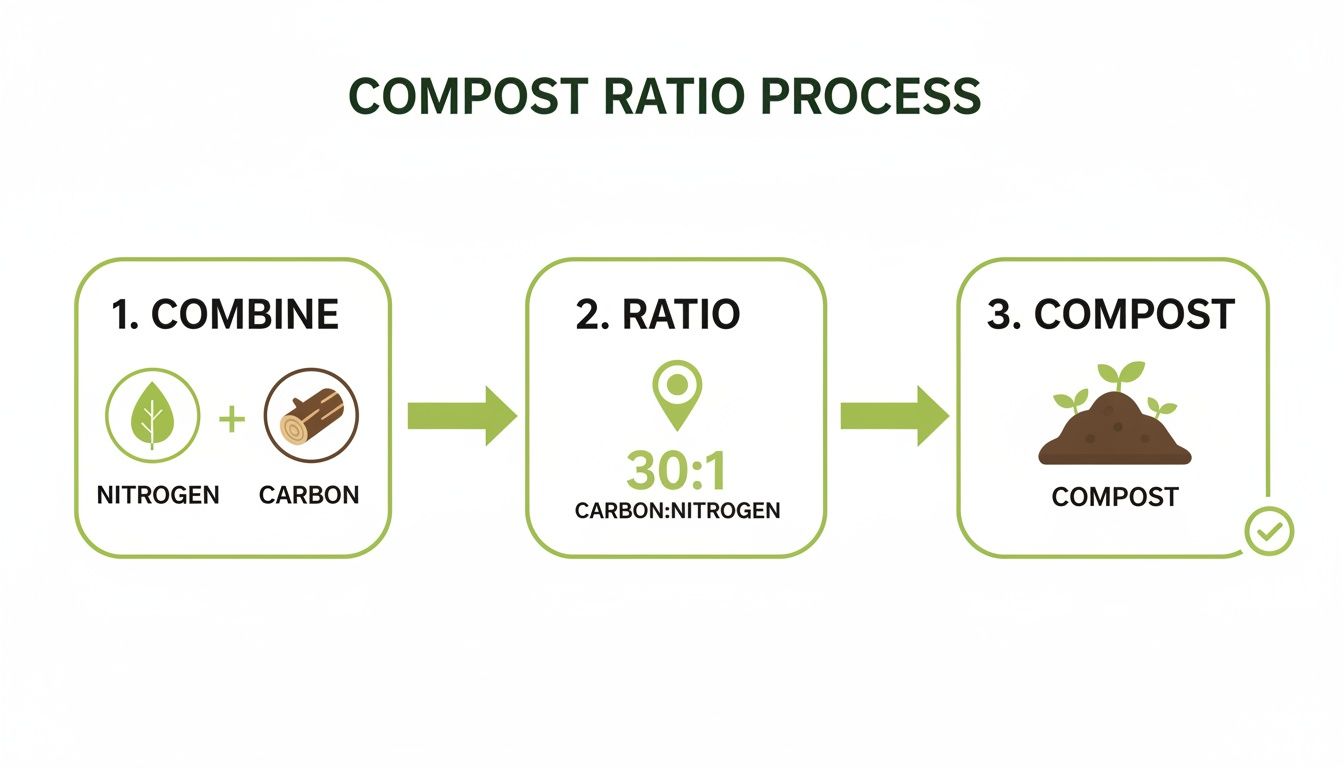
The key thing to remember is that your pile needs a lot more carbon material (mulch) than nitrogen (scraps) to get hot and break down without any bad odours.
Managing Moisture and Aeration
After every couple of layers, give the pile a light spray with the hose. You're aiming for the contents to feel as damp as a wrung-out sponge, not sopping wet. Too much water will drown all the good microbes, but too little will grind the whole process to a halt.
Our Pro Tip: Always keep a small stockpile of dry mulch right next to your compost bin. If you’ve added a heap of wet kitchen scraps or the pile gets drenched by rain, just toss in a few shovelfuls of the dry mulch. It will soak up the excess moisture and keep everything in balance.
For a really active, hot compost pile, turning is non-negotiable. Every week or two, grab a garden fork and give it a good turn. Your goal is to move the cooler outer layers into the hot centre and bring the centre material to the outside. This is your pile's workout—it mixes everything up, gets oxygen into the core, and seriously speeds up decomposition.
You’ll know you're doing it right when you see steam rising from the pile. That’s the sign of happy, hard-working microbes.
Troubleshooting Common Composting Problems
Even the most carefully built compost pile can run into trouble. Don't stress—it happens to the best of us, and the solutions are usually straightforward. With over 25 years on the tools across the Central Coast, from Avoca Beach to Warners Bay, we've seen (and fixed) every compost issue you can imagine.
One of the first things people notice is the smell. If your pile is giving off an ammonia or rotten egg odour, it’s gone anaerobic. This is a classic sign that there’s too much nitrogen ('greens') and not enough air flowing through. Your pile is basically suffocating.
Fixing a Smelly or Slow Pile
To get rid of the smell, you need to get air and carbon back into the mix. Grab a garden fork and give the whole thing a good turn, making sure to break up any of those dense, slimy clumps.
As you’re turning it, add in a generous amount of carbon-rich mulch for compost. Those woody chips will create vital air pockets, soak up the excess moisture, and get that carbon-to-nitrogen ratio back in balance. The smell should disappear pretty quickly.
But what if your pile isn’t smelly, it’s just… sitting there? A static compost pile that won’t heat up is almost always caused by one of two things: it’s too dry, or it’s starved of nitrogen.
If it’s dry and crumbly when you reach into the centre, it just needs a drink. Give it a good spray with the hose as you turn it. If the pile is damp but still cold, it’s calling out for more 'greens'. You can easily kickstart the microbial activity by adding activators like fresh lawn clippings, used coffee grounds, or even some poultry manure.
Keeping Unwanted Pests Away
Another worry we often hear about, especially in suburban areas like Umina Beach or Charlestown, is attracting pests like rats. The good news is that a healthy, well-managed compost pile isn’t very appealing to rodents.
The most effective way to deter pests is to make it hard for them to find food. Never leave kitchen scraps exposed on the surface. Always bury food waste deep in the hot centre of your pile and cover it with a thick layer of woody mulch.
You should also avoid adding meat, oils, or dairy products to your home compost. These are a five-star meal for pests and will create some seriously foul odours as they rot.
Keeping the pile consistently moist and turning it every week or so also makes it a much less comfortable home for unwanted visitors. If you're undertaking a larger project and worried about pests from the outset, our guide on the basics of grubbing and land clearing might have some useful insights for you.
Using Your Finished Compost and Sourcing Quality Mulch
After all that careful layering and turning, you've finally got a pile of beautiful, crumbly 'black gold'. The real magic, though, is in how you use this finished compost to transform your garden. It’s a powerful soil conditioner, a slow-release fertiliser, and a brilliant moisture retainer all rolled into one.
Putting Your Compost to Work
The simplest way to get started is by using it as a top dressing. Just spread a 2-3cm layer across your garden beds. For a typical garden in a suburb like Erina or Kariong, this single act can make a huge difference to our often sandy coastal soils. It helps the ground hold onto precious water, which means less time spent with the hose.
You can also give new plants a head start by incorporating compost directly at planting time. When you dig a hole for a new shrub or some veggies, mix a few generous handfuls of your homemade compost into the existing soil. This gives the roots immediate access to nutrients, helping the plant establish much faster.
Another great trick is to brew a 'compost tea'. Steep a couple of shovelfuls of finished compost in a large bucket of water for a day or so. You're left with a rich liquid fertiliser, perfect for giving pot plants and garden beds a quick nutritional boost.
Sourcing Quality Mulch on the Central Coast
Running low on mulch for your compost system? This is a common problem. After we finish a tree removal or pruning job, clients often ask if they can keep the mulch. Our answer is almost always a resounding "yes!". It’s one of the best ways to get a large volume of high-quality organic matter, fast.
When you get mulch from a professional arborist, you have peace of mind about its origin. The mulch we produce here at Treecorp is just clean, chipped local wood and leaf matter. It’s completely free from nasty contaminants like treated timbers or plastics that have no place in a healthy garden.
What to look for in quality mulch: A good load of arborist mulch should have a nice mix of chip sizes and plenty of green, leafy material mixed in with the wood. This blend of 'browns' and 'greens' is the perfect starter pack for using mulch for compost.
Whether you’re tending a small garden in Gosford, managing a large strata complex in Lake Macquarie, or looking after commercial grounds in Newcastle, using local arborist mulch is just plain smart. It closes the green waste loop and ensures you're feeding your soil with a safe, quality product. This isn't just about composting; it's a core principle of responsible property maintenance, similar to the practices we use for larger projects. To see how we handle organic material on a bigger scale, you can read our guide on land clearing services.
Frequently Asked Questions About Composting With Mulch
With over 25 years as arborists here on the Central Coast, we’ve heard just about every question there is about composting. It’s a fantastic way to turn tree waste into a resource your garden will love, and we're always happy to help people get it right.
Here are a few of the most common things we get asked by property owners looking to add mulch to their compost.
Can I Use Mulch From Any Type of Tree?
For the most part, yes. The type of tree just changes the timeline and the texture of your finished compost.
Hardwood mulches from our native Eucalypts (gums) are brilliant. They break down slowly, adding long-lasting structure and aeration to your compost pile. Softer woods, like from a Liquidambar, will decompose much faster and help get things cooking sooner.
The big no-nos are treated pine (CCA-treated timber is a definite one to avoid), as the chemicals have no business in a healthy garden. You'll also want to steer clear of mulch from allelopathic trees—like Black Walnut—which release compounds that can stop other plants from growing. If you're ever in doubt, just ask your arborist.
How Long Does It Take for Mulch to Turn Into Compost?
This really comes down to how much effort you put in. If you're managing a 'hot' compost pile, keeping it moist and turning it over regularly, you could have beautiful, rich compost in as little as 3 to 6 months.
On the other hand, if you go for a 'cold' or passive pile where you just add materials and let nature do its thing, it could take a year or more. The smaller you shred your mulch and the better you balance your carbon and nitrogen, the quicker it will all happen.
Our Pro Tip: Don't get too caught up on the speed. Even a slow-composting pile will eventually create something amazing for your soil. The most important thing is just to start and find a rhythm that works for you.
My Compost Pile Is Attracting Pests What Should I Do?
This is a common worry, but it’s usually an easy fix. Pests like rats are almost always after one thing: exposed food scraps. The solution is simply to make it harder for them to find a meal.
Always bury your kitchen scraps deep in the hot centre of the compost pile and immediately cover any new food waste with a thick, 15-20cm layer of woody mulch. It's also vital to avoid adding meat, dairy, or oily foods, as these are a major magnet for pests and will cause foul odours.
Keeping the pile consistently moist (but not waterlogged) and turning it now and then also makes it a much less inviting home for rodents. For those creating a mulch-based compost pile on the Central Coast, understanding local waste management options is key to sourcing materials. Services available in areas like local waste management in Gilroy can assist with collecting tree waste or other organic debris.
Creating rich compost is one of the most rewarding things you can do for your garden. If you need a hand managing the trees on your property to produce that perfect mulch, or need advice on any aspect of tree health, the team at Treecorp Solutions is here to help.
Request a free quote online or call us for a friendly chat about your needs. We're on time, every time.