If there's one thing you can do to give your trees a fighting chance against our harsh Australian climate, it's applying a good layer of mulch. We're not just talking about a cosmetic touch-up for your garden beds; this is one of the most effective ways to guarantee the long-term health and resilience of your trees, especially here on the Central Coast. With over 25 years of experience helping property owners from Newcastle to Lake Macquarie, we've seen how this simple step makes a huge difference.
Why Mulching Is Crucial for Your Trees
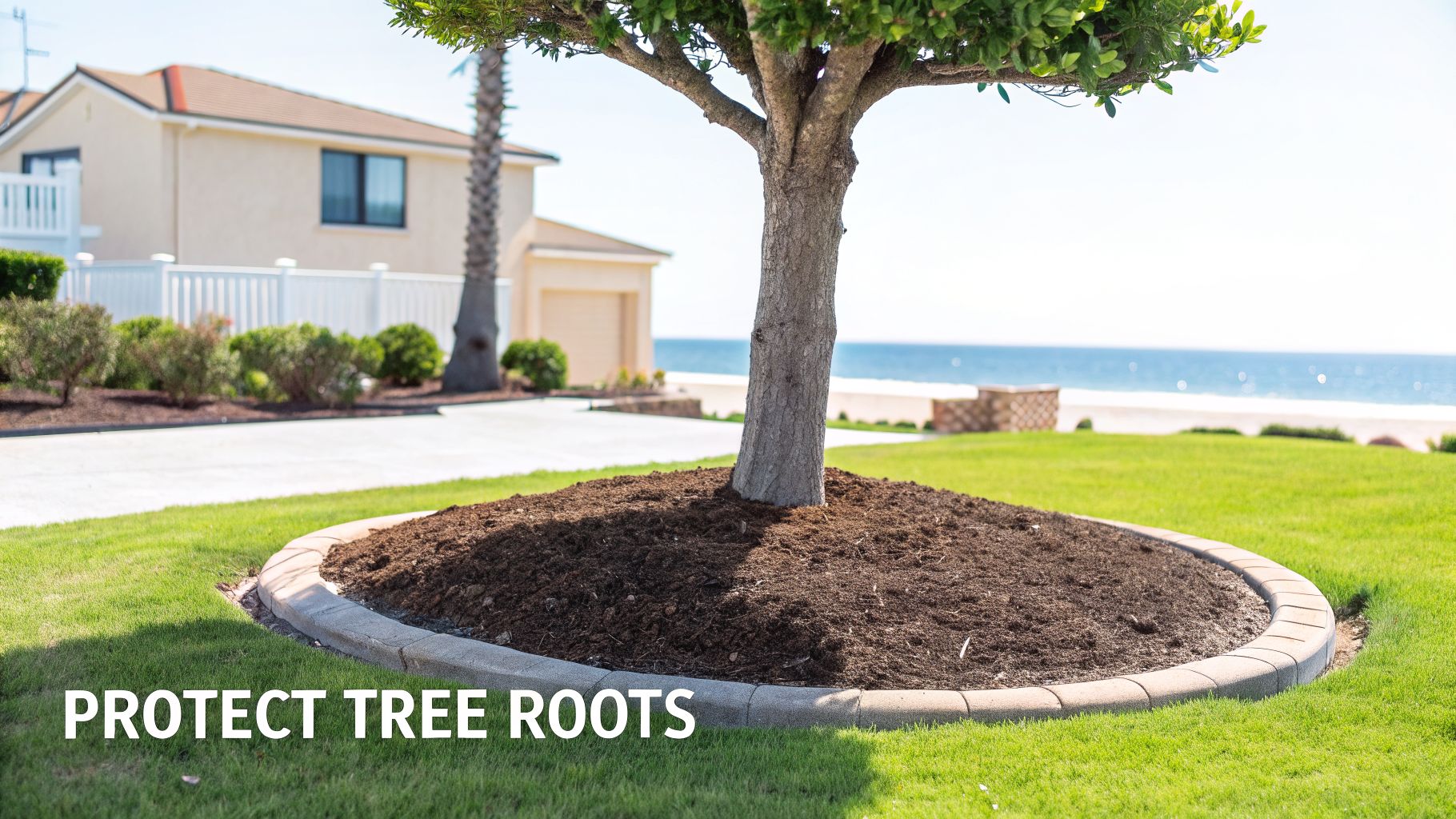
Think of mulch as a protective blanket for your tree’s root system. After more than 25 years as qualified arborists, we've seen firsthand the incredible difference correct mulching makes. It’s a simple job that pays huge dividends, particularly in our unique local conditions across the Central Coast, Newcastle, and Lake Macquarie regions.
The Benefits of a Good Mulch Layer
Whether you’re dealing with the sandy soils in suburbs like Wamberal or the heavier clay grounds around Wyong, mulch performs several critical jobs. A quality layer of organic mulch will:
- Retain crucial moisture: It acts like a sponge, soaking up rainwater and dramatically reducing evaporation during our hot, dry spells. This means less time spent watering for you.
- Regulate soil temperature: Mulch insulates the soil, keeping the root zone cooler in summer and warmer in winter, which prevents unnecessary stress on the tree.
- Suppress weeds: A thick layer blocks out the sunlight, stopping weeds from sprouting and stealing water and nutrients from your tree.
- Improve soil health: As organic mulch decomposes, it feeds the soil with vital nutrients, creating a rich, healthy environment where roots can really thrive.
Beyond the surface benefits, proper mulching is a powerful way to amend your soil, improving its structure and nutrient content from the ground up. If you want to get into the nitty-gritty, this science-based guide to soil amendments is a fantastic resource. This process builds a strong foundation that helps trees handle everything from the Central Coast's coastal winds to seasonal droughts.
A well-mulched tree is simply a healthier and more robust tree. It's far better equipped to fend off pests and diseases and will grow stronger with each passing year. Let's look at how to get it right.
The Right Way to Apply Mulch
Applying mulch seems simple enough, but after 25 years working with trees on the Central Coast, we can tell you the technique is everything. It's what separates a tree that's just surviving from one that's truly thriving. A few small tweaks can make a massive difference, and we've seen the proof on countless properties from Newcastle down to Gosford.
We’re going to walk you through the professional method we use every day. The aim is to create a healthy, beneficial layer that helps your tree without accidentally causing harm. It all comes down to getting the shape, depth, and distance spot on.
The Donut, Not the Volcano
The single biggest mistake we see out in the field is the dreaded "mulch volcano"—a huge cone of mulch piled right up against the tree's trunk. People think they're giving the tree extra love and protection, but it’s actually the opposite. This method traps moisture against the bark, creating the perfect environment for collar rot, fungal diseases, and destructive pests.
This is a massive problem locally. It's a quiet killer for common Central Coast species like eucalypts and figs.
Instead, always aim for the "donut" shape. This just means creating a wide circle of mulch around the tree but leaving a clear space of at least 10-15 cm around the base of the trunk itself. This simple gap lets the bark breathe and stay dry, stopping decay before it starts, while the rest of the mulch gets on with its job.
Expert Tip: Look for the tree's trunk flare—that's the part at the bottom where the trunk widens out before meeting the roots. This area should never be covered with mulch. Keeping it clear is one of the most important things you can do for the tree's long-term health.
Getting the Depth and Spread Just Right
Once you’ve got the donut shape down, the next thing is the depth. You’re aiming for a consistent layer about 5 to 10 cm deep.
- Too shallow (less than 5 cm): A thin dusting won't do much. It can’t effectively block weeds or hold onto moisture, and the sun will bake it dry in no time.
- Too deep (more than 10 cm): Piling it on too thick can literally suffocate the roots by blocking air and water from getting to the soil. It can also trick the tree's roots into growing up into the mulch, where they're vulnerable to drying out.
Let’s put that into a real-world context. Imagine you're mulching a new Lilly Pilly hedge on your property in Terrigal. A 5 cm layer is perfect for those younger plants. But for a huge, established gum tree in a backyard in Adamstown, you could go closer to the 10 cm mark.
The spread of the mulch is just as vital. For the best results, you want to spread the mulch out as wide as you can, ideally all the way to the tree’s dripline. The dripline is the imaginary circle on the ground directly under the furthest reach of the branches. This is where most of the tree's fine feeder roots are, so mulching this whole area gives the maximum benefit. In many residential gardens in places like Warners Bay or Belmont this isn't always practical, but the rule is simple: the wider, the better.
If your tree needs more than just a fresh layer of mulch, our guide on professional tree pruning services on the Central Coast can help you figure out if it also needs a trim. Combining proper pruning with correct mulching is a powerful one-two punch for a long and healthy life for your trees.
Choosing The Best Mulch For Central Coast Gardens
Walking into a garden supply centre can feel a bit overwhelming. You’re faced with a mountain of different bags and piles, all promising to be the best for your garden. But not all mulches are created equal, and the right choice for your trees really hinges on your local soil, the types of trees you have, and the look you’re going for.
Here on the Central Coast, we see it all. A sprawling native garden in Umina Beach has completely different needs to a formal rose garden in Erina. The right mulch can be the difference between a thriving landscape and one that struggles. Let's break down the common options to help you decide.
Organic vs. Inorganic Mulch
First up, mulches fall into two main camps: organic and inorganic. Organic mulches come from natural materials that break down over time—think wood chips, bark, or sugar cane. Inorganic options are things like pebbles, gravel, or recycled rubber, which don't decompose.
After more than 25 years in the field, we almost always recommend organic mulch. Why? Because as it decomposes, it’s constantly feeding your soil with essential nutrients, improving the structure, and encouraging the beneficial microbial life that trees love. It’s a slow-release fertiliser and soil conditioner all in one.
Inorganic mulches might look neat and last longer, but they offer zero nutritional benefit. Worse still, on a hot summer's day in Newcastle, those stones can heat up and literally bake the soil underneath, adding a huge amount of stress to your tree's root system. When you use organic matter, you’re not just covering the soil—you’re actively building a healthier ecosystem from the ground up. You're mimicking the natural process of a forest floor, which is exactly the environment trees are designed to thrive in.
Popular Mulch Choices For Our Region
Let’s look at some of the most common types of organic mulch you'll find around Lake Macquarie and the Central Coast. A quick comparison can help you narrow down the best fit for your garden's specific needs.
Comparing Common Mulch Types for Central Coast Gardens
| Mulch Type | Key Benefit | Best For | Consideration |
|---|---|---|---|
| Arborist Wood Chips | Excellent nutrient content & moisture retention | Native trees and large garden areas | Can have a less uniform, more rustic look |
| Pine Bark | Tidy appearance, readily available | General-purpose garden beds | Can be slightly acidic as it breaks down |
| Sugar Cane Mulch | Breaks down quickly, enriching soil fast | Vegetable gardens and annual beds | Very lightweight; can blow away in coastal winds |
| Eucalyptus Mulch | Natural pest-deterrent properties | Native gardens, especially around gum trees | The strong scent may not be for everyone |
| Pebbles/Gravel | Long-lasting, very low maintenance | Cacti, succulents, and decorative features | Offers no soil improvement; can overheat roots |
| Recycled Rubber | Excellent weed suppression, stays put | Playgrounds or paths (not recommended for plants) | Can leach chemicals into the soil over time |
Choosing an organic mulch like arborist chips or pine bark is generally the best investment you can make for the long-term health of your trees. The basic process for applying any of these mulches is straightforward.
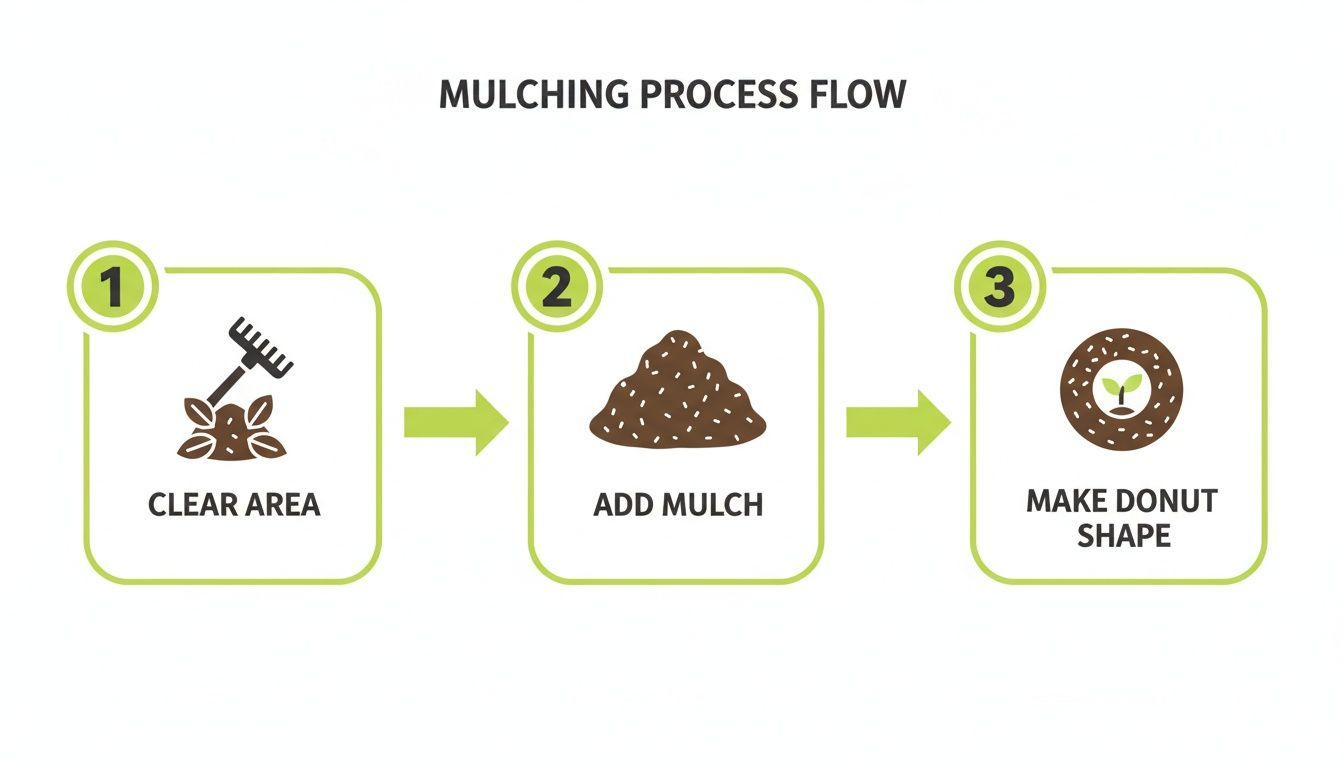
This simple visual guide reinforces the key actions. Always start by clearing the area of weeds, apply your chosen mulch evenly, and most importantly, create that essential "donut" gap around the trunk to prevent collar rot.
Our 25+ years of hands-on experience has shown time and again that a good 5-10 cm layer of organic mulch can help the soil retain moisture during the dry spells we often get on the Central Coast. This simple step can slash your watering needs and helps trees fight off pests, which affect many urban trees each year according to data sources like globalforestwatch.org.
And if you're in the planning stages, it's also worth reading our guide on choosing trees with non-invasive roots to make sure your new additions are a perfect, low-hassle fit for your property.
Common Mulching Mistakes and How to Avoid Them
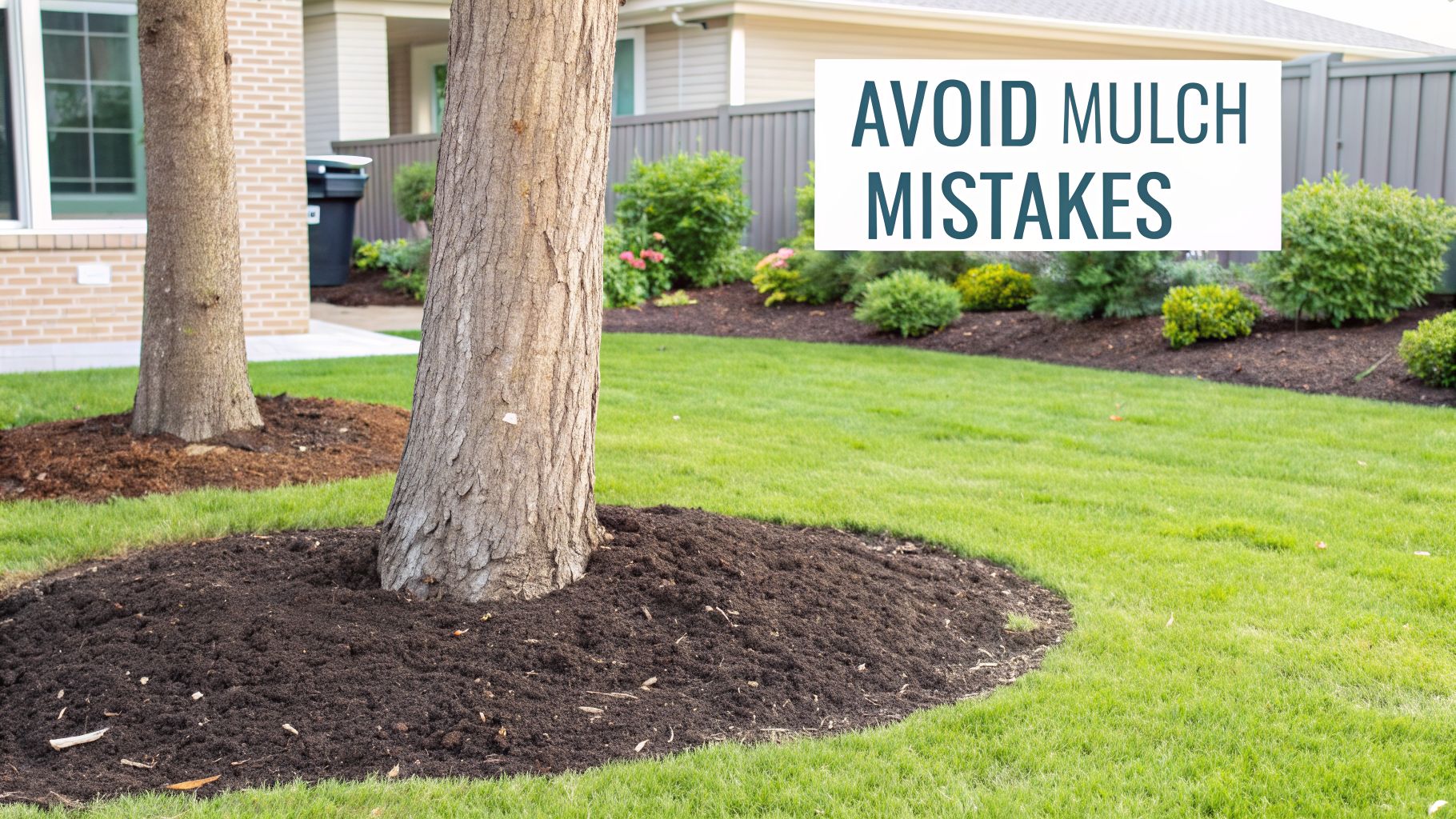
It’s one of those jobs everyone thinks they know how to do, but it’s surprisingly easy to get wrong. Over our 25 years working on properties across the Central Coast and Newcastle, we've seen first-hand how a well-intentioned mulching job can cause serious, long-term harm to trees. The good news is that these common slip-ups are entirely avoidable.
The Dreaded "Mulch Volcano"
This is, without a doubt, the number one mistake we see. A "mulch volcano" is a huge cone of mulch piled high against the base of a tree's trunk. People think they’re giving the tree extra protection, but they’re actually doing the opposite. Piling mulch directly against the bark traps moisture, creating a damp, dark environment that’s a perfect breeding ground for fungal diseases like collar rot. This decay weakens the trunk's base and can even create a hidden entry point for termites and other borers.
You must always keep the trunk flare clear. This is the area at the base of the tree where the trunk widens just before it enters the soil. If you spot a mulch volcano, fix it straight away. Carefully pull all the mulch away from the trunk by hand, making sure there's a clear gap of at least 10-15 cm between the trunk and where your mulch ring starts. You should be able to see the trunk flare clearly.
Laying It On Too Thick
More isn't always better. A layer that’s too deep—anything over about 10 cm—can effectively suffocate a tree's root system by blocking oxygen and water from getting to the soil. It can also encourage roots to grow upwards into the mulch itself, where they are extremely vulnerable to drying out and damage, putting the entire tree under stress.
Imagine a mature Moreton Bay Fig on a strata property in The Entrance that has had mulch piled on year after year. The fix involves carefully raking off the excess until you get back to that ideal 5-10 cm depth. Just be gentle—you don't want to damage any delicate surface roots that may have grown into the mulch.
Using the Wrong Type of Mulch
Another common error is using fresh, un-composted "green" mulch—basically, freshly chipped branches and leaves that haven't had time to break down. While it seems like a great way to recycle garden waste, it can trigger a problem called nitrogen drawdown. As microorganisms work to decompose the fresh wood, they need a lot of nitrogen and will pull it directly from the soil.
This robs your tree of a vital nutrient, often leading to yellowing leaves and poor growth. If you're seeing these signs, it's worth learning more about how to identify and address sick tree symptoms. Always opt for aged or properly composted mulch, which has already gone through that initial decomposition phase.
When to Call an Arborist for Your Mulching Needs
Getting stuck into the garden and spreading some mulch is a great way to spend a weekend. But some jobs are best left to the professionals. Knowing when to put down the shovel and call in a qualified arborist isn’t about admitting defeat; it’s about protecting your trees and your property. With over 25+ years of hands-on experience, we’ve seen countless times how a professional touch can prevent major headaches down the line.
Large-Scale and Strata Mulching
Picture a body corporate trying to manage mulching for a dozen townhouses in Tuggerah, or a business owner in Warners Bay needing to refresh their entire commercial landscape. This is where our crew really shines. We bring in high-quality arborist mulch by the truckload, applying it efficiently and to the correct standards across the whole site, all while adhering to WHS legislation.
For strata managers, this approach is a game-changer. A single, scheduled service is far more effective and consistent than relying on various residents to do their own thing. It also ticks the boxes for safety and compliance, eliminating potential trip hazards from poorly laid mulch in common areas. Our $20M public liability insurance gives body corporates and commercial clients complete peace of mind.
Assessing Trees Already Under Stress
If you've got a tree that's already looking a bit peaky, hold off on mulching. Symptoms like yellowing leaves or a thinning canopy could signal a deeper problem. Just piling mulch around the base can be like putting a bandage on a serious wound—it hides the issue but does nothing to fix it. If a tree is suffering from root rot caused by poor drainage, adding a thick blanket of mulch will only trap more moisture and accelerate its decline.
Our qualified arborists can get to the bottom of it first. We’ll perform a full assessment to check for soil compaction, diseases, or pest problems that need sorting out before any mulch goes down. A professional assessment ensures you’re treating the actual problem, not just masking the symptoms, giving your tree the best chance of a full recovery. You can find out more about this process in our guide on what qualified arborists do to safeguard tree health.
After Major Pruning or Tree Removal
One of the best times to call us is right after we’ve finished other tree work on your property. A big pruning job or a tree removal can leave you with a mountain of branches and wood. Instead of you paying to have it all hauled away, we can fire up our industrial-grade wood chippers and process it right there on-site.
This instantly turns your green waste into nutrient-rich, premium arborist mulch for the rest of your garden. We can then apply it straight away around your other trees, closing the loop from tree maintenance to soil improvement in a single visit. It’s an efficient, sustainable solution that puts valuable resources back into your property. If you need a tree removed or pruned in suburbs like Woy Woy or The Entrance, we can handle the whole job from start to finish, mulching included.
Your Questions About Mulching Trees Answered
After more than 25 years looking after trees on properties from Newcastle down to the Central Coast, we’ve heard just about every question there is when it comes to mulching. It’s one of those jobs that seems straightforward, but a lot of homeowners and strata managers want to be sure they’re getting it right.
Here are our answers to the most common questions we get.
How Often Should I Re-Apply Mulch Around My Trees?
For most organic mulches like arborist wood chips or pine bark, a top-up every one to two years is about right. The main goal is to keep that perfect 5-10 cm depth. There’s no need to scrape away the old stuff—just let it keep breaking down and feeding the soil. You’ll probably notice the mulch disappears a bit faster in some spots. On a windy coastal property, say in Terrigal or Wamberal, the wind can shift it around and thin it out. Just keep an eye on it and add a bit more whenever it starts looking sparse.
Can I Use Wood Chips From a Removed Tree as Mulch?
Absolutely, and we always recommend it when possible. Reusing the wood chips from a pruned or removed tree is a fantastic, sustainable move. This gives you what we call 'arborist mulch' – a rich mix of wood, bark, and leaves that soil microbes go crazy for. It's the best free resource you could give your garden.
There is one critical exception, though: never use chips from a diseased tree. If we’ve had to remove a tree because of a fungal infection or pest problem, chipping it and spreading it around your garden is the fastest way to infect your healthy trees. Our qualified arborists are trained to spot these problems and will give you clear advice on whether it’s safe to reuse.
Does Mulch Attract Termites to My Home?
This is a really common and completely understandable concern, but thankfully, it's easy to manage. Termites love timber and moisture. Piling a thick layer of mulch right up against your home’s foundation or any timber structures like a deck can create a perfect, damp highway for them.
The solution is simple: always leave a clear gap of at least 15-20 cm between your mulch and your house. Keep the mulch around your garden trees where it does its job, but never let it touch the building. This small buffer is all it takes to deter termites, so you can get all the benefits of mulch without creating any risk for your home.
What Is the Best Way to Mulch a Large Strata Property?
For strata properties, a scheduled maintenance plan is hands-down the most professional and effective way to go. We work with many body corporates and strata managers from Newcastle to the southern end of the Central Coast to create annual tree care plans that include bulk mulching.
This approach brings a few big wins: cost-effectiveness, consistency, and compliance. It guarantees every tree across the common areas gets the same high standard of care, lifting the whole look of the property. Our professional crews make sure mulch is applied correctly, preventing trip hazards in shared spaces and avoiding tree damage. Plus, our $20M public liability insurance gives the body corporate total peace of mind. By having our team manage it, you avoid patchy results and ensure healthier trees and happier residents.
If you're unsure about the best way to mulch your trees, or if you're managing a large strata or commercial property, our team at Treecorp Solutions is here to help. We are "On Time, Every Time", providing reliable service backed by 25+ years of local expertise. We can provide a free property assessment to give you clear, expert advice tailored to your specific needs. For emergencies, give us a call.