When you're looking at a block of land, ready to build your dream home or kick off a development, one of the first questions that pops into your head is always, "What's this going to cost me?" For land clearing, the typical figure you'll hear thrown around for New South Wales is anywhere from $2,000 to $7,000 per acre.
But honestly, that's just a starting point. Think of it less as a fixed price and more as a ballpark figure. Whether your block in a suburb like Umina Beach is covered in light coastal scrub or dense bushland near Morisset will dramatically change the final quote. As local arborists with over 25 years of experience, we can help you understand the real costs involved.
Your Guide to Land Clearing Costs in NSW
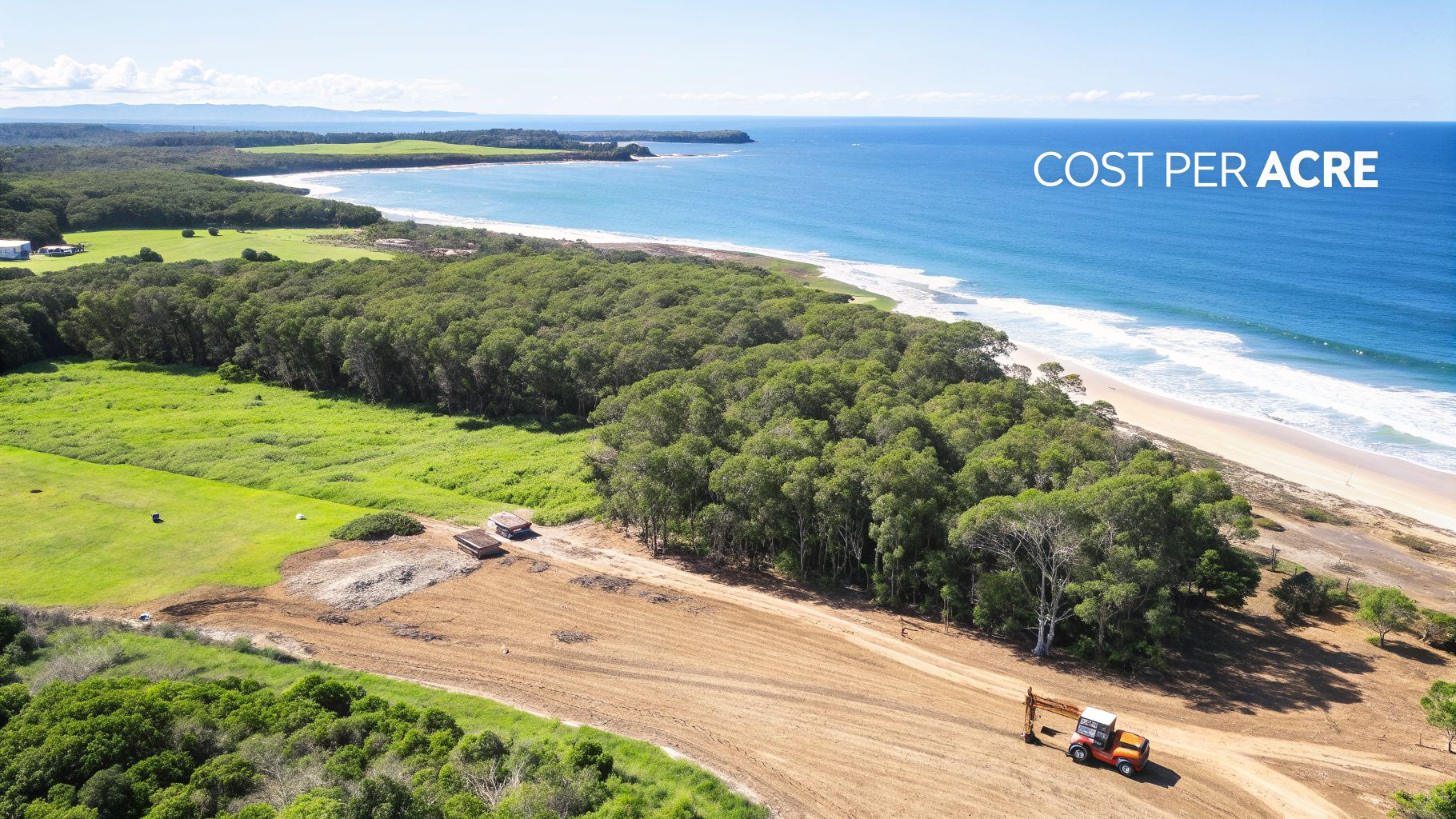
Getting a handle on the real cost of land clearing is essential, whether you're prepping a small residential block in Terrigal or tackling a sprawling rural property out near Warners Bay. That simple "per acre" price is a handy benchmark, but it never tells the whole story. With over 25 years of experience clearing land across the Central Coast, Lake Macquarie, and Newcastle, we've learned that every single property has its own personality and its own set of challenges.
A flat, open acre with just a few small shrubs is a completely different beast to an acre on a steep slope packed with mature gum trees. The first might be a straightforward job for our machinery. The second? That requires careful planning, specialised equipment, and a rock-solid commitment to Work Health and Safety (WHS) legislation from start to finish. We're not just clearing land; we're preparing your future project safely and professionally.
Why Costs Vary So Much
So, what's behind that massive price range? It all boils down to the time, machinery, and manpower needed to get the job done safely and properly. A seasoned arborist doesn't just see a bunch of trees; we size up the entire block to give you an accurate picture.
Here’s a glimpse into what we’re assessing when we visit your site:
- Vegetation Density: Are we dealing with a few scattered saplings, or is it a thick forest of tough ironbark and spotted gums? The difference in labour is huge.
- Terrain and Accessibility: Can we drive our heavy machinery straight onto the site? Or is access tight and tricky, like some of the lakeside suburbs around Belmont?
- Soil Composition: Is the ground soft and easy to work with, or is it full of rock that will slow us down and put extra wear on our equipment?
These factors dictate the type of equipment we’ll need, how many crew members are required, and ultimately, how long the job will take. Modern techniques like forestry mulching, for example, can be incredibly cost-effective on the right site. This method chews up vegetation and turns it into a handy, nutrient-rich ground cover, which means you avoid the high costs of hauling and dumping green waste. Mulching can often keep your project towards the lower end of that $2,000 to $7,000 scale.
On the other hand, traditional tree felling and removal often pushes the price higher simply due to the extra labour and logistics involved. You can get a deeper dive into the different methods in our guide to land clearing services. At the end of the day, a professional quote from a team like ours, backed by $20 million public liability insurance, is about more than just a number. It's a guarantee of safety, compliance, and a site that’s perfectly prepped for whatever you have planned next.
Seven Key Factors Driving Your Land Clearing Quote
Ever wondered why a land clearing quote for a block in Gosford can look so different from one for a similar-sized plot in Wyong or Belmont? It’s not just about the acreage. The final price comes down to a handful of crucial variables our arborists assess on every single site.
Think of it like getting a quote to paint a house. A single-storey home with smooth walls is pretty straightforward. But a three-storey heritage house with fiddly trim and peeling paint? That needs far more time, skill, and equipment. Land clearing works the same way. We look beyond the simple size to understand the real work involved, ensuring your quote is accurate and fair.
1. Vegetation Type and Density
The single biggest factor is what’s actually growing on your land. Are we talking about light, manageable scrub and a few saplings, or a dense forest of mature, hardwood Eucalypts? Imagine you've got a block in Kariong covered in dense, mature gum trees; clearing that is a whole different ball game to a lightly vegetated block in The Entrance.
An acre of light vegetation might be cleared relatively quickly with a forestry mulcher. On the other hand, an acre packed with large, established trees has to be assessed and felled safely by qualified arborists, following strict WHS protocols. This means more labour, specialised rigging, and a lot more time on the job.
2. Terrain and Slope
A flat, even block is the dream scenario. It lets our heavy machinery—like excavators and mulchers—move around freely and get the job done efficiently. But as anyone living on the Central Coast or around Lake Macquarie knows, many properties have rolling hills or steep slopes.
Working on an incline immediately brings challenges. It demands more skilled machinery operators, specialised equipment built for gradients, and extra safety measures to prevent accidents. A steep block in a suburb like Terrigal or a coastal part of Newcastle will naturally cost more per acre to clear than a level one, simply because of the increased complexity and risk.
3. Site Access
How easily can we get our gear onto your property? A wide, open gate leading to a clear block is perfect. More often than not, we're dealing with tight access points, narrow driveways between houses, or blocks set way back from the road in places like Woy Woy or Adamstown.
If we can’t bring in our biggest, most efficient machines, we have to use smaller equipment that takes longer to do the same work. That means more labour hours and fuel. In some tricky situations, the access might even dictate the entire clearing method we can use. For strata properties, this often involves careful coordination to avoid blocking shared driveways or common areas.
4. Stump Removal Requirements
Deciding what happens to the tree stumps is another critical cost factor. Simply leaving them in the ground is the cheapest option, but it's rarely practical if you plan to build, landscape, or replant.
Stump grinding is the most common solution. We use powerful machinery to grind the stump down well below the soil level. The cost for this depends on the number, size, and species of the stumps—hardwood stumps take a lot more time and effort to chew through. For a full rundown, you can learn more about what impacts stump and tree removal costs in our dedicated guide.
5. Soil Conditions and Hidden Obstacles
What lies beneath the surface really matters. Soft, loamy soil is easy to work with. But if the ground is full of rocks, heavy clay, or other hidden surprises, it can slow the whole process down.
Rocky soil causes serious wear and tear on our equipment, especially the teeth of grinders and mulchers. It also makes any excavation and grading much more difficult and time-consuming. We always check out the visible ground conditions, as this can have a surprising impact on the final quote. Coastal salt spray in suburbs like Avoca Beach can also affect soil and machinery, another factor we consider.
6. Debris Disposal Method
Once the land is cleared, all that green waste has to go somewhere. You generally have two choices: haul it all away or mulch it on-site.
Hauling involves labour to load up trucks, plus transport costs and tipping fees at a waste facility. On-site forestry mulching, where we process everything into a beneficial layer of mulch right where it falls, is often more cost-effective. It completely eliminates transport and disposal fees, turning a waste product into a valuable resource that helps prevent soil erosion.
7. Council Permits and Environmental Overlays
Finally, local council rules play a huge role. Councils on the Central Coast, in Newcastle, and around Lake Macquarie are vigilant in protecting native vegetation. The average land clearing cost can be influenced by compliance needs, which vary significantly between councils.
Navigating the rules for an area like Umina Beach or Morisset can be tricky, but as experienced local arborists, we can help you figure out if your project needs a permit and what that process involves. It's a key part of our service to ensure your project is compliant from the start.
Navigating Council Permits and Local Regulations
Before a single chainsaw fires up or any heavy machinery arrives on site, there’s a step that’s absolutely crucial. Getting it wrong is one of the most expensive mistakes you can make. We’re talking about council approval.
Starting a land clearing project without the proper green light can bring everything to a grinding halt and hit you with hefty fines. Every council, whether it's Central Coast, Lake Macquarie City, or Newcastle City, has its own rulebook. These regulations are there to protect our unique local environment and keep the community safe.
These rules aren't just bureaucratic red tape. They play a vital role in protecting significant native trees, preventing soil erosion, and preserving precious wildlife habitats. The requirements can be surprisingly specific and change dramatically from one suburb to the next. Clearing a block for a new home in a growth area like Tuggerah involves a different process than clearing vegetation inside a heritage zone in Newcastle.
Skipping this step is a gamble that just isn’t worth it. You could be facing stop-work orders and fines that run into the thousands of dollars, completely derailing your timeline and budget.
Why Permits Are Non-Negotiable
At the heart of it, permits are about environmental protection. Councils use Tree Preservation Orders and Vegetation Management Plans to outline exactly which trees can be removed and how. For example, on a property in Wamberal, you might find that certain mature gum trees are a protected species. Touching them without a proper assessment is a serious breach.
These regulations also ensure the work itself is done safely and responsibly. They might dictate how you need to manage sediment to stop runoff into local waterways or demand a report from a qualified arborist to confirm a tree is a genuine hazard. It can feel a bit complex, but it’s a non-negotiable part of any professional land clearing job.
This mind map shows the key cost drivers our team looks at when we build your quote. You'll notice many of them are directly tied to what the council will and won't approve.
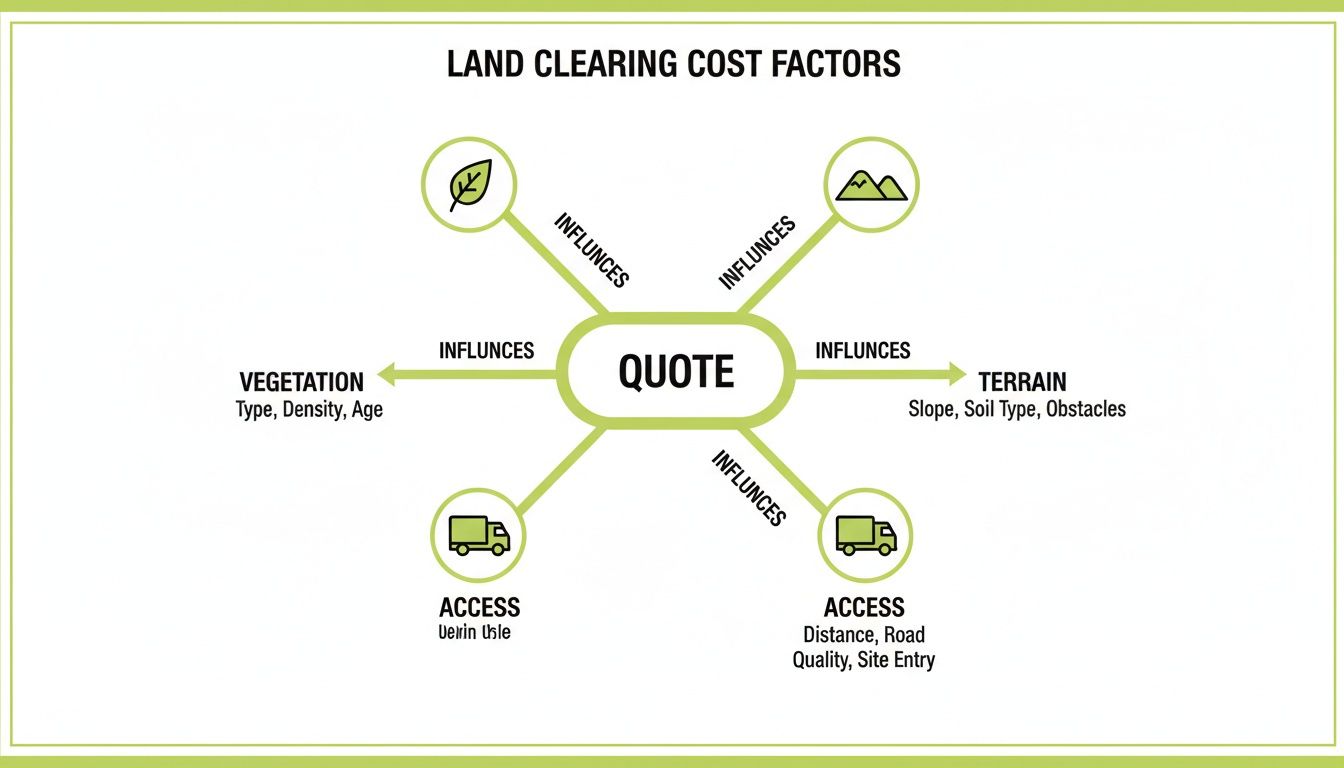
As you can see, the physical realities of your land—the type of vegetation, the slope, and how easily we can get machinery in—all have a direct impact on the job's complexity and final cost.
The Application Process in a Nutshell
While each council has its own quirks, the path to getting approval generally follows the same key stages. The first step is figuring out the rules before you get too far down the track.
Our advice: Always assume you need a permit. It’s far better to check and be told you don't need one than to push ahead and get slapped with a penalty. Being proactive protects you and your investment.
Here's a quick look at what the process typically involves:
- Initial Enquiry: Your first move is to contact your local council. Be ready to explain exactly what you’re planning to clear.
- Lodge an Application: This usually means submitting a Development Application (DA) or a specific tree removal permit. You’ll almost always need to include a site plan and photos.
- Arborist Report: For bigger jobs or the removal of significant trees, councils will often require a report from a qualified arborist. This document details the trees' species and health, providing a professional case for the work.
- Council Assessment: The council then reviews your application against their local environmental plans before giving you a yes or no.
This whole process takes time, so it's critical to build it into your project schedule from day one. With over 25 years of experience, we guide clients across the Central Coast through this all the time. We help prepare clear, professional applications that have the best chance of a smooth and speedy approval.
If you want to get into the nitty-gritty, you can learn more about council approval for tree removal.
How Smart Landowners Can Reduce Clearing Costs
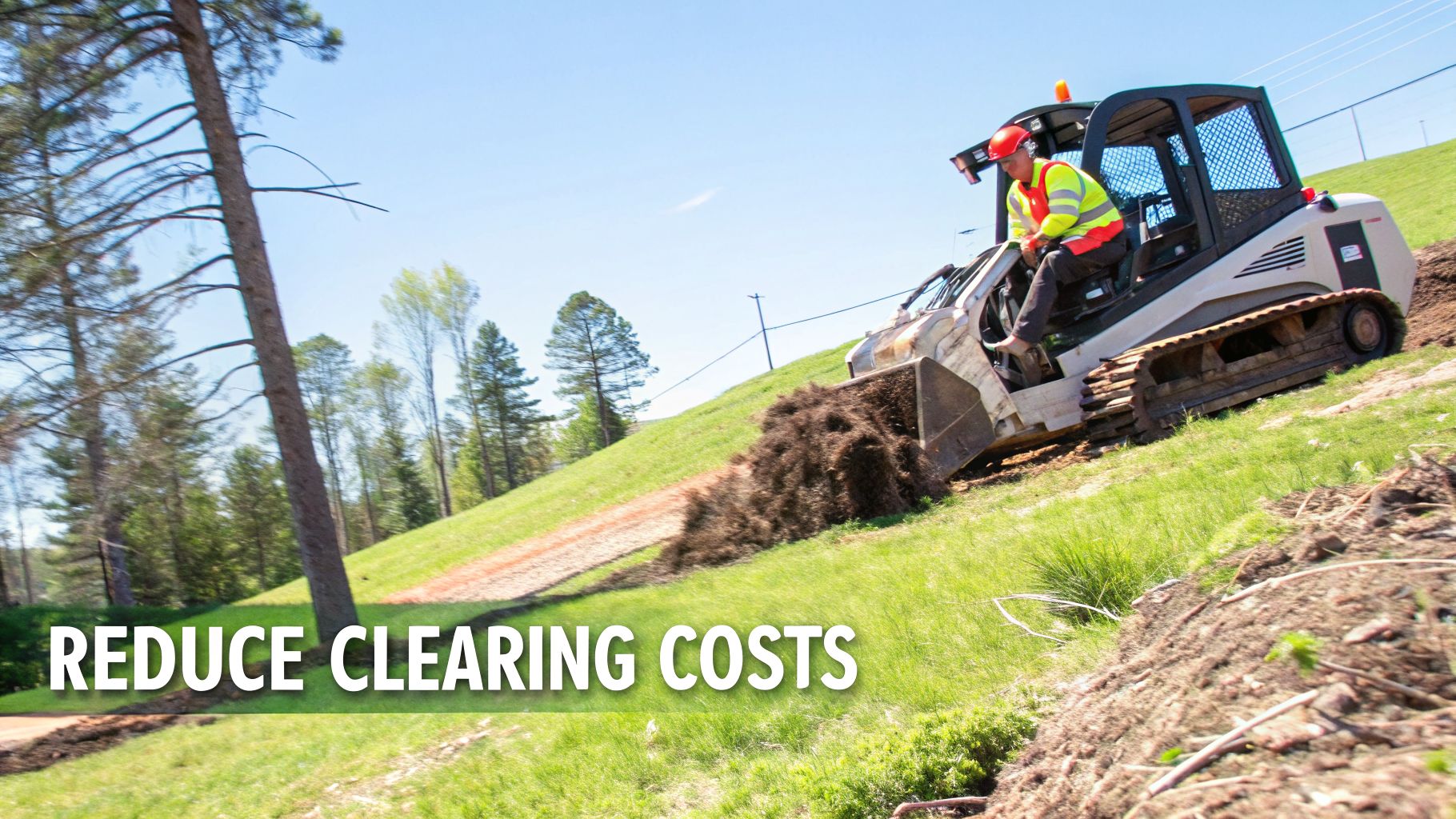
While land clearing is a crucial investment for many projects, the final figure on your quote isn't set in stone. As a savvy landowner, you have more control over the final cost than you might realise. By making a few strategic decisions upfront, you can bring that price down significantly without ever compromising on safety or the quality of the work.
With over 25 years of experience across the Central Coast, Newcastle, and Lake Macquarie, we've seen firsthand how a little bit of planning goes a very long way. It's not about cutting corners; it's about working smarter. This means picking the right methods, timing your project well, and being crystal clear about your goals from the start.
Let’s dig into some practical ways you can manage your land clearing cost per acre.
Embrace Modern Clearing Techniques
One of the single best ways to keep costs in check is to choose the right tool for the job. Modern techniques like forestry mulching are often far more cost-effective than old-school methods that involve felling, stacking, and then hauling away all the debris.
A forestry mulcher processes trees and undergrowth right where they stand, turning them into a beneficial layer of organic material on your soil. This delivers a few key financial wins:
- No Haulage Fees: You completely eliminate the costs of truck hire, fuel, and expensive tipping fees at waste management centres. That alone can be a massive saving.
- Faster Completion: Mulching is typically much faster than traditional clearing, which means fewer labour hours are billed to your project.
- Free Ground Cover: You're left with a natural, nutrient-rich mulch that helps prevent soil erosion. This saves you from having to buy and spread your own ground cover later.
Choosing the right method is about long-term value. Forestry mulching not only lowers your initial outlay but also invests back into the health of your land, saving you future costs on soil management and erosion control.
Plan Ahead for Big Savings
Timing and clear communication can have a surprisingly large impact on your final quote. A well-prepared client almost always gets better value for their money.
Schedule During the Off-Season
Just like any industry, we have our peak seasons. These usually hit after major storms or in the lead-up to summer for bushfire preparations. If your project isn't urgent, scheduling it during a quieter period can often lead to more competitive pricing and better availability.
Mark Your Boundaries Clearly
Before our team even sets foot on your property, take the time to clearly mark out the exact area you want cleared. Use stakes, flags, or spray paint to define property lines and the project perimeter. This simple step prevents any confusion, ensuring we don't clear more than necessary and you don’t pay for work you didn't want. It helps our machine operators work efficiently and with confidence from the moment they arrive.
The economics of land clearing in Australia have a complex past. Decades ago, tax policies actively encouraged clearing, but those days are long gone. Today, the full market cost falls on the landowner, making professional, efficient clearing more important than ever for properties around suburbs like Erina or Charlestown. You can discover more about how historical policies shaped today's prices by exploring the history of land clearing in Australia.
Why a Professional Arborist Is Your Best Investment
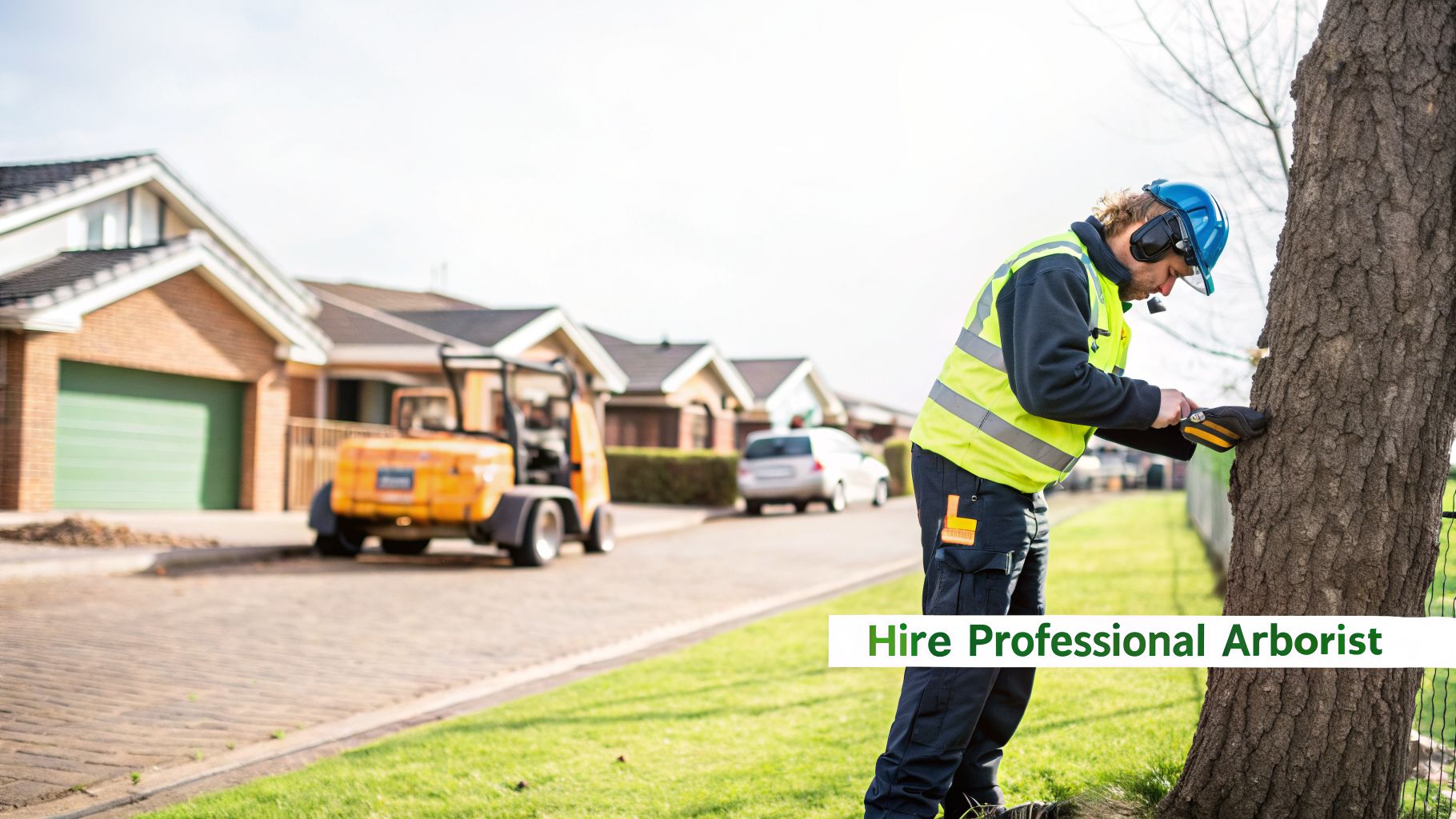
When you start looking at the land clearing cost per acre, it's easy to be tempted by the cheapest quote or even think about giving it a crack yourself. But let's be honest: this is one area where cutting corners can spiral into dangerous and seriously expensive outcomes. Choosing a qualified arborist over a general labourer isn't an extra cost—it's your best investment in getting the job done right, the first time.
The real difference boils down to three things: safety, efficiency, and compliance. An unqualified operator with a chainsaw might seem like a bargain, but the risks they bring onto your property are massive. A single slip-up could mean serious injury, or thousands in damage to your home, a neighbour's fence, or hidden underground services. This is precisely why our team is backed by a $20 million public liability insurance policy. It's about giving you complete peace of mind that your assets are protected, no matter what.
The Value of Experience and Equipment
With over 25 years of local experience on the Central Coast, we’ve seen the messy aftermath of under-equipped services. Jobs drag on for weeks, deadlines get blown out, and the site is often left looking like a disaster zone. A professional arborist team arrives with a fleet of specialised, modern machinery, ready for whatever your block throws at us.
Imagine you've got a steep, heavily wooded lot in a suburb like Avoca Beach. An amateur might try to tackle this with basic tools, creating huge safety risks and taking forever. Our team, on the other hand, can bring in specialised gear designed for steep gradients, making sure the work is done safely and on schedule. Our promise to be "On Time, Every Time" is built on expert planning and having the right tools for the job.
Hiring a professional isn't just about what we do; it's about what we prevent. We prevent accidents, property damage, council fines, and costly project delays. We understand the unique challenges of our region, from the Central Coast's coastal winds to Newcastle's heritage tree protection overlays.
Compliance and Peace of Mind
Beyond just the physical work, a qualified arborist is your guide through the maze of local regulations. We understand the specific Tree Preservation Orders and vegetation management plans for councils from Gosford all the way to Newcastle. This knowledge is crucial for making sure your project is fully compliant, saving you the stress and expense of stop-work orders or hefty penalties.
Hiring a professional offers a clear return on investment through:
- Risk Mitigation: Our comprehensive insurance and strict adherence to WHS legislation protect you from any liability.
- Efficiency: Specialised machinery and experienced crews mean the job gets finished faster. That saves you money on labour and avoids project delays.
- Guaranteed Quality: We leave your site clean, safe, and perfectly prepped for whatever comes next, whether that's construction or landscaping.
It’s worth thinking about the full scope of what an arborist brings to the table. If you want to dig deeper into the skills we use on every job, you might be interested in learning about what a qualified arborist actually does. Ultimately, choosing a professional arborist ensures your land clearing project becomes an asset, not a liability.
How to Get an Accurate Quote for Your Property
Getting a vague, back-of-the-napkin quote for a land clearing project is a huge red flag. A professional, detailed quote isn't just a formality—it’s the foundation of a successful job. It protects you from surprise costs down the track and makes sure everyone is on the same page from day one.
Think of it as your best tool for comparing different companies. You’re not just looking at the final price, but at the real value, safety, and thoroughness they bring to the table. An accurate quote is more than a number; it’s a project blueprint. At Treecorp Solutions, we believe in total transparency, which is why our quotes are always comprehensive and itemised. Modern tools like construction estimating software also help reliable contractors deliver precise estimates quickly, raising the bar for the quality of quotes you should expect.
What a Professional Quote Must Include
A trustworthy quote should leave no room for guesswork. It needs to clearly spell out every part of the job and provide a fixed price for that exact scope of work. Anything less is an open invitation for budget blowouts.
Here’s what to look for:
- Detailed Scope of Works: The quote must precisely describe what will be cleared, the methods being used (e.g., forestry mulching vs. traditional felling), and what’s happening with the stumps and green waste.
- Clear Cost Breakdown: It should separate the costs for labour, machinery, and disposal. This way, you know exactly what you’re paying for.
- Insurance and Compliance Details: This is non-negotiable. Look for written proof of their qualifications and, most importantly, their public liability insurance. Our quotes always clearly state our $20 million public liability policy for your peace of mind.
- Estimated Timeline: A true professional will give you a realistic start date and an estimated completion time, which is essential for planning the rest of your project.
Your Checklist for Hiring an Arborist
Before you sign on the dotted line, asking the right questions is the best way to sort the genuine experts from the cowboys. Treat it like a job interview—after all, you're trusting them with your property and your safety.
A cheap quote often means something important has been left out—usually safety, insurance, or a proper site clean-up. Always ask what's not included in the price.
Make sure you ask any potential contractor these questions:
- Are you a qualified arborist (holding an AQF Level 3 or higher)?
- Can you provide a copy of your public liability insurance certificate?
- Will you help us navigate any necessary council permits?
- What safety procedures (WHS) do you follow on-site?
- How will you protect my property and the surrounding areas from damage?
Getting a clear, detailed quote is simple when you work with the right team. To get a better sense of how all these factors add up, you can explore our handy tree removal cost calculator. If you're ready for a no-obligation chat and a transparent quote for your property, get in touch with us for a free property assessment.
Frequently Asked Questions About Land Clearing
When you're looking at a block of land that needs clearing, a lot of questions pop up. We get it. Drawing on our 25+ years of experience clearing land across the Central Coast, Newcastle, and Lake Macquarie, we've put together answers to the questions we hear most often.
How Long Does It Take to Clear One Acre of Land?
The honest answer? It depends entirely on the block. An acre can take anywhere from a single day to over a week. If we're looking at a relatively flat acre in a place like Tuggerah with just light scrub and smaller trees, our crew can often get it done in one or two days. Modern machinery like forestry mulchers makes quick work of that kind of vegetation.
But the timeline stretches out when we run into hurdles. A steep, sloping acre with dense, mature hardwoods like ironbark, or a site littered with rock, is a different story. That’s a slower, more deliberate process. A site like that could easily take four, five, or even more days to clear safely and correctly. Access is another big one—if we can't get our larger machines in due to tight entry points, that will naturally add time to the job.
Do I Need a Permit for Land Clearing on My Property?
In most cases, yes, you will need a permit. Both the Central Coast Council and the councils for Lake Macquarie and Newcastle have pretty strict rules to protect our local ecosystems and native vegetation. This usually means lodging a Development Application (DA) or getting a specific land clearing permit, especially if you're clearing a large area or removing protected tree species.
There are some exemptions, like creating asset protection zones for bushfire safety. But you absolutely must confirm this with your local council before a single tree comes down. Don't just assume. As part of our service, we can help you figure out your obligations and guide you through the council's permit process, which can often feel a bit complicated. For strata properties, body corporate approval is also usually required on top of council permits.
Is It Cheaper to Mulch Vegetation or Haul It Away?
On-site forestry mulching is almost always the smarter choice, both for your wallet and for the environment. When we have to haul vegetation off-site, the quote has to factor in multiple costs: the labour to load up the trucks, the fuel to get to a waste facility, and the hefty tipping fees they charge. These costs stack up fast.
Forestry mulching, on the other hand, deals with everything right there on your property. It turns trees and undergrowth into a valuable layer of organic mulch. This method completely cuts out all transport and disposal costs, leading to big savings on most jobs. As a bonus, that mulch layer enriches your soil over time and helps stop erosion. It's a win-win.
What Is Included in Your Standard Land Clearing Quote?
We believe in total transparency. Our quotes are comprehensive, so you know exactly what you’re paying for with no nasty surprises down the track. A standard quote from Treecorp Solutions covers all labour, machinery, and fuel. It also includes a detailed plan for managing the debris, whether that's mulching on-site or hauling it away.
We’ll also clearly state our insurance details, including our $20 million public liability policy, and give you a realistic project timeline. The quote details the full scope of work, and we make a point to list anything that isn't included, like council application fees, so everything is clear from the start.
Ready to clear your land with a local team you can trust? The experts at Treecorp Solutions are here to help. With over 25 years of hands-on experience across the Central Coast, Newcastle, and Lake Macquarie, we deliver safe, reliable, and compliant land clearing services. Our promise is "On Time, Every Time".
Request a free quote today or give us a call for a friendly chat about your project. For emergencies, please call us directly for an immediate response.